Photographing palm trees on a tropical coastline sounds straightforward until you're actually standing in front of a tangled cluster of trunks, messy sand, and scattered coconuts with no obvious composition in sight. Finding a shot that goes beyond a simple silhouette takes deliberate thinking about separation, foreground interest, and depth.
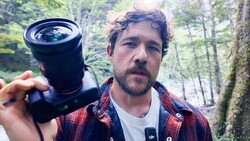
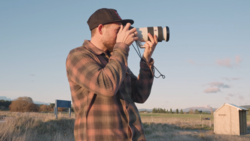
Coming to you from William Patino, this practical video follows Patino along the Queensland coast as he works through the specific challenges of shooting palm trees at sunrise with a 10mm lens. Rather than settling for whatever is in front of him, Patino walks the coastline looking for a single palm framed naturally by two surrounding trunks, then uses the ultra-wide angle to pull those framing elements into the composition. He shoots at ISO 200 and f/8, exposing for the highlights and using his histogram to avoid clipping. One of the more useful points he raises early on is the problem of separation: at a wide focal length, small positional shifts dramatically change whether elements overlap or read cleanly against each other, and Patino keeps repositioning until he has clear visual zones between the foreground, midground, and background.
Because he wants to get extremely close to foreground plants and leaves, Patino uses his camera's focus bracketing mode, capturing up to nine frames per sequence to ensure front-to-back sharpness that he can blend later in Photoshop. He shoots sequences at both f/8 and f/10, though he notes that single exposures at f/11 or f/16 are always preferable when the depth of field is sufficient. One tip that's easy to overlook: when focus stacking, step back slightly from the foreground rather than filling the frame edge to edge. That small buffer gives you room to adjust alignment during blending without cropping into your subject. The light shifts throughout the shoot, moving from soft pastel color to a harder golden tone as the sun breaks through cloud, and at one point Patino positions a background tree to block direct sun and catch a small sun star, adding another point of interest to the frame.
The second half of the video gets into how Patino handles a barren, distracting foreground by moving laterally along the beach to find low coastal plants he can use instead of sand and coconuts. His approach to the wide angle here mirrors how he works with ferns in forest environments: get low, get close, and use whatever is available to build layers. He also talks through a specific compositional decision about keeping leaf tips below the horizon line to avoid merging with background elements. As a postscript, Patino mentions that the focus-stacked frames from this shoot turned out to be unnecessary since single exposures held up, which reinforces his advice about always capturing a safety shot when stacking in the field. Check out the video above for the full breakdown from Patino.
Join the Fstoppers community for free
-
Post comments and join in the discussions
-
Browse the site ad-free
-
Share your work and get featured in the community
-
Compete in the photo contests for fun and prizes
No comments yet