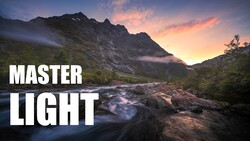
Waterfall scenes look simple, but they fall apart fast when the eye has nowhere to go. If you want stronger landscape images, you need to think beyond the obvious front-on shot and start controlling flow, balance, and shutter speed.
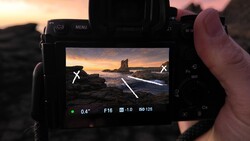
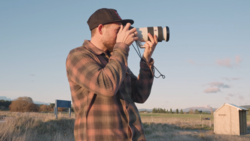
Coming to you from William Patino, this practical video follows Patino deep into Fjordland as he searches for waterfalls by boat and works each scene in real time. He heads out with a 10mm prime, moving in close to cascades and fallen logs rather than standing back and hoping for the best. Instead of committing to a composition too early, he takes test frames, reviews them on the live view screen, and deletes what does not work. You watch him evaluate obstructions, especially branches cutting through the background falls, and decide whether a scene is worth the effort before unloading all his gear. That restraint alone will save time in the field.
He focuses heavily on visual flow. Not just capturing a waterfall, but guiding the eye from foreground to midground to background without letting it spill out of the frame. In one scene, bright white water pulls the eye straight to the lower corner and out. In another, finer cascades and darker rocks slow the movement, letting the eye settle near the central falls. He avoids too much white water because it overwhelms everything else. You see how small changes in camera position shift balance between rocks on either side of the frame, and how a single log can either block a waterfall or help frame it. It is a constant adjustment process, not a one-click solution.
Shutter speed gets careful attention. Patino rarely drags it too long. Around 1/5 to 1/3 of a second keeps texture in the water while still giving that soft movement. He warns against going past half a second in most cases because the water turns milky and loses structure. Yet in a wider composition with layered cascades, he pushes it to 0.8 seconds to pull out finer strands in the foreground. You start to see that shutter choice depends on distance and composition, not habit. Closer compositions can handle faster speeds. Wider scenes sometimes benefit from slowing down. The key is testing both.
Back at the computer, he reviews raw files and compares frames that looked promising on location. One has strong movement but feels unbalanced. Another is clean yet too static. A third strikes the middle ground with subtle S-curves and better tonal control. He leans into cool tones, gently cooling the global temperature or adding blue into the midtones through color grading, careful not to push the water into unnatural color. He lets images sit before finalizing them, revisiting with fresh eyes rather than rushing to publish.
There is more in the video about handling bright areas, shaping light toward the main focal point, and raising your standards after years of shooting, so you avoid keeping images that do not hold up. Check out the video above for the full rundown from Patino.


Join the Fstoppers community for free
-
Post comments and join in the discussions
-
Browse the site ad-free
-
Share your work and get featured in the community
-
Compete in the photo contests for fun and prizes
No comments yet