
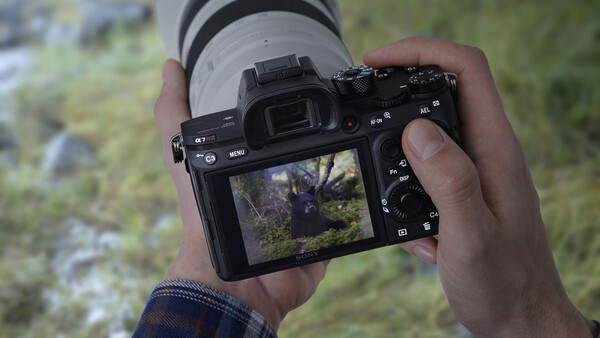
These aren't compromised relics from a forgotten era. They're the same tools that shot magazine covers, documented weddings, and produced professional video content when they retailed for two or three times what they cost today. The sensor inside a five-year-old camera hasn't degraded. The engineering hasn't gotten worse. These cameras have simply depreciated because photographers chase new releases with the enthusiasm of golden retrievers pursuing tennis balls, and that irrational behavior creates opportunity for everyone else.
What follows are five used cameras offering the best value in today's market, ranked by how much professional capability you get per dollar spent. Each of these bodies originally cost between $2,000 and $6,800 when new. Today, you can own any of them for a fraction of that investment.
The Portrait and Wedding Workhorse: Nikon D750
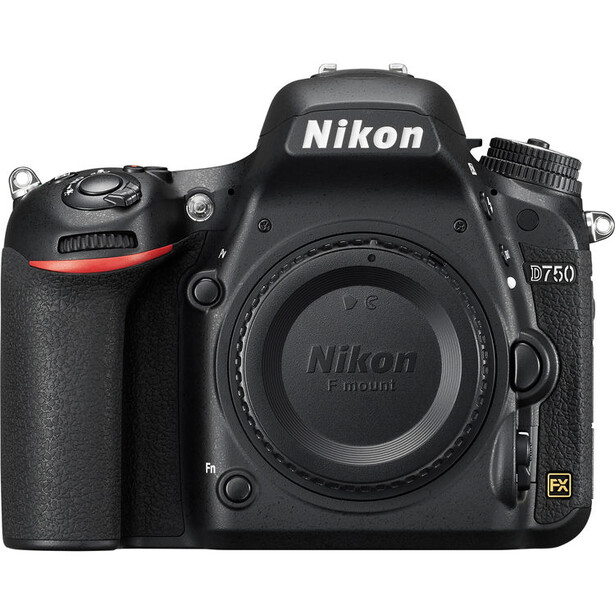
When Nikon released the Nikon D750 in 2014 at $2,300, it immediately became the camera that made full frame accessible to working professionals who couldn't justify the D810's price tag. More than a decade later, it remains one of the most balanced DSLRs ever manufactured. That's a 73% depreciation on a camera that still produces professional-quality files indistinguishable from bodies costing three times as much.
The 24.3 MP sensor delivers dynamic range that genuinely competes with modern cameras, recovering shadow detail and highlight information with the kind of latitude that makes exposure mistakes fixable rather than fatal. The 51-point autofocus system locks reliably in low light, which matters enormously for wedding and event photographers working in dim reception halls and candlelit ceremonies. The tilting rear screen, revolutionary when it launched, remains useful for low-angle compositions without requiring you to lie on the ground. Wedding and portrait photographers shot thousands of paid jobs on this body. Many still do, and their clients have no idea they're not using the latest equipment.
Key Specs
- Sensor: 24.3 MP full frame CMOS
- Autofocus: 51-point AF system (15 cross-type)
- Burst rate: 6.5 fps
- Video: 1080p at 60 fps
- Card slots: Dual SD
The value proposition here is almost unfair. You're getting a professional full frame sensor, weather-sealed construction with magnesium alloy top and rear covers, and access to Nikon's deep F-mount lens ecosystem for roughly the price of a new entry-level APS-C body. The image quality gap between the D750 and something like a new Canon EOS R100 or Nikon Z30 isn't subtle. Full frame depth of field control, superior high ISO performance, and vastly better dynamic range put this camera in a completely different league. If you're serious about wedding or portrait work, pairing this body with How to Become a Professional Commercial Wedding Photographer will give you both the tools and the knowledge to start booking clients immediately.
The trade-off is straightforward: it's a DSLR in a mirrorless world. No eye-tracking autofocus, no in-body stabilization, and 1080p video that looks increasingly dated. If you need cutting-edge video specs or the latest computational AF features, look elsewhere. But if you shoot stills and understand how to work with traditional focus points, the D750 has years of professional mileage left in it.
The Resolution Champion: Sony a7R III
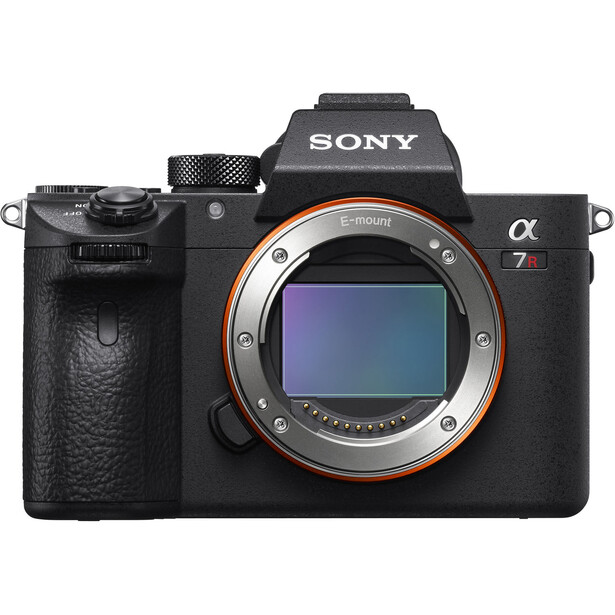
Sony released the Sony a7R III in 2017 at $3,200, and it immediately became the camera that proved mirrorless had truly arrived for professional work. The combination of 42.4 megapixels, reliable eye-tracking autofocus, 10 fps burst shooting, and a battery that finally didn't die mid-session convinced commercial photographers, landscape shooters, and studio professionals to make the switch from DSLRs in droves. This camera shot campaigns for major brands and produced gallery-sized prints that revealed detail invisible to the naked eye. Today it represents a 61% depreciation on what remains a genuinely professional tool.
The resolution advantage cannot be overstated. Nothing currently available new under $2,000 approaches 42.4 megapixels, and that pixel count translates directly into practical flexibility. The ability to crop aggressively while retaining enough resolution for large prints means a single body can effectively function as both a standard and pseudo-telephoto setup. Landscape photographers working with the a7R III can produce wall-sized prints with detail that holds up under close inspection, and the dynamic range from that backside-illuminated sensor recovers highlights and shadows with remarkable latitude. For anyone pursuing landscape work seriously, combining this body with Photographing the World: Landscape Photography and Post-Processing creates a powerful foundation.
Key Specs
- Sensor: 42.4 MP full frame BSI-CMOS
- Autofocus: 399 phase-detect points with Eye AF
- Burst rate: 10 fps
- Video: 4K at 30 fps in full frame or Super 35 (oversampled from 5K for sharper output)
- Stabilization: 5-axis IBIS
The most expensive camera on this list still represents remarkable value when you consider what you're actually getting. The autofocus system, while not as refined as Sony's latest generation, tracks eyes and faces reliably enough for professional portrait and event work. Five-axis in-body stabilization allows handheld shooting at shutter speeds that would produce blur on unstabilized bodies. And genuine 4K video in both full frame and Super 35 crop modes means this camera handles hybrid photo and video work competently, with the Super 35 mode offering superior sharpness from its 5K oversampled readout.
The trade-offs include Sony's notoriously frustrating menu system from this era, a body smaller than some photographers prefer for extended shooting sessions, and enormous file sizes that demand fast cards and ample storage. If resolution isn't your priority, other cameras on this list offer better value. But if you need pixels, the a7R III offers nothing else close at this price.
The Action Specialist: Nikon D500
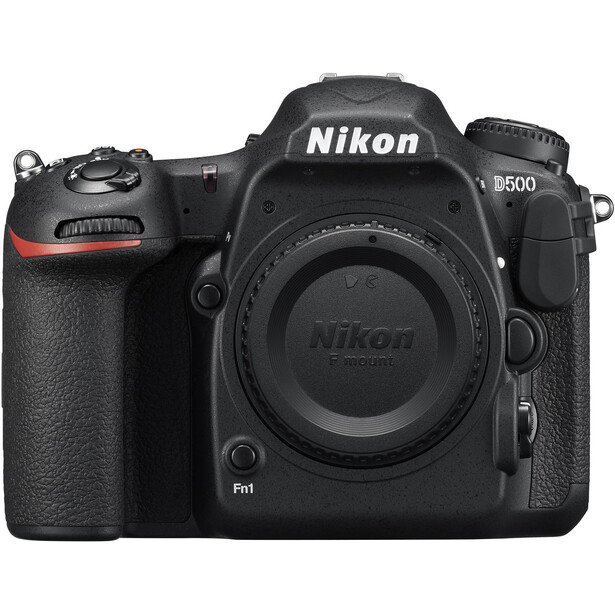
Nikon designed the Nikon D500 as the APS-C equivalent of their flagship D5, and the family resemblance is impossible to miss. The 153-point autofocus system, borrowed directly from that $6,500 professional body, tracks subjects with a tenacity that budget cameras cannot approach. Ten frames per second with continuous autofocus. A buffer deep enough to shoot 200 raw frames to the XQD/CFexpress slot without slowing down. Weather sealing that shrugs off dust, moisture, and the general abuse of field work. When Nikon released this camera in 2016 at $2,000, it made sports and wildlife photography accessible to enthusiasts who couldn't afford flagship bodies. At 61% depreciation, it dominates that role more convincingly than ever.
The 1.5x crop factor that some photographers view as a limitation becomes a genuine advantage for reach-hungry shooters. Mount a Nikon 70-200mm f/2.8 and you're effectively shooting at 105-300mm. Pair it with the affordable Nikon 200-500mm f/5.6 and you have a 300-750mm equivalent setup that produces publishable wildlife and sports images for less than most new bodies alone cost. The autofocus system's 99 cross-type points and dedicated group-area modes were designed specifically for tracking unpredictable movement, whether that's a running back cutting through traffic or a raptor diving toward prey.
Key Specs
- Sensor: 20.9 MP APS-C CMOS
- Autofocus: 153-point AF system (99 cross-type)
- Burst rate: 10 fps
- Video: 4K at 30 fps
- Buffer: 200 raw frames (14-bit lossless compressed, XQD/CFexpress slot)
- Card slots: 1 SD + 1 XQD/CFexpress Type B (budget for fast media and reader)
No new camera under $1,500 offers this combination of autofocus sophistication and sustained burst rate. The D500 was built for one purpose, tracking fast action reliably, and it executes that purpose with professional-grade competence. The build quality matches flagship bodies, with extensive weather sealing and a shutter rated to 200,000 actuations.
The APS-C sensor means less low-light headroom than full frame alternatives, and 20.9 megapixels feels modest by current standards when heavy cropping is required. It's also a substantial DSLR that won't win portability comparisons with modern mirrorless options. Budget-conscious buyers should also factor in the cost of XQD or CFexpress Type B media and a card reader, which adds roughly $100-150 to the total investment. But for action photography specifically, the D500 punches so far above its current price point that the compromises barely register.
The Professional's Professional: Canon EOS-1D X
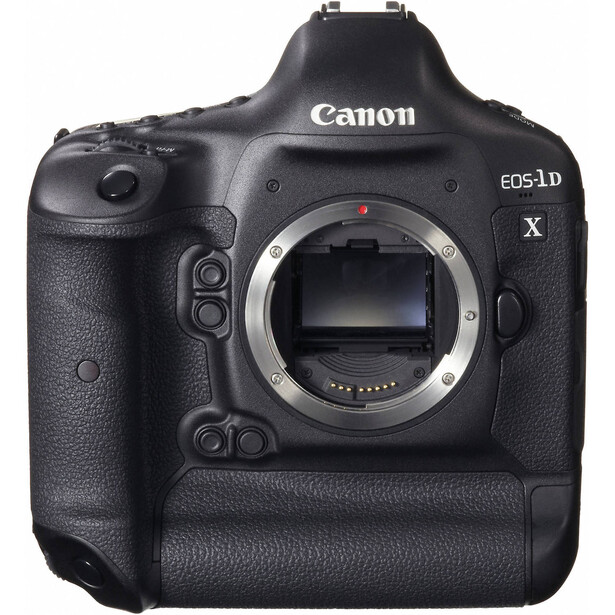
Used Price: ~$750 | Shop Used at B&H
The original Canon EOS-1D X represented Canon's flagship when flagship meant something almost unreachable for ordinary photographers. When it launched in 2012 at $6,800, Sports Illustrated photographers carried these bodies. Olympic coverage ran through these sensors. Network television sports broadcasts relied on images from these cameras. The build quality is genuinely absurd: a magnesium alloy body engineered to survive impacts, weather, and professional abuse that would destroy consumer equipment. At 12 fps with full autofocus tracking (or 14 fps with mirror lockup for JPEG shooters), it defined speed for its era. Today it represents an 89% depreciation that transforms an elite professional tool into an accessible option for serious enthusiasts.
Holding a 1D X reveals immediately what $6,800 of engineering investment feels like. The shutter fires with a precise mechanical authority that makes modern cameras sound like toys. The integrated battery grip provides all-day shooting without swapping power sources. The 61-point autofocus system with 41 cross-type sensors was designed specifically for tracking athletes moving unpredictably at high speed, and that capability translates directly to motorsports, wildlife, and any situation demanding absolute reliability. The camera's 400,000-cycle shutter rating means most used examples have substantial life remaining even after years of professional service.
Key Specs
- Sensor: 18.1 MP full frame CMOS
- Autofocus: 61-point AF system (41 cross-type)
- Burst rate: 12 fps (14 fps with mirror lockup, JPEG only)
- Video: 1080p at 30 fps
- Build: Professional weather sealing, 400,000 shutter rating
The value here lies in professional-grade durability and shooting experience rather than specifications. Holding and shooting a 1D X teaches you what camera manufacturers mean when they claim professional build quality, and it exposes how much consumer bodies compromise in service of price and portability.
The 18.1 megapixel count is genuinely limiting for heavy cropping or very large prints. Video capabilities are ancient by current standards. The body is enormous and heavy, impractical for casual use or extended travel. And it requires CompactFlash cards (UDMA 7 recommended for clearing bursts quickly), an increasingly inconvenient format. But for stills photography in demanding conditions, particularly sports, wildlife, and action work, the 1D X remains a formidable tool that offers an experience unavailable at any other comparable price point.
The Filmmaker's Sleeper: Panasonic Lumix GH5
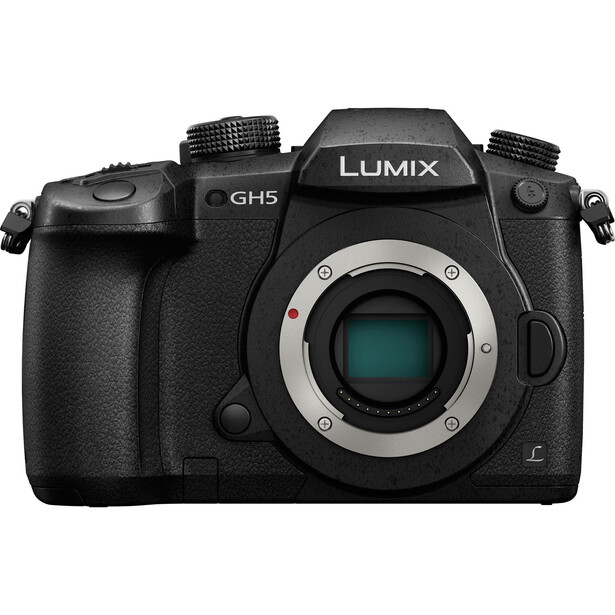
Used Price: ~$650 | Shop Used at B&H
The Panasonic Lumix GH5 was the camera that proved Micro Four Thirds could be taken seriously for professional video production. When Panasonic released it in 2017 at $2,000, the specifications read like a cinema camera: 4K at 60 fps, 10-bit 4:2:2 internal recording at 30 fps, unlimited recording duration, professional-grade codecs, and built-in waveforms and vectorscopes for exposure monitoring. Filmmakers, documentarians, and YouTube creators adopted it immediately, and many have never found sufficient reason to upgrade despite years of new releases. At 68% depreciation, those professional video capabilities become accessible to virtually anyone serious about motion work.
The 10-bit internal recording at 30 fps deserves particular emphasis because it fundamentally changes what's possible in post-production. Eight-bit footage, standard in most cameras at this price point and many cameras costing considerably more, falls apart quickly under aggressive color grading. Banding appears, transitions become harsh, and the flexibility that defines professional color work simply isn't available. The GH5's 10-bit 4:2:2 recording provides latitude that rewards skilled colorists and forgives the exposure variations inevitable in documentary and event work. Combined with Introduction to Video: A Photographer's Guide to Filmmaking, this camera provides everything needed to begin producing professional-quality video content.
Key Specs
- Sensor: 20.3 MP Micro Four Thirds Live MOS
- Video: 4K at 60 fps (8-bit), 4K at 30 fps (10-bit 4:2:2 internal)
- Stabilization: 5-axis Dual I.S. 2
- Recording limit: Unlimited
- Slow motion: 1080p at 180 fps (no continuous AF)
Nothing new under $1,500 matches these video specifications. The unlimited recording duration means the GH5 functions perfectly as a B-camera for interviews, lectures, or documentary work without requiring someone to babysit recording limits. The Micro Four Thirds lens ecosystem includes excellent cinema-style manual focus lenses at prices that would be impossible in larger formats. One note for budget-conscious buyers: V-Log L, the flat picture profile that maximizes dynamic range for color grading, was a $100 paid upgrade on this camera. Look for used GH5 units with V-Log already activated to avoid that additional expense. For video-first shooters, this remains a genuinely professional tool selling at enthusiast prices.
Micro Four Thirds sensors have inherent limitations that matter more for photography than video: shallow depth of field is harder to achieve, and low-light performance cannot match larger formats. The contrast-detect autofocus system works adequately but noticeably trails modern phase-detect hybrid systems in speed and reliability. For stills work, nearly any other camera on this list would serve better. But the GH5 was never really designed for stills photography, and judging it on that basis misses the point entirely.
The Bottom Line
New cameras are exciting. Used cameras are intelligent. For under $800, you can own the same Nikon D750 that working wedding photographers trusted with their livelihoods, the same Canon EOS-1D X that shot Super Bowls and Olympics, or the same Panasonic GH5 that produced professional documentaries and countless YouTube channels. For slightly more investment, the Sony a7R III delivers resolution that nothing new under $2,000 can match, and the Nikon D500 remains untouchable for action photography at anywhere near its price point.
Depreciation works against sellers and rewards buyers. Let someone else absorb the cost of being first.





Join the Fstoppers community for free
-
Post comments and join in the discussions
-
Browse the site ad-free
-
Share your work and get featured in the community
-
Compete in the photo contests for fun and prizes
2 Comments
The a7R III is effectively the best overall option for a used ILC camera in the list. Since Sony offered a decent length of support for firmware updates, as well as performance improvements, the camera has aged very well, with it basically becoming more capable of sports, bird, and wildlife photography over time.
I had to rebuy a Canon 1Dx two years ago, I sold the first one eight years ago when I bought two 5DIV's. This one was mint- for $650 and I plan on holding onto it till it dies.