Picking the right portrait kit gets expensive fast, and the gap between a budget Canon setup and a professional one can easily run into thousands of dollars. James Reader tested two real-world rigs against each other to find out whether that price difference shows up in actual portraits.
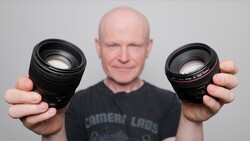
Coming to you from James Reader, this detailed video pits the Canon EOS R8 and Canon EOS RP against the Canon EOS R5 Mark II, with portrait images shot side by side so you can judge them yourself. The budget end pairs either body with the Canon RF 45mm f/1.2, a setup you can find used in the UK for just over a thousand pounds. The expensive end runs the R5 Mark II with the Canon RF 50mm f/1.2 L, which Reader estimates costs about five times more. At normal viewing sizes and on social media, the results from both setups are genuinely close, and Reader's wife, who appears in the photos, liked the results from both.
Zoom in close, though, and differences do emerge. The R5 Mark II's 45-megapixel sensor resolves more fine detail than the 24-megapixel sensors in the R8 and RP, and the RF 50mm f/1.2 L produces smoother, cleaner bokeh, especially in busy, high-contrast backgrounds like backlit branches or flowers. That said, Reader points out that stepping the RF 45mm f/1.2 down to f/2 closes the sharpness gap dramatically, even against the higher-resolution body. The megapixel difference sounds significant on paper, but for social media, web use, and most print work, Reader argues 24 megapixels is more than enough, and in some cases the extra resolution just means larger files, slower editing, and more time spent retouching skin.
One of the more striking findings in the video is what happens when you swap the lenses between bodies. Put the expensive RF 50mm f/1.2 L on the budget RP, and it outperforms the R5 Mark II fitted with the cheaper lens. Reader even shows portraits taken on the Canon EOS R50 V, a crop-sensor camera, using a high-end L-series prime, and the results are sharp enough to make the body almost irrelevant. His consistent conclusion is that lens quality drives image quality far more than the body does, and a good lens stays useful for years or even decades while bodies get replaced on a much shorter cycle. Reader's RF 50mm f/1.2 L was his first purchase when he switched to Canon mirrorless, and he still shoots with it daily.
Beyond image quality, the video also covers autofocus reliability, weather sealing, and dual card slots, and how those practical differences change the math depending on whether you're shooting casually or getting paid. Reader gives clear recommendations on where different types of shooters should actually spend their money, including which body he'd call enough for 90% of portrait work and when the R5 Mark II finally earns its price. Check out the video above for the full rundown from Reader.



Join the Fstoppers community for free
-
Post comments and join in the discussions
-
Browse the site ad-free
-
Share your work and get featured in the community
-
Compete in the photo contests for fun and prizes
No comments yet