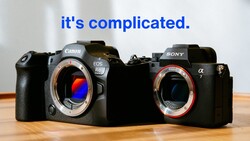
The Canon EOS R6 V sits in a genuinely interesting spot in the lineup, and if you're trying to decide between it, the Canon EOS R6 Mark III, and the Canon EOS C50, the answer is not as obvious as Canon's marketing might suggest.
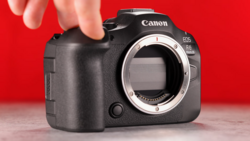
Coming to you from Anthony Gugliotta, this detailed hands-on video breaks down exactly what the R6 V is, what it borrows from other Canon bodies, and where it fits if you already own something in the lineup. Gugliotta notes that the R6 V shares the same sensor as the R6 Mark III and the C50, which is either reassuring or uninspiring depending on what you were hoping for. The body is notably boxy, closer in feel to the C50 than the R6 Mark III, but it's thinner, a bit shorter without the viewfinder, and a couple ounces lighter. There is no mechanical shutter, which matters immediately if you shoot any kind of fast-moving subject and care about rolling shutter. The camera does carry over the mode dial and on/off switch design from the Canon EOS R50 V, and the photo/video dial switches instantly with no center-off detent, which is a real practical benefit for anyone moving between the two.
The active cooling fan is one of the headline features here, and Gugliotta actually ran extended record tests to see what it delivers in practice. At the most demanding setting, 4K 60 fps oversampled recording to both card slots simultaneously, with the fan on low, the camera held up roughly an hour and a half before hitting thermal limits. Bump the fan to medium or high, and that extended to around three hours in a room at approximately 22°C. The tradeoff is noise: on high, the fan is audible, and Gugliotta compares it to a laptop running at full blast. The camera supports dual card slots with CF Express Type B and SD, and the highest resolution available is 7K open gate raw at 2,600 MB/s. For everyday use, Gugliotta has been shooting 4K oversampled H.265 LongGOP, which is the same codec he used on the R6 Mark III.
One of the more nuanced points in the video involves the R6 V's unofficial dual base ISO. Canon doesn't document it, and it works differently than on the C50, which has an explicit menu control to lock the base ISO. On the R6 V, the two bases are 800 and 6,400, and the camera switches automatically. That distinction has real consequences for anyone who wants to shoot at something like ISO 5,000 and still get clean footage. Gugliotta also pairs the camera with the new Canon RF 20-50mm f/4-6.3 IS STM power zoom, and the combination is worth understanding before you decide whether this body makes sense as a run-and-gun setup. His on-camera conversation with colleagues Jonathan and Will gives a useful real-world read on how the form factor feels.
Check out the video above for the full rundown from Gugliotta, including his honest take on whether he'd actually buy one himself and what features he thinks Canon still needs to add.



No comments yet