Not carrying a dedicated camera around? Here's why you should.
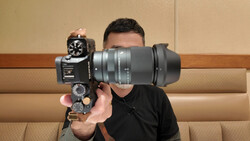
Coming to you from Andrew Andrew, this thoughtful video challenges the idea that a phone is enough for documenting family life. Andrew frames photography as a shared responsibility between parents, not a hobby reserved for one person. He describes how one parent often captures the formal milestones while the other notices the quieter, in-between moments. The posed holiday portrait has value. It gets printed, mailed, placed on a mantle. But the fleeting expression on Christmas morning, the calm look during a board game, the light falling across a kitchen table on a random Tuesday night, those frames tell a different story. He pushes you to consider what perspective you bring and whether you are actively preserving it.
He draws a sharp line between documentation and preservation. A phone captures everything. A dedicated camera asks you to choose. Andrew argues that intent changes behavior. When a camera hangs on your neck or sits in your bag, you stay aware. You scan for light. You anticipate gestures. You remain tuned in. A phone, by contrast, competes for attention with messages, email, and social feeds. You unlock it to take a photo and end up somewhere else. A camera does one job. That limitation creates focus. He also points out that image quality still favors larger sensors, especially in low light, and that quality compounds over decades when those files are printed large or archived.
There is also a social signal at play. When you raise a dedicated camera, everyone knows what is happening. The moment carries weight. Children recognize that something is being recorded with purpose. A phone muddies that signal. It might mean a text. It might mean scrolling. That difference changes how people respond in front of the lens. Andrew acknowledges the counterpoint. Phones can be discreet. They can disappear into the background. But he maintains that the ritual of using a real camera builds a sense of occasion that shapes memory itself.
He goes further than image quality or ergonomics. He talks about process. With a camera, you handle memory cards. You transfer files. You review, cull, edit, archive. That friction builds a habit of curation. Files on a phone drift into cloud storage, social feeds, and forgotten folders. The act of tending to images becomes casual, sometimes nonexistent. Over years, that difference shows up in what survives. He also argues that using a dedicated camera forces growth. You learn light. You learn exposure and depth of field. You stop outsourcing every decision to software. Even if you later reach for a phone, you see better because you trained your eye.
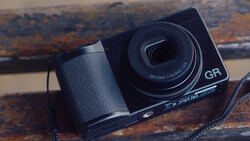
Andrew does not insist on expensive gear, though he admits excitement matters. If a camera makes you want to carry it, that matters more than specs. He hints at tradeoffs, at specific types of cameras that change how you shoot, and at hard-earned lessons from years of rotating through different models. He also shares practical reasoning that goes beyond sentiment and into habit formation and long-term storage choices, areas most people ignore until it is too late. Check out the video above for the full rundown from Andrew.

Join the Fstoppers community for free
-
Post comments and join in the discussions
-
Browse the site ad-free
-
Share your work and get featured in the community
-
Compete in the photo contests for fun and prizes
2 Comments
Sixty seconds worth of content expanded to fill twenty minutes.
The reason I don't like phone photography is that the moment you take a photo with your phone you are then immediately distracted by your pop-ups your messages your DMS your emails your phone calls and everything else that's attached their phone. No one puts their phone into Aeroplane Mode when they're out taking photos I've not met one that does that so it is not mindful. It is a distraction. When you get a camera you are immediately immersed in the settings to make the thing work and you are mindfully working through what you need to to get the shot that's where the beauty of photography comes in as opposed to just clicking a button on a phone. It's not so much about the quality of the images. The new iPhone iPhones and Samsung and Google pixel take great photos. It's not about the photo. It's about the experience.