

The compact camera was supposed to be dead. For the better part of a decade, that was the industry consensus. Smartphone cameras got good enough, the logic went, and nobody needed a separate device just to take pictures. The numbers supported this: from a peak of roughly 120 million units shipped in 2010, compact camera sales collapsed to a small fraction of that by the end of the decade. Analysts wrote eulogies. Manufacturers quietly discontinued product lines. The compact camera joined the portable CD player and the standalone GPS unit in the graveyard of technologies killed by the smartphone.
Except something changed. CIPA's mid-2025 shipment data shows fixed-lens cameras up notably year over year, with a little over a million units moved in the first half of the year, the strongest performance since 2021. More telling than the unit numbers is what happened to value: shipment revenue has been climbing steadily since 2020 even while volumes stayed depressed, a clear signal that buyers are paying premium prices for the compacts they do purchase. At CP+ 2025, Canon executive Go Tokura acknowledged that the category had bottomed out at roughly one-fortieth of its peak but noted that the company was seeing early signs of renewed interest. The compact camera, it turns out, is not dead. It is smaller, more expensive, and culturally repositioned, but it is very much alive.
Two Revivals Sharing a Headline
The story of the compact camera comeback is really two stories that happen to share a trend line. The first story is about premium enthusiast compacts. This is the world of the Fujifilm GFX100RF, a genuinely remarkable product that stuffs a 102-megapixel medium format sensor into a body with a fixed 35mm f/4 lens, roughly a 28mm equivalent field of view. It has already picked up industry award recognition and represents Fujifilm's bet that there is a market for photographers who want medium format image quality without the bulk of an interchangeable lens system. Sony made a similar bet by reviving its full frame RX1 line after nearly a decade of dormancy with the RX1R III. Ricoh released the GR IV, the biggest upgrade in the history of its cult-favorite street photography compact. Even the six-year-old Canon PowerShot G7 X Mark III continues to rank highly at major retailers, with demand that has refused to fade even as Canon pivots its compact strategy toward the video-focused PowerShot V1. What unites these cameras is a design philosophy built around constraint: fixed lenses engineered specifically for their sensors, distinctive color science, physical controls that invite deliberate operation. The product is the limitation, and the limitation is the point.
The second story is about Gen Z, TikTok, and the hunt for Y2K-era digicams. This is the world of vintage Sony CyberShots and Nikon Coolpix cameras from the early 2000s selling for inflated prices on eBay, of the Kodak Charmera, a blind-box keychain camera that gamified the unboxing experience by randomizing which color buyers received, of screenless devices like the Camp Snap that market themselves explicitly as anti-phone. Canon revived the PowerShot Elph 360 HS A, a reissue of a 2016 model, specifically to meet demand from buyers who want something that looks and feels like the cameras they remember from childhood. In this market, low resolution is a feature rather than a bug. Grain, flash artifacts, and what the photography establishment would call "imperfect" rendering are precisely what buyers are paying for. The aesthetic is the product.
These two markets have almost nothing in common except timing. The GFX100RF buyer and the Charmera buyer are not the same person, are not solving the same problem, and would probably not understand each other's purchase decisions. But they are both buying compact cameras in 2025, and that convergence is what makes the trend legible to manufacturers and analysts.
TikTok as Engine
You cannot explain the compact camera revival without talking about TikTok. The platform's hashtag for #digitalcamera has accumulated tens of billions of views. The broader #y2k hashtag, which encompasses fashion, music, and technology from the late 1990s and early 2000s, runs even higher, pushing a staggering 100 billion. This is a generational aesthetic movement with photography at its center.
The trend has identifiable origin points. In 2023, a format emerged on TikTok comparing portraits taken on phones to the same shots captured with dedicated cameras like the Canon PowerShot G7 X. Many users thought the phone photos looked flat and overprocessed, while the Canon photos had warmth, dimension, and character. These comparison videos spread quickly, each demonstrating the same basic finding: dedicated cameras produce images that look meaningfully different from smartphone output. Subsequent attention from celebrities like Bella Hadid, Kendall Jenner, and Charli D'Amelio, all of whom have posted digicam-aesthetic photos to their accounts, amplified the signal further.
The algorithm mechanics here matter. TikTok rewards novelty, and digicam photos look different from the smartphone-captured content that dominates most feeds. That difference makes them scroll-stoppers. A grainy, flash-lit photo with visible date stamps and slightly blown highlights reads as authentic and distinctive in a context where most images have been optimized into sameness. The platform is not just distributing the trend; it is actively selecting for it.
The Anti-Computational Backlash
The phrase "friction with phones" does a lot of work in explaining the compact revival, but it deserves unpacking. What exactly is the friction, and why does it matter enough to drive purchasing decisions?
The core complaint, expressed across countless TikTok videos and Reddit threads, is that smartphone photos look "fake," whatever that means. Users describe phone images as "a little too crisp" and criticize the way computational processing handles scenes. It's often referred to as a "vibe." That word, vibe, appears constantly in discussions of compact cameras. It gestures at something that technical specifications cannot capture.
What is actually happening is that modern smartphone cameras impose priors on every image they capture. The computational photography pipeline includes HDR stacking, noise reduction, skin smoothing, and scene optimization, all of which push the output toward a pre-programmed ideal of what a "good" photo should look like. Night modes synthesize detail that the sensor never actually recorded. Portrait modes simulate depth of field through software rather than optics. The camera is not documenting reality so much as interpreting it, guessing at what you probably wanted to see and delivering that guess as a finished product. The result is that smartphone photos from different users, different phones, and different manufacturers all tend to converge toward a similar look. The processing has a house style, and that style is inescapable.
Compact cameras, especially older ones, do not work this way. They had their own processing pipelines, of course, with noise reduction and sharpening and tone curves baked into their JPEGs. But the processing was less aggressive, less homogenized, and crucially, it failed in different and more legible ways. A photo from a 2007 CyberShot looks the way it does because of the physical characteristics of a small CCD sensor and a plastic lens, not because software decided to synthesize detail that was never there. The flaws are readable. You understand why the image has the character it has, and that legibility turns out to matter to people who have grown suspicious of invisible optimization.
This is the paradox at the heart of the trend: people are not rejecting technology. The Ricoh GR IV is an extremely sophisticated piece of engineering. What they are rejecting is invisible technology that removes them from the process of making an image. A compact camera with manual controls and a fixed prime lens is still technology, but it is technology you can see and understand and work with rather than technology that works on you.
Experience Over Output
The deeper driver of the compact revival is not image quality in any measurable sense. Phones win most technical comparisons. They compensate for smaller sensors with multi-frame HDR and noise reduction pipelines that often outperform small-sensor compacts in difficult light. They offer more versatile focal lengths through multi-camera arrays. If you evaluate cameras purely on output, the phone is the obvious choice.
But output is not the only thing people value. Using a dedicated camera creates a different experience of photography itself. The act of deciding to bring a camera, of pulling it out of a bag rather than a pocket, of raising it to your eye or composing on a screen that does not also contain your email and your anxiety, changes the relationship between photographer and subject. There is intention in the gesture. The camera is not a background utility; it is a foreground choice.
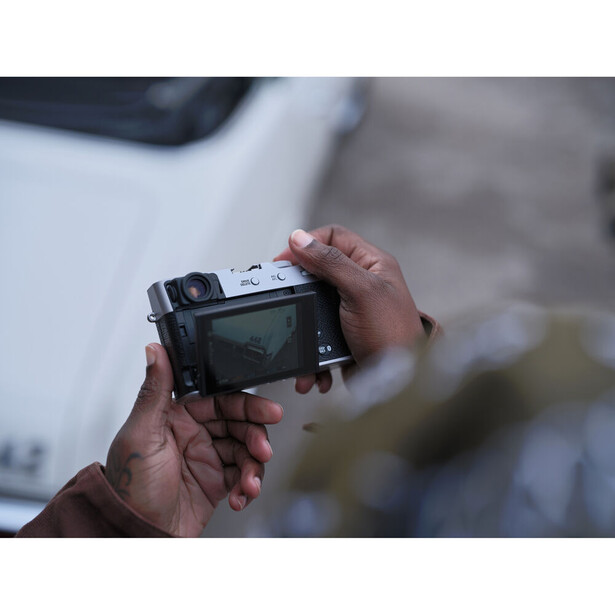
Physical characteristics matter here in ways that smartphone designers have systematically eliminated. The grip of a camera body, the tactile click of a shutter button, the mechanical resistance of a focus ring: these are not just ergonomic considerations but experiential ones. They make photography feel like an activity rather than a reflex. The friction of offloading photos to a computer, of culling without infinite cloud backup, of sharing deliberately rather than instantly, turns out to be a feature rather than a limitation for photographers who have grown exhausted by the seamlessness of smartphone photography and the paralysis of reviewing thousands of nearly identical frames.
The fixed lens is central to this experience. When you shoot with a Ricoh GR and its 28mm equivalent lens or a Fujifilm X100 with its 35mm equivalent, you cannot zoom. You have to move your body to compose the frame. You have to accept what the lens sees or not take the picture. This constraint, which would be a dealbreaker for a general-purpose device, becomes a creative discipline for a dedicated one. It forces you to see differently. The limitations are the product.
What phones cannot sell, despite all their technical capability, is tangibility, constraint, and separation. A camera is an object with presence and weight, a thing you hold rather than a surface you tap. Its limitations force creative choices that unlimited flexibility does not. And critically, it is not also the device that delivers your work email at 11 PM. For a growing number of photographers, that separation alone is worth the price of a second device.
Scarcity and the Attention Flywheel
One underappreciated aspect of the compact revival is how scarcity has become part of the story itself. The Fujifilm X100VI has been perpetually backordered since launch, with waitlists stretching months into the future. The Ricoh GR III, GR IIIx, and GR IV have experienced persistent stock shortages that pushed secondary market prices well above MSRP. The Canon G7 X Mark III has remained periodically hard to buy at MSRP years after release. The Kodak Charmera, sold in blind boxes that randomized which design buyers received, sold out in 24 hours and moved ten times its expected volume; subsequent restocks have disappeared almost immediately, with resale premiums already forming on the secondary market. Vintage digicams have seen eBay prices climb steadily as supply dries up and demand grows.
This scarcity feeds itself through an attention loop. Stock shortages generate press coverage, which generates social media posts about the difficulty of finding units, which generates more demand, which generates more shortages. The hunt for a specific camera becomes content in its own right. TikTok videos about finally securing an X100VI or unboxing a hard-to-find Charmera perform well precisely because the difficulty is part of the narrative. The product becomes more desirable because it is hard to get, and it stays hard to get because it is desirable. Manufacturers have stumbled into a marketing dynamic that luxury brands engineer deliberately.
The Aging Middle
Surveying what manufacturers are actually producing reveals a curious pattern. The premium tier of the compact market is well-served: Sony, Fujifilm, Ricoh, and Leica all offer serious enthusiast compacts at price points above $1,500 and often well above $2,000. The ultra-budget tier is having a moment: Kodak's Charmera and PixPro lines, Canon's revived Elph models, and various screenless novelty cameras all target buyers willing to spend $30 to $400 on something fun and different.
The middle tier exists but has gone stale. Canon's G7 X Mark III, G5 X Mark II, and G1 X Mark III all fall in the $500 to $1,000 range and remain popular, but they date from 2017 to 2019. Canon has not released a genuinely new stills-focused compact design since then; its 2025 PowerShot V1 targets vloggers rather than photographers, and the company has not announced a stills-focused successor to the G7 X series. Sony's RX100 VII, once the benchmark for premium pocket cameras, is six years old with no successor announced. Nikon has exited the pocket compact market entirely, leaving only superzoom bridge cameras in its Coolpix lineup. Panasonic's late-2024 Lumix ZS99 is positioned as a refresh rather than a clean-sheet redesign, leaning heavily on a familiar TZ-series platform. The Fujifilm X half is arguably the only mid-tier compact digital camera doing something interesting at the moment.
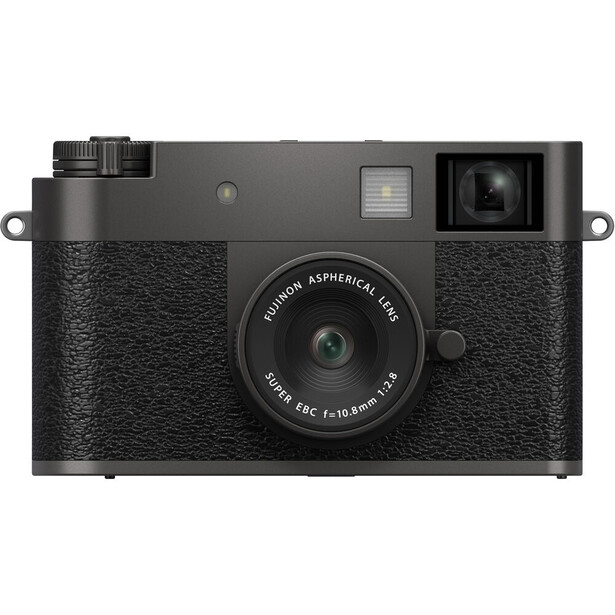
The pattern suggests that major manufacturers have not yet decided the compact revival justifies serious product investment. They are happy to keep aging models in production, restock discontinued budget cameras for trend-chasing buyers, and pivot existing designs toward video. But the commitment required to develop genuinely new mid-market compacts, cameras that would compete with Fujifilm and Ricoh for the enthusiast dollar, has not materialized. Whether that changes depends on whether the current trajectory holds.
What the Trend Is and Is Not
It is worth being precise about claims here. The compact camera revival is real, but it is not a return to the category's former scale. The 120-million-unit peaks of the early 2010s are not coming back. Smartphones have permanently absorbed the casual snapshot market, and nothing about the current trend changes that, nor is there any reason to suspect it will. What is happening is a niche revival, a revaluation of what dedicated cameras offer that phones cannot, and a willingness among a specific subset of buyers to pay for that difference.
The revival is also not proof that compacts are "better" than phones in any objective sense. Phones win on convenience, connectivity, computational capability, and often, image quality. Compacts win on experience, aesthetics, and intentionality. These are different products serving different needs, and the interesting development is that the second set of needs has reasserted itself after years of being dismissed.
Finally, the revival is not purely nostalgic, even though nostalgia plays a role in the Y2K digicam segment. The buyer of a Ricoh GR IV or a Sony RX1R III is not chasing 2005. They want a modern tool that happens to reject the smartphone's design philosophy, a camera built around the premise that constraint and physicality have value.
The Foreground Experience
Phones optimized photography into a background activity. The camera is always in your pocket, always ready, always connected. Taking a photo requires no preparation and no commitment. The special feeling of pulling out a camera I remember from 1997 isn't there. The result is that we take more photos than ever before and value each one less. Photography has become a reflex rather than an intention, a background process running constantly rather than a foreground activity we choose to engage.
Compact cameras are selling the opposite. They are selling the foreground experience: the decision to bring a specific tool, the physical act of using it, the creative constraints it imposes, the distinctive look it produces. Whether that tool is a $6,000 medium format Fujifilm or a $30 Kodak keychain camera, the underlying proposition is the same. You are buying intentionality. You are buying the feeling that the photos you take with this device are yours in a way that phone snapshots never quite feel.
The most interesting thing about the compact camera comeback is not that people want better photos. By most technical measures, phones already produce better photos than many of the compacts flying off shelves. What people want is photos that feel like theirs: images marked by the specific character of a specific tool they chose to use, for reasons they can articulate, in a process they controlled. That feeling, it turns out, is worth paying for. The market is proving it.




Join the Fstoppers community for free
-
Post comments and join in the discussions
-
Browse the site ad-free
-
Share your work and get featured in the community
-
Compete in the photo contests for fun and prizes
3 Comments
I'm so confused by this trend in so many ways. I have many times tried to love my 1" compacts but after dutifully toting them around for months, I give up and go back to something larger for the image quality/low light (where these compacts arguably are being used the most).
I recently sold one of my Canon compact cameras (an SD-something or other - one of the small sensor ones that were the size of a deck of cards and all the rage in the mid-to-late-2000s) for $125, which seemed really high to me. I even warned the young woman that it was, by all accounts, a terrible camera, but she took it for a spin before buying it, loved it and is presumably enjoying it. I'm just glad that young people are using cameras that don't take phone calls again.
This definitely tracks with what I’ve been noticing too. A lot of people seem to be over the whole “good enough” mindset and are gravitating toward the slower, more intentional vibe of using a dedicated camera again. Compact cameras especially make a lot of sense they cut down the setup hassle without trying to replace your phone entirely. It’s kind of like how some photographers and studios still turn to proper gear for certain shoots, even with phones being so capable now. Different tools match different creative moods. The resurgence seems less about specs and more about the experience of actually shooting.
Yet some of these "compacts" are anything but. I still carry around a small, unobtrusive, high quality compact when I don't want to lug my usual stuff.
My compact of choice, a Panasonic LX7 with its F/1.4 lens. The image quality for the sensor size is excellent, best of all, it fits (with a couple of spare batteries), into my jacket pocket. Dirt cheap secondhand if you can find one. The prices charged for the latest models is way over the top, particularly the Leica badged Panasonic's with identical features and the Sony offerings are off the scale. These are mass produced electronics touted in the same way as Rolex.
Meanwhile, look at the premium prices charged for the Canon G10/11/12/15/16 compacts to get a flavour.