
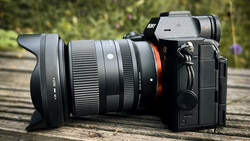
Sigma has announced the Sigma 20-60mm f/2.8-4 DG | Contemporary, a compact full frame zoom for L-Mount and Sony E-mount cameras. The lens covers a range from an unusually wide 20mm through 60mm while keeping its weight to 385 g in the L-Mount version.
The new lens will be available beginning October 6, 2026, with a suggested retail price of $849. Sigma is positioning it as a general-purpose option for photographers and hybrid creators who want a wider starting point than is typical of standard zooms without moving to a dedicated ultra-wide zoom.
A 20-60mm Range in a Compact Design
The main distinction of the 20-60mm f/2.8-4 DG | Contemporary is its focal length range. Rather than beginning at 24mm, as many general-purpose zooms do, it starts at 20mm and extends to 60mm. That gives photographers additional room for landscapes, architecture, interiors, travel photography, and environmental images while still reaching focal lengths suitable for everyday subjects and portraits.
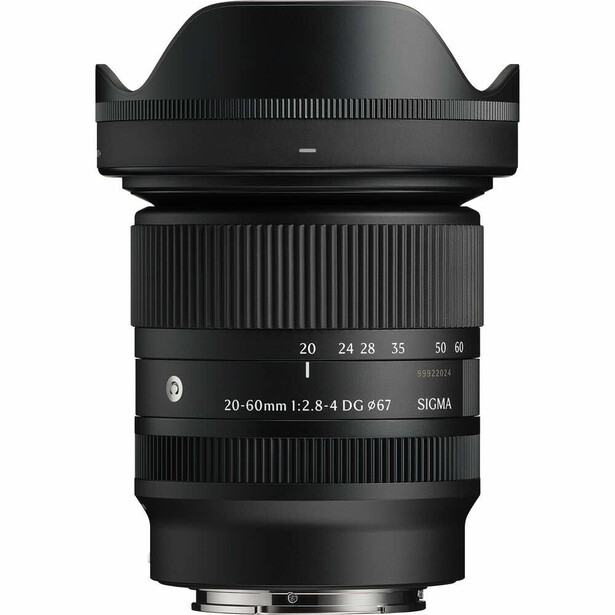
Its maximum aperture is f/2.8 at 20mm, narrowing to f/4 toward the long end of the zoom range. Sigma specifically points to indoor and nighttime photography as situations where the f/2.8 maximum aperture at the wide end could be useful.
Despite covering a 3x zoom range beginning at 20mm, the lens weighs 385 g in its L-Mount configuration. Sigma has designed the Contemporary-series lens around portability, making it a potentially useful option for travel, hiking, everyday photography, and lightweight video kits.
Optical Design and Close-Focusing Performance
Internally, the lens uses 15 elements arranged in 13 groups. The design includes three aspherical elements and three SLD glass elements, which Sigma says are used to maintain image quality throughout the zoom range and control optical aberrations.
Close focusing is another notable part of the design. At 28mm, the minimum focusing distance reaches 15.8 cm. Maximum magnification is 1:2.3 at 35mm, which brings the lens relatively close to half-macro reproduction. At 60mm, it still provides a maximum magnification ratio of 1:2.9.
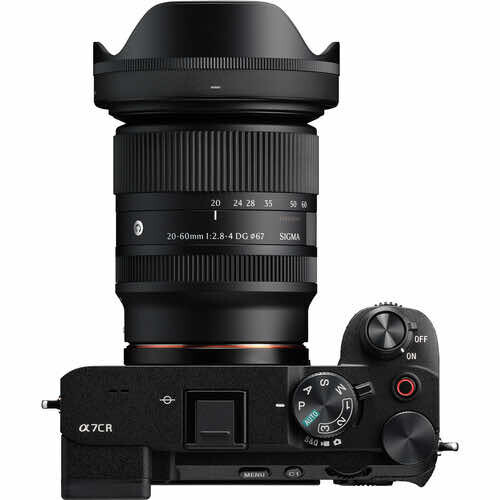
That combination could make the lens useful for photographing details, food, products, flowers, and other smaller subjects without carrying a separate macro lens.
Sigma also says the optical design has been developed to reduce flare and ghosting when shooting into or around strong light sources.
Autofocus and Video Features
Autofocus is driven by Sigma's HLA, or High-response Linear Actuator. According to the company, the linear motor is intended to provide fast, precise, and quiet focusing as well as tracking performance suitable for moving subjects and high frame-rate shooting.
The autofocus design is also intended for hybrid photo and video use. Sigma says focus breathing has been minimized so that framing changes are reduced during focus pulls, which should be particularly relevant to video shooters.
The lens incorporates a dust- and splash-resistant construction, although Sigma notes that it is not waterproof. The front element also receives a water- and oil-repellent coating intended to make the lens easier to use and maintain in outdoor conditions.
Key Specifications
- Format: Full frame
- Focal length: 20-60mm
- Zoom ratio: 3x
- Maximum aperture: f/2.8 at 20mm to f/4 at the long end
- Optical construction: 15 elements in 13 groups
- Special elements: Three aspherical elements and three SLD glass elements
- Minimum focusing distance: 15.8 cm at 28mm
- Maximum magnification: 1:2.3 at 35mm
- Maximum magnification at 60mm: 1:2.9
- Autofocus motor: HLA (High-response Linear Actuator)
- Video consideration: Designed to minimize focus breathing
- Construction: Dust- and splash-resistant
- Front element coating: Water- and oil-repellent
- Weight: 385 g for the L-Mount version
- Available mounts: L-Mount and Sony E-mount
- Suggested retail price: $849
- Release date: October 6, 2026
Why It Matters for Photo and Video Creators
The 20mm starting point is arguably the most significant aspect of this lens. Standard zooms are frequently chosen because they can remain on a camera for a large portion of a shoot, but photographers who regularly need wider coverage may still have to switch lenses. Extending a general-purpose zoom down to 20mm changes that calculation.
For travel and landscape photographers, 20mm adds considerably more flexibility for large scenes while the 60mm end remains useful for tighter compositions and portraits. Event and documentary photographers could similarly move from broad establishing photographs to more isolated subjects without changing lenses.

The close-focusing specifications also broaden the lens's usefulness. A 1:2.3 maximum magnification ratio at 35mm is substantial for a standard zoom and could reduce the need to carry a separate close-up lens for detail photographs during travel, events, or commercial work.
For video creators, the combination of a 20mm starting focal length, relatively low weight, quiet linear autofocus, and reduced focus breathing is particularly relevant. Wide focal lengths are useful for handheld shooting, small interiors, environmental footage, and situations where the camera is positioned close to the operator. At 385 g for the L-Mount version, the lens should also be comparatively easy to incorporate into compact handheld or stabilized setups.
There are tradeoffs. This is a variable-aperture zoom rather than a constant-f/2.8 design, and its 60mm long end does not provide the reach of a conventional 24-70mm zoom. Whether those compromises matter will depend heavily on the type of work being done. Someone who prioritizes portraits or longer focal lengths may prefer additional reach, while photographers and filmmakers who repeatedly find 24mm insufficient may see the 20mm starting point as more valuable.
Conclusion
The Sigma 20-60mm f/2.8-4 DG | Contemporary takes a somewhat different approach to the standard zoom by trading some reach at the long end for a wider 20mm starting point. Combined with a 385 g weight, close focusing down to 15.8 cm, 1:2.3 maximum magnification, HLA autofocus, and video-oriented focus-breathing control, it is designed as a compact all-purpose lens rather than simply another variation on the traditional 24-70mm formula.
It will be available for L-Mount and Sony E-mount beginning October 6, 2026, at a suggested retail price of $849.


Join the Fstoppers community for free
-
Post comments and join in the discussions
-
Browse the site ad-free
-
Share your work and get featured in the community
-
Compete in the photo contests for fun and prizes
No comments yet