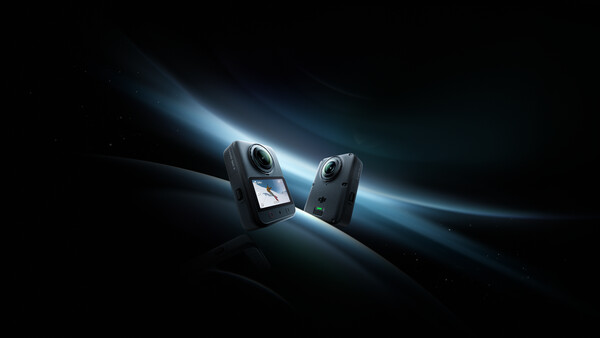
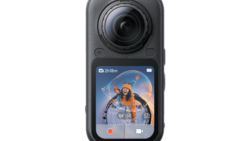
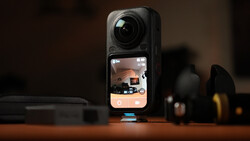
DJI just gave the 360 camera market something to catch up to. Building on more than 12 years of imaging expertise, the Osmo 360 II delivers new capabilities rooted in a shared lineage from previous generations of DJI's creative camera technology, from the Osmo 360 to the Avata 360.
The original Osmo 360 introduced a purpose-built square CMOS sensor—a first for panoramic cameras that elevated industry standards. Typically, a 360° lens has a circular image field and only uses the inscribed circle. That means conventional rectangular sensors essentially waste 25% of their area. With a higher utilization efficiency, DJI's dual square 1/1.1-inch sensors enable its 360 camera to deliver native 8K with large 2.4μm pixels. In practical terms, this means image clarity doesn't degrade when you crop 360 footage. Later, the Avata 360 put the sensor to the test under extreme operating conditions, such as high-speed flights and maneuvering through tight gaps. The Osmo 360 II builds directly on this foundation, refining what a panoramic sensor can achieve.
Since launching at IFA 2026, the Osmo 360 II has earned widespread acclaim and won 17 “Best of IFA” awards from CNN Underscored, Tom's Guide, Mashable, Gizmodo, Digital Trends, Apple Insider, and more.
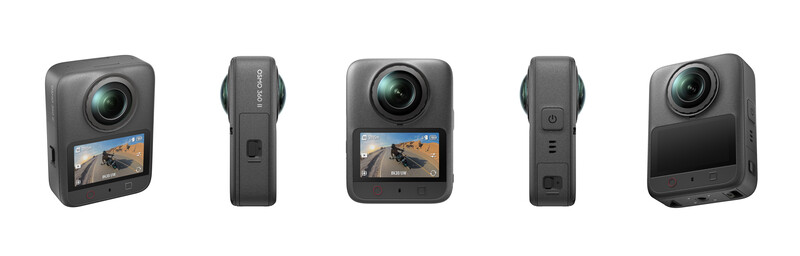
The Osmo 360 II introduces a new tracking mode that keeps a subject centered no matter how the camera spins, and tackles two of the biggest headaches in panoramic shooting: framing on the fly with no one else there to help, and stitching issues that have cropped up in 360 footage. These upgrades ensure a single creator can produce footage that looks like it had far more hands and time involved.
In most scenarios, creators shooting on the move don't have a crew. There's no one framing a second angle while the main shot is being captured, and it is time-consuming to reframe everything in the edit. DJI is positioning the Osmo 360 II as more than an action camera or a novelty for fun clips or a standard video camera; they have created a flexible production tool for creators covering travel vlog content, behind-the-scenes footage, lifestyle content, brand campaigns, and live events without carrying a full setup or having your own team. The 8K panoramic director's camera framing is built to cover the jobs a small crew would normally handle, so a single shooter can still walk away with footage that gets it right in-camera. Shooting in 360°, of course, means multiple angles are captured by default, which removes a lot of the risk of missing a shot in the first place.
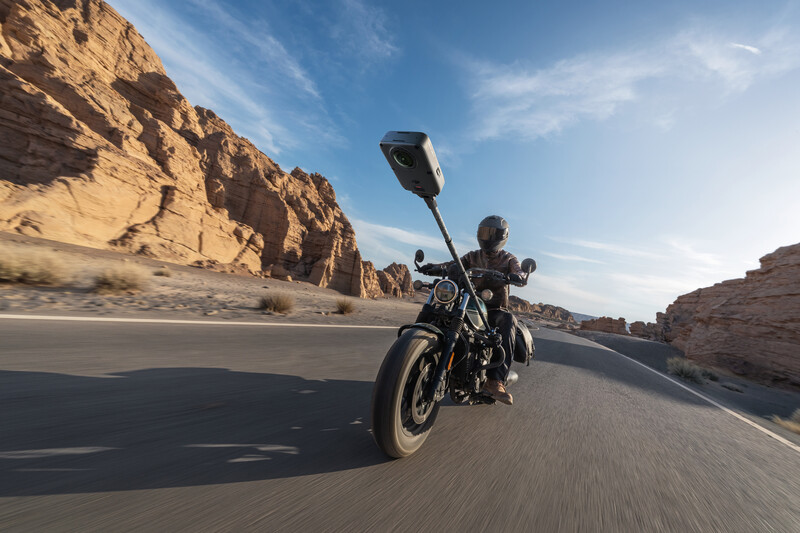
The original Osmo 360 introduced a 1/1.1-inch square CMOS sensor built specifically for panoramic shooting, a design that's since been adopted across the industry. This second-generation release builds directly on that foundation, refining what a panoramic sensor can achieve.
Key Tech Specs
- 1/1.1-inch CMOS sensor
- 8K/60 fps 360° video
- 14.5 stops of dynamic range
- AI SuperNight 2.0 low-light noise reduction
- 2.4 μm pixels for reduced motion blur in fast action
- 120 MP HDR 360° photo
- 16K 360° timelapse
- 64x Pano Slow Motion
- 8K/120 fps Vortex slow motion
- 10-bit color with D-Log M across all video formats
- 105 GB built-in storage
- Replaceable, ultra-hard lenses
- Spotlight Follow AI subject tracking
- NFC quick connect to the DJI Mimo app
Imaging Improvements
The Osmo 360 II now offers SuperNight 2.0, a noise reduction pass built for low-light shooting, and 2.4 μm pixels, which help to keep fast action sharp and free of motion blur. Add in a dynamic range of 14.5 stops, which doubles the brightness range that the sensor can capture. Creators can freeze any scene as an HDR 360° photo with accurate lighting and contrast.
The 360° Timelapse can deliver remarkable image quality at up to 16K. With the right mode, it can condense sweeping skies into an epic flow of time with breathtaking clarity. With DJI Studio's Super Slow Motion mode, you can slow a video down by up to 8x. This means a normal video at 8K 60fps will slow down to 8K 480 fps, while slow motion mode at 4K 240fps will slow down to 4K 1920fps. Whatever video format you choose, every format now supports 10-bit color depth, capturing over a billion colors.
Handling the Framing Problem
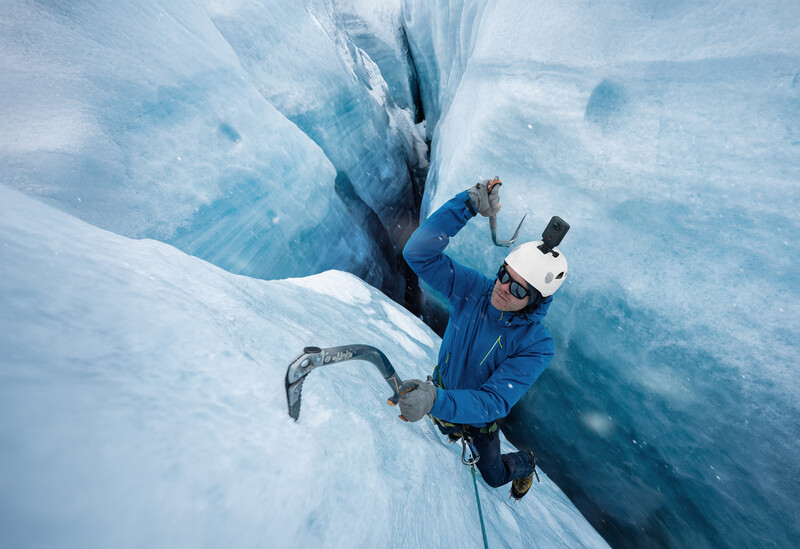
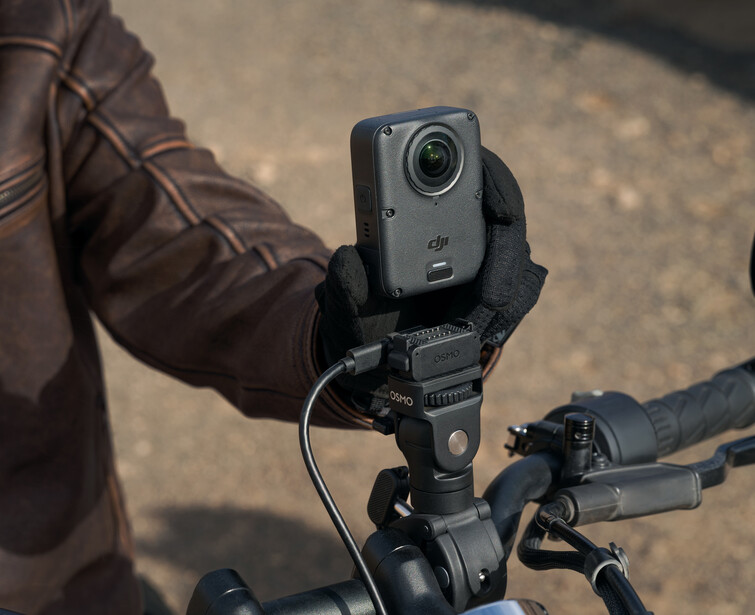
Spotlight Follow is a key feature in this second-generation model. It uses AI to lock onto a subject and keep them centered no matter how the camera itself moves or rotates, removing the need to reframe every clip manually in the edit. For anyone shooting solo, that time saved is going to change your practice, leaving your creative energy to focus on your next idea or project.
Solving the Stitching Problem
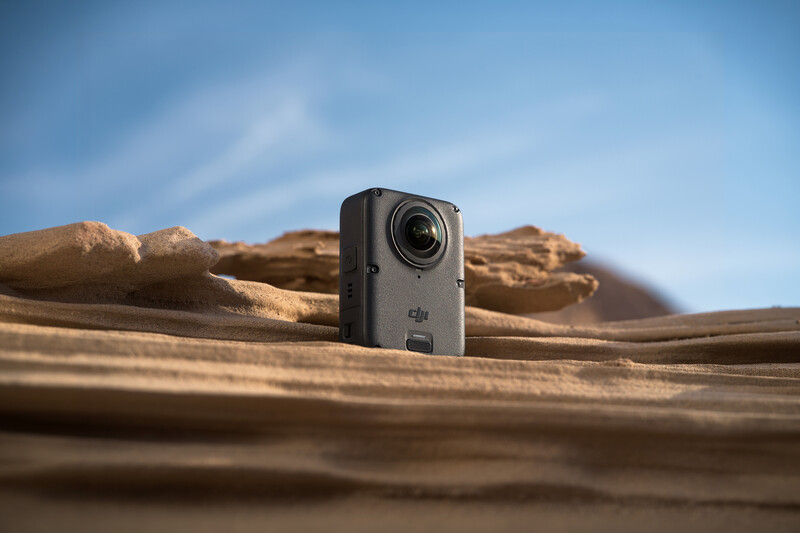
Stitching is where 360 cameras in general have traditionally lagged, especially for subjects closer to the lens. DJI has refined this capability through generations of panoramic cameras, starting with the first-generation Osmo 360 and later validated through the Avata 360. When using this technology on a camera drone, DJI performed and refined image stitching under extreme operating conditions, such as high-speed flight and maneuvering through tight gaps. With the Osmo 360 II, DJI's stitching engine now on its third generation, and trained on thousands of images and spatial calibration data specifically aimed to eliminate any near-field misalignment.
Built to Shoot the Moment It Powers On
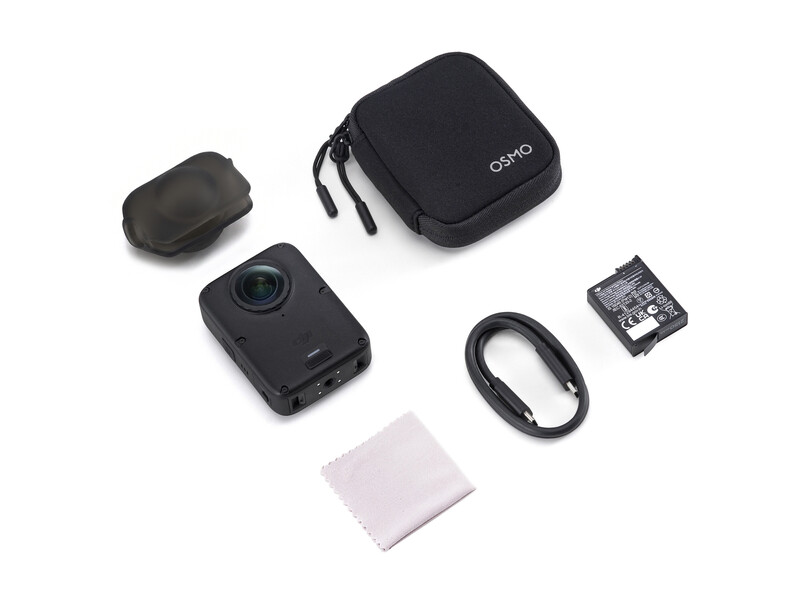
With 105 GB of built-in storage and 8K/30 fps as the default recording mode, this new 360 camera is ready to go without reaching for external memory, which is what matters most when trying to capture something before it passes by. An instant Snapshot mode adds to that readiness, letting the camera capture the moment it powers on rather than waiting through a setup process.
Tap the camera to a phone over a new NFC area to connect with an improved Mimo app, move files across, and get straight into editing. DJI is leaning on AI to shorten that process further, with automatic moment selection, smart transitions, and one-tap video generation in Mimo. For anyone working in a proper NLE rather than a phone app, DJI Studio exports 360 files that work directly into a DaVinci Resolve plugin, so the workflow doesn't have to stay mobile-only.
Final Thoughts
The Osmo 360 II arrives at a moment when panoramic cameras are having to work harder to stand out and deliver on the demands of the modern shooter, with AI tracking, automated stitching, and quick editing tools being prioritized by users. What is special here is DJI putting all of them into one panoramic camera which is specifically aimed at creators who need to shoot on the go without a crew behind them. Demand for professional-quality content produced quickly and delivered across multiple platforms is ever growing, and that's the space that the Osmo 360 II occupies as a contender for the best 360 camera available; combining portability, accessibility, and creative potential, even for users with limited experience. That potential is a technical advantage, in that each take can be reframed into wide establishing shots, tight portrait crops, or vertical cuts, meaning one take can turn into multiple possibilities.



Join the Fstoppers community for free
-
Post comments and join in the discussions
-
Browse the site ad-free
-
Share your work and get featured in the community
-
Compete in the photo contests for fun and prizes
No comments yet