The Fujifilm X100VI is the kind of camera people buy to carry everywhere, and that only works if it keeps delivering once the light fades and the rain starts. A fixed 23mm lens and a body small enough for a coat pocket come with real limits compared with a larger interchangeable lens kit.
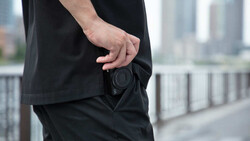
Walking through central London on a wet evening, OpticalWander puts the Fujifilm X100VI through exactly the kind of shooting it was built for: red buses, umbrellas, pub fronts, and people hurrying across the road. He starts in auto and steers the exposure with compensation, then moves to full manual once the light drops and he wants more room to work. He calls it by far the best everyday pocketable camera you can buy in 2026, and part of his case is its size. Because it is so light and easy to use, he gets frames he wouldn't get with a bigger Sony or Hasselblad setup, and it feels less intrusive, so he can interact with the public more. The rain, meanwhile, plays to one of his favorite subjects, reflections, with a puddle on Piccadilly giving him one as people with umbrellas walk through the frame.
At Elizabeth Tower, he focuses manually through a puddle so the clock tower sits sharp in the reflection. He uses a longer exposure so people walking through the frame blur while the tower stays in focus. He then shows a variation: once the shutter opens on a 1-second exposure, he moves the frame, waits, and repeats that a few times, so several offset copies of the scene stack into a single image. He offers it as a way to get something more creative than the standard shot at one of the most photographed views of Elizabeth Tower. He returns to the idea later in the evening with St. Paul's Cathedral, framed from a street he rates as one of London's best spots for car photography.
The X100VI has a built-in 4-stop ND filter, which lets you slow the shutter in brighter conditions without screwing glass onto the front, so motion-blur shots don't have to wait for dusk. What he demonstrates at Elizabeth Tower belongs to a broader technique called intentional camera movement, where you move the camera on purpose during the exposure to get abstract, painterly results. A small fixed-lens body is easy to swing with control, which makes it a good tool for learning the technique. Start with exposures between half a second and two seconds, look for scenes with strong contrast between light and dark, and expect to delete most frames while you figure out the timing. For nights like this one, Fujifilm rates the X100VI as weather resistant once you add the AR-X100 adapter ring and PRF-49 protector filter, which takes some of the worry out of shooting without a free hand for an umbrella.
He doesn't present the camera as flawless. Autofocus can sometimes be a little slow, and in the rain he focuses on a fixed spot and lets people walk into a frame he has already composed. He also takes the 40-megapixel APS-C sensor to ISO 12,800 in a spot he describes as genuinely dark, and he shows the straight-out-of-camera JPEG next to an edited raw file. He adds grain to his photos anyway, for the aesthetic, so high-ISO noise matters less to him. His view is that most current cameras are close enough on low-light performance that the endless debate about who handles ISO best has gone stale. He calls the ISO 12,800 result very impressive and says he can't fault the camera in low light.
His closing verdict on the X100VI as an all-round camera is in the video above.




Join the Fstoppers community for free
-
Post comments and join in the discussions
-
Browse the site ad-free
-
Share your work and get featured in the community
-
Compete in the photo contests for fun and prizes