Filters are the last piece of gear that still cannot be replaced in software. You can fake a blurred waterfall with a stacked exposure and fake a glow with a Photoshop layer, but nothing in Lightroom removes the reflection from the surface of a pond or from the leaves of a wet forest, because that light never reached the sensor in a usable form. A polarizer does. That is why a photographer with a flagship body still carries glass worth a fraction of the camera.
Three questions decide what you buy. How dark do you need the world to get, which is the neutral density question. How fast do you need to change your mind, which is the screw-in versus magnetic versus square-system question. And how much color neutrality will you pay for, because a cheap 10-stop filter hands you a magenta image that takes real work to correct.
The picks below span solid NDs, variable NDs, polarizers, a full square system, diffusion glass, and a magnetic ecosystem. Every one has a real weakness, and each entry states it rather than burying it. Every specification here was re-verified against the manufacturer's current spec page and a live retailer listing, and where an entry describes how a filter behaves, that behavior is grounded in its published specifications and optical design.
At a Glance
- Best ND: B+W MRC Nano Master #810 ND
- Best Variable ND: PolarPro Peter McKinnon Signature Edition II Variable ND
- Best Circular Polarizer: NiSi True Color Pro Nano CPL
- Best Filter System: Kase Armour 100mm Master Holder Kit
- Best Budget: K&F Concept Nano-X Series ND 4-Filter Set
- Best Creative and Diffusion Filter: Moment CineBloom Diffusion Filter
- Best Magnetic System: NiSi JetMag Pro Cinema Magnetic Filter Kit
- Best Variable ND With a Built-In Polarizer: H&Y RevoRing Mark II Variable ND and CPL
Best ND: B+W MRC Nano Master #810 ND
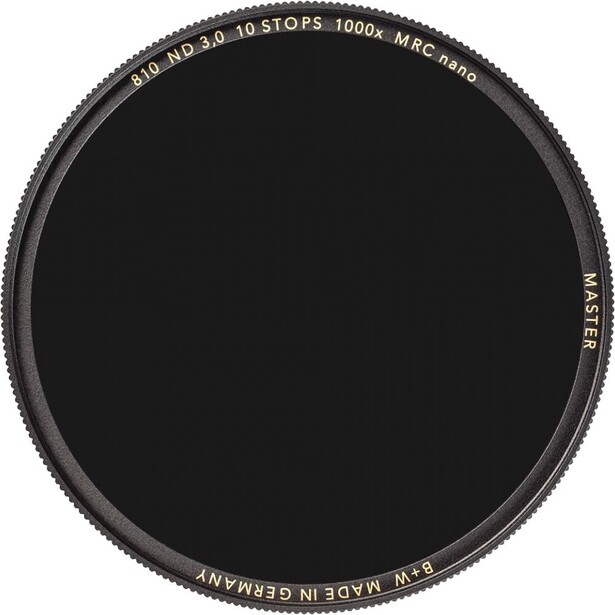
- Type: Solid (fixed) neutral density, screw-in
- Density Range: 10 stops, optical density 3.0 (the Master line also covers 2, 3, and 6 stops)
- Optics and Coating: SCHOTT optical glass with MRC nano coating on both surfaces
- Frame: Slim brass ring with knurled top edge, rated by B+W for lenses as wide as a 17mm full frame equivalent
- Sizes: 30.5mm through 95mm
- In the Box: Filter and drawstring pouch, in plastic-free packaging
- Price: $135.95 (B&H)
A solid ND does one thing, and the only question is whether it does that thing without staining your file. The B+W MRC Nano Master #810 is the filter most working landscape photographers reach for when they want to stop worrying about it. B+W builds the Master line on SCHOTT glass with MRC nano coating on both faces, and the specification the company leans on is uniform transmittance across the visible spectrum. A 30-second exposure of a gray coastline comes back gray, not the purple-brown a cheap 10-stop filter produces when it lets infrared leak through.
Ten stops is the density that unlocks the pictures people buy ND filters for. In bright midday light it drags a 1/500 second exposure out to roughly two seconds, long enough to smear surf into fog. The Master line holds among the most neutral color of any 10-stop filter, leaving a clean gray where cheaper glass drifts warm or green. The brass ring is the quiet reason it survives years of use: brass does not gall against an aluminum lens thread, so the filter comes off in the cold without a strap wrench. B+W also keeps the ring slim enough to rate it for a 17mm full frame equivalent, so it will not clip the corners of a standard ultra-wide zoom.
The honest limitation is that it is a single fixed density, and it costs real money for one. Ten stops is too much filter for a moody overcast morning, where three or six stops is the right call, so the Master line quickly becomes a two-filter purchase. At 10 stops the viewfinder is close to black, so you compose and focus before the filter goes on. For a photographer who mostly shoots on a tripod and wants a file that needs no color rescue, check the current price of the B+W MRC Nano Master #810 ND at B&H. Long exposures also demand a rigid platform, which our tripods guide covers.
What We Like
- Among the most color-neutral solid NDs you can buy
- Brass ring resists binding on the lens thread
- MRC nano coating sheds water and fingerprints
What Could Be Better
- One fixed density per filter, so a full kit gets expensive
- At 10 stops the viewfinder is effectively black, forcing you to compose first
- Screw-in mounting is the slowest way to change filters
Best Variable ND: PolarPro Peter McKinnon Signature Edition II Variable ND
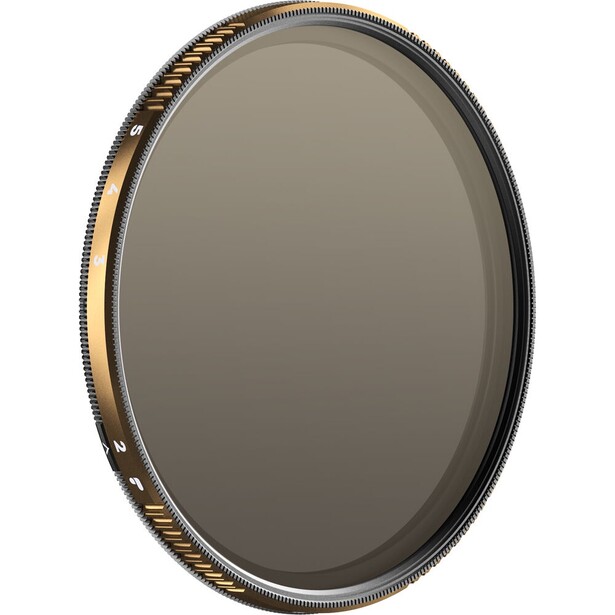
- Type: Variable neutral density, screw-in
- Density Range: 2 to 5 stops, or 6 to 9 stops (sold separately)
- Optics and Coating: Cinema Series quartz glass rated by PolarPro to resolve 8K, with 16 layers of anti-reflective and scratch-resistant coating
- Frame: Slim frame with haptic click stops and hard limits at each end of the range
- Sizes: 49mm, 67mm, 77mm, 82mm, and 95mm
- In the Box: Filter, Defender 360 case, microfiber cloth
- Price: $249.99 (B&H)
Variable NDs earned a bad reputation for a specific and visible reason. Turn most of them past their intended range and two polarizing layers cross, producing an ugly dark X across the frame. The Peter McKinnon Signature Edition II solves that in the most boring and most effective way available: it will not let you. PolarPro splits the range into two filters, one running 2 to 5 stops and one running 6 to 9, and puts a mechanical hard stop at each end, so you physically cannot rotate into the cross-polarization zone. The ring clicks into each whole stop, so you can change density with your eye at the finder and a glove on your hand.
Optics are the other half of the argument. PolarPro builds the filter on quartz glass it rates for 8K sensors, wraps it in 16 layers of anti-reflective coating, and across a full rotation its color shift stays small enough to leave alone rather than fight in post, which is not something most variable NDs manage. The company also states zero vignetting down to 16mm.
What it costs you is money and drawer space. Covering the 2-to-9-stop range means buying two filters, and neither incorporates a polarizer, so killing reflections means adding a third piece of glass. The Defender 360 case is genuinely good and genuinely bulky. For a hybrid shooter holding 1/50 second at f/2.8 through changing light, nothing else here is as calm to use, so check the current price of the PolarPro Peter McKinnon Signature Edition II Variable ND at B&H. Also consider the Black Mist version of the same filter, offered in both stop ranges, if you shoot faces and want diffusion baked in.
What We Like
- Hard stops make cross-polarization impossible
- Haptic click stops let you set density without looking
- Very low color shift across the full rotation, with no vignetting stated down to 16mm
What Could Be Better
- Full 2-to-9-stop coverage requires buying two filters
- No polarizer function at all
- Among the priciest screw-in variable NDs
- The excellent case is bulkier than a pouch
Best Circular Polarizer: NiSi True Color Pro Nano CPL
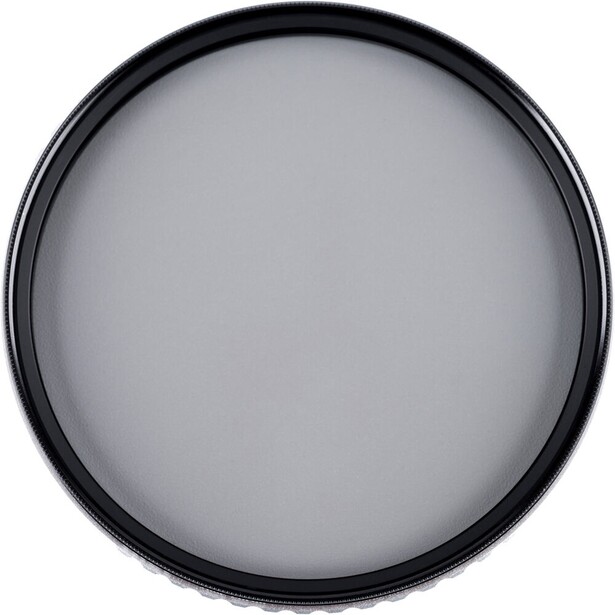
- Type: Circular polarizer, screw-in
- Density Range: Not applicable, though a polarizer costs roughly one to two stops of light
- Optics and Coating: Optical glass with True Color polarizing film, Pro Nano coating, and Cine seal edge blackening
- Frame: Two-tone aluminum, silver rear ring and black front ring, with front threads for a cap or a second filter
- Sizes: 40.5mm through 95mm, with a separate brass-frame version in the largest diameters
- In the Box: Filter and case
- Price: $139 (B&H)
Every polarizer removes glare. The reason to spend more on one is what it does to color while it is doing that. Traditional polarizing film runs slightly warm and pushes a scene amber, which shows up in snow, in white architecture, and under overcast skies, precisely where landscape photographers use one. NiSi built the True Color Pro Nano CPL around a polarizing film engineered to strip that warm bias out, and it ranks among the most color-neutral polarizers in wide circulation. You get the wet rock going saturated and the reflection lifting off a river, without a white balance you did not ask for.
The construction details are the sort that only matter after two seasons. NiSi blackens the edge of the glass with what it calls Cine seal technology, which cuts internal reflections and keeps moisture out of the laminate when the filter goes from a cold pack to a warm car. The two-tone frame is not cosmetic either: the silver rear ring makes it obvious which way the filter faces when you are fumbling in a headlamp beam. The front ring is threaded, so a lens cap or a second filter still goes on top.
A polarizer is also the filter most likely to ruin a photograph if you do not understand it. On a lens wider than about 24mm on full frame, the effect is strongest 90 degrees from the sun and weakest pointing at or away from it, so a wide sky comes back with a dark band across part of it and a pale band across the rest. Rotate it wrong and you flatten the very reflections you wanted, because water with no sheen looks dead. It also costs a stop or more of light. Learn the tool, then buy the good one, and check the current price of the NiSi True Color Pro Nano CPL at B&H.
What We Like
- The most color-neutral polarizing film in common use
- Cine seal edge treatment resists moisture ingress
- Sizes from 40.5mm up, which suits small primes as well as zooms
What Could Be Better
- Uneven sky darkening on wide angle lenses is physics, not a defect, but it will bite you
- Costs a stop or more of light you may not have
- You need one per filter thread unless you use step-up rings
- Rotating it for every recomposition slows you down
Best Filter System: Kase Armour 100mm Master Holder Kit
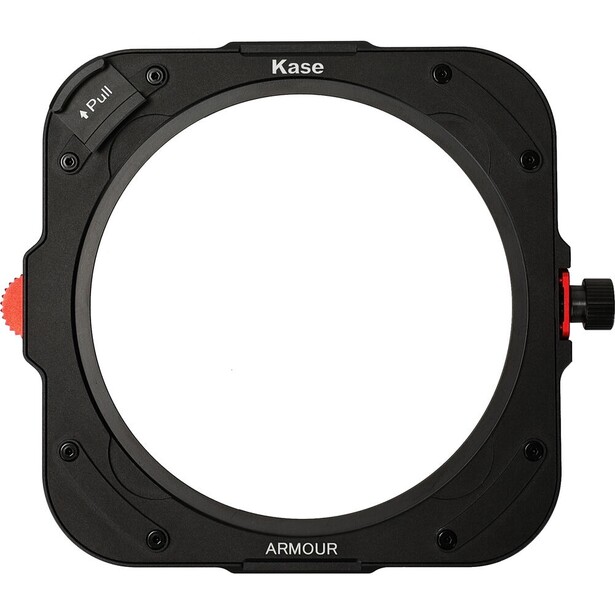
- Type: 100mm square filter system with a magnetic holder
- Density Range: Magnetic ND64 (6 stops) and ND1000 (10 stops), plus 100 x 150mm soft graduated NDs at 0.9 (3 stops) and 1.2 (4 stops) and a 0.9 reverse graduated ND
- Optics and Coating: Toughened multicoated optical glass squares with a 95mm magnetic circular polarizer
- Frame: Aluminum holder with magnetic frames for 100 x 100mm and 100 x 150mm filters
- Sizes: 77mm and 82mm magnetic adapter rings, plus 67-82mm and 72-82mm step-up rings
- In the Box: Holder, 95mm CPL, ND64, ND1000, three graduated NDs in magnetic frames, two adapter rings, two step-up rings, lens cap, and soft bag
- Price: $999.95 (B&H)
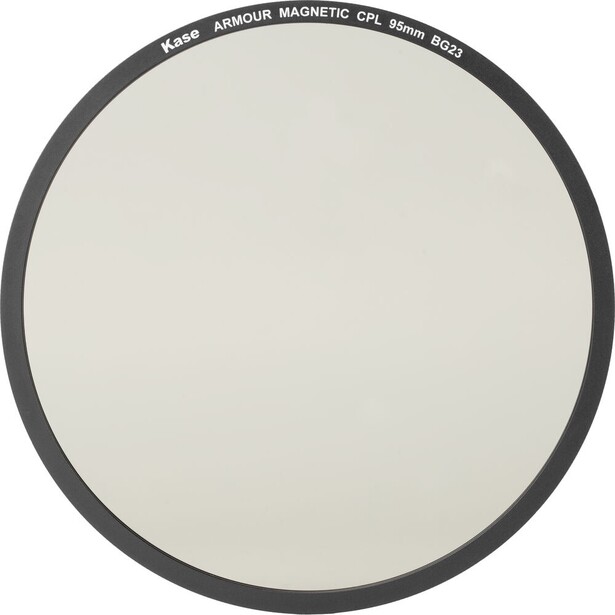
Square systems exist for one job screw-in filters cannot do. A graduated ND darkens the sky and leaves the land alone, and placing its transition on your horizon means sliding it up and down, which is impossible on a round filter. The Kase Armour 100mm Master Holder Kit is the system we would buy, because Kase fixed the two things that make traditional holders miserable. The 95mm polarizer mounts magnetically behind the holder and rotates independently, and every square filter snaps into a magnetic frame that clicks onto the holder rather than sliding through a slot, which is the difference between placing a graduated ND with cold hands and dropping it in the sand.
This is the complete answer rather than a starter set. It ships with the ND64 and ND1000 that cover the useful long-exposure range, two soft graduated NDs (0.9 and 1.2) and a 0.9 reverse graduated ND for the horizon situations that actually occur (a broken skyline, and a hard sea horizon with the sun sitting on it), the 95mm polarizer, two magnetic adapter rings, two step-up rings, and a bag. The magnetic frames accept any 100 x 100mm or 100 x 150mm glass from 1.1 mm to 2.1 mm thick, so filters you already own from Lee, Haida, or Formatt Hitech drop straight in, and the holder takes up to four squares at once.
Now the cost. This is the most expensive pick here by a wide margin, and it is a bag full of gear rather than a filter in a jacket pocket. The magnets pick up beach grit and need wiping, and the whole kit is overkill unless you shoot landscapes seriously and often. If graduated NDs are not part of how you work, buy the polarizer and the solid ND above and put the difference toward glass. For the landscape photographer tired of the holder being the reason the shot got away, check the current price of the Kase Armour 100mm Master Holder Kit at B&H. Elia Locardi's Photographing the World: Landscape Photography and Post-Processing tutorial builds most of its long-exposure work around exactly this kind of kit.
What We Like
- Magnetic frames make swapping square filters genuinely fast
- Rear-mounted 95mm polarizer rotates independently of the holder
- Frames accept square glass from any brand at 1.1 mm to 2.1 mm thick
- Covers solid ND, graduated ND, and polarizing in one purchase
What Could Be Better
- By far the most expensive option here
- Bulky enough to change how you pack a bag
- Magnets attract grit and need regular cleaning
- Overkill for anyone who does not shoot graduated NDs
Best Budget: K&F Concept Nano-X Series ND 4-Filter Set
- Type: Solid neutral density set, screw-in
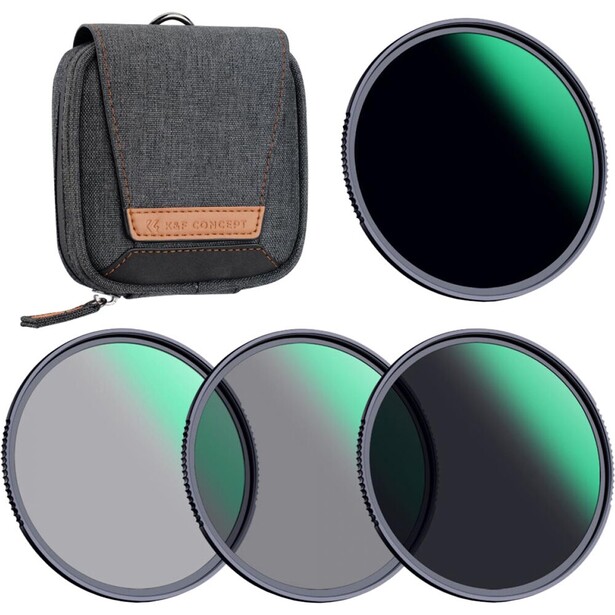
- Density Range: ND4, ND8, ND64, and ND1000, which is 2, 3, 6, and 10 stops
- Optics and Coating: Japanese AGC optical glass with 28-layer multicoating, waterproof and scratch resistant
- Frame: 3.3 mm slim aluminum
- Sizes: 55mm, 67mm, 77mm, and 82mm sets
- In the Box: Four filters and a zippered four-slot pouch
- Price: $109.99 (B&H)
Buy the K&F Concept Nano-X Series ND 4-Filter Set and you get four densities for roughly what one premium 10-stop filter costs. That arithmetic is the entire case, and it is a strong one for someone not yet sure how much they will use an ND. The set covers 2, 3, 6, and 10 stops, the full working range, and arrives in a pouch that holds all four. K&F builds these on Japanese AGC optical glass with a 28-layer coating and a slim 3.3 mm aluminum frame that keeps vignetting off the corners of a standard zoom.
Where the money went missing is neutrality at the deep end. K&F's ND1000 pushes files cooler and slightly blue next to a B+W or a NiSi, and the shift is not always uniform across the frame, which is what costs you time in Lightroom rather than one white balance slider. The shallower filters behave much better. Treat the ND1000 as a filter you will correct, not one you will forget about.
Aluminum rather than brass is the other compromise: the frames can bind on a lens thread if you overtighten them in the cold, and the coatings do not shrug off a sandy microfiber cloth the way premium glass does. If you have never used an ND and want to find out whether long exposures are your thing, this is the right first purchase, and the ND8 and ND64 will stay in your bag even after you upgrade the 10-stop. Check the current price of the K&F Concept Nano-X Series ND 4-Filter Set at B&H.
What We Like
- Four densities for about the price of one premium filter
- Slim 3.3 mm frames avoid vignetting on standard zooms
- The 3-stop and 6-stop filters are close to neutral
What Could Be Better
- The ND1000 shows a measurable cool color shift you will correct in post
- Aluminum frames can bind on a lens thread
- Coatings are less durable than the premium glass here
- The ND4 is too weak to be useful for much
Best Creative and Diffusion Filter: Moment CineBloom Diffusion Filter
- Type: Diffusion filter, screw-in
- Density Range: 5%, 10%, and 20% diffusion strengths
- Optics and Coating: Japanese optical glass with an etched NanoBlack diffusion microlayer, deliberately uncoated to maximize bloom
- Frame: Aluminum with a knurled edge for stacking and removal
- Sizes: 37mm through 82mm
- In the Box: Filter and case
- Price: $95 (B&H)
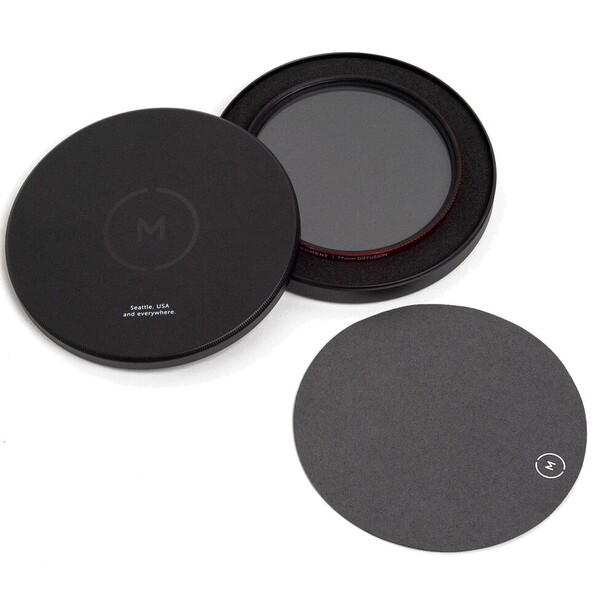
Modern lenses are so clinically sharp that a certain kind of photographer spends the evening in Photoshop putting the softness back. A diffusion filter does it in the glass, in a way no slider replicates, because the bloom happens optically inside the highlight rather than being painted around it afterward. The CineBloom sandwiches a fused microlayer of etched NanoBlack particles between two layers of optical glass, and what comes out is a gentle halation around street lights and window highlights, softened micro-contrast in skin, and shadows that stay black instead of going milky.
Strength is the real decision. The 5% is subtle enough that most viewers will not consciously see it, the safe everyday choice for portraits and weddings where you want skin to look kind rather than styled. The 10% is the one most people should buy, visible in highlights and forgiving on faces without announcing itself. The 20% is closer to a 1980s soap opera than a modern film, and it will make a client ask what happened. The CineBloom holds shadow density better than a classic black mist, keeping blacks from turning milky under strong light.
Two real problems. Moment leaves the front surface uncoated on purpose, which is exactly why the glow looks organic, and it is also why the filter veils and flares when a strong light source sits just outside the frame. The effect is baked permanently into the raw file, so unlike almost everything else in your bag, this is a decision you cannot take back at the computer. Shoot a set with and without if the job matters. For a photographer chasing a softer, more cinematic rendering, check the current price of the Moment CineBloom Diffusion Filter at B&H. Also consider the Formatt Hitech Firecrest Bloom Gold if you want the same halation with a warm gold cast rather than a neutral one.
What We Like
- Optical bloom that no editing slider convincingly reproduces
- Holds shadow density better than a typical black mist
- Three strengths, and the 10% is a genuinely useful everyday look
What Could Be Better
- The uncoated front surface flares readily against strong light
- The effect is permanent in the raw file
- The 20% strength is too aggressive for most paid work
- Sizes stop at 82mm, so the biggest ultra-wide zooms are out
Best Magnetic System: NiSi JetMag Pro Cinema Magnetic Filter Kit
- Type: Magnetic filter system with a mechanical twist lock
- Density Range: Kit includes FS ND4, ND8, ND16, and ND64 (2, 3, 4, and 6 stops), plus a True Color CPL and a 1/8 Black Mist
- Optics and Coating: Full Spectrum ND glass with NiSi's nano coating, waterproof, dustproof, and oil resistant
- Frame: Ultra-slim aluminum, magnetic mount with a mechanical twist lock
- Sizes: Kit includes 67mm, 72mm, 77mm, and 82mm adapters to the 82MAG mount; separate MAXMAG adapters cover larger and cine lenses
- In the Box: Six filters, four adapter rings, two front caps, one back cap, and a caddy pouch
- Price: $649 (B&H)
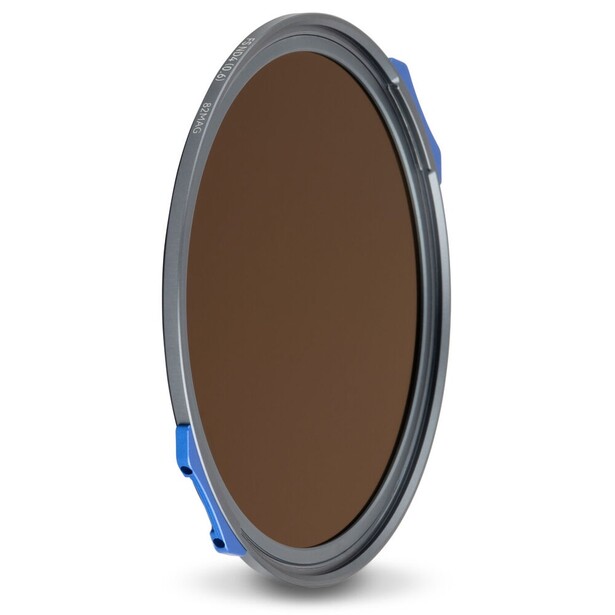
Magnetic filters fixed the slowest part of using filters and introduced a new anxiety: a magnet is the only thing standing between expensive glass and a rock. NiSi's answer with the JetMag Pro is a magnet that snaps the filter into position and a short twist that engages a mechanical lock, the same principle as a lens mount. You rotate the filter until it lines up with the white index mark on the adapter, and from there it does not come off without a deliberate counter-rotation, so the glass survives a knock against a tripod leg.
The Cinema kit is the version worth buying, because it covers a whole working day: 2-, 3-, 4-, and 6-stop NDs that combine by stacking, a True Color CPL, and a 1/8 Black Mist. NiSi calls the ND glass Full Spectrum and rates it for true-to-life color with no cast, and the frames are thin enough that NiSi's own test with two filters stacked on a 15-35mm f/2.8 at 15mm shows no visible vignetting on full frame. Separate MAXMAG adapters extend the system to large-diameter and cine lenses, including bulbous front elements like the Sony FE 14mm f/1.8 GM that break every other system.
The catch is that you are buying an ecosystem, not a filter. Every lens needs its own JetMag adapter ring, the filters mount only to those rings, and once you have three lenses, a CPL, and a mist filter, the total spend rivals the square system above. Stacked filters also add depth in front of the lens, a real consideration on a wide angle. If the filter swap is what keeps costing you shots, this is the best-executed magnetic system on the market, so check the current price of the NiSi JetMag Pro Cinema Magnetic Filter Kit at B&H. Also consider the Freewell V2 Magnetic Hybrid VND with CPL if you would rather carry one magnetic filter that does everything than a case full of them.
What We Like
- Twist lock means the filter cannot fall off, which no plain magnet can promise
- Two filters stack without visible vignetting at 15mm on full frame
- The Cinema kit covers ND, polarizing, and diffusion in one case
What Could Be Better
- Every lens needs its own adapter ring, and the cost adds up fast
- Proprietary mount locks you into NiSi glass
- Stacked filters add depth in front of a wide angle lens
- The kit price is close to a square system
Best Variable ND With a Built-In Polarizer: H&Y RevoRing Mark II Variable ND and CPL
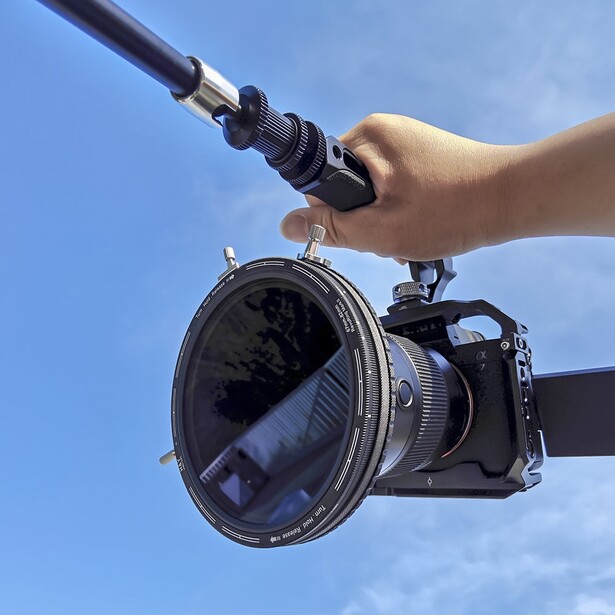
- Type: Variable ND with an independent circular polarizer, adjustable-diameter mount
- Density Range: ND3 to ND1000, which is 1.5 to 10 stops
- Optics and Coating: German Schott B270 optical glass with anti-reflective nano coating, and a Nitto polarizing film on the CPL
- Frame: Aluminum with self-retracting blades and lockable adjustment knobs
- Sizes: One filter fits a band of threads; four bands cover 46-62mm, 58-77mm, 67-82mm, and 82-95mm
- In the Box: Filter and case
- Price: $249 (Amazon)
Here is the problem the H&Y RevoRing Mark II exists to solve. You own a 24-70mm at 82mm, a 35mm prime at 67mm, and a 70-200mm at 77mm, and you do not want three of everything or a bag of step-up rings. The RevoRing's mount is a ring of spring-loaded, self-retracting blades: push it onto the lens, the blades collapse to grip the thread, and one filter covers 67mm, 72mm, 77mm, and 82mm lenses. The Mark II turns the adjustment pins into knobs that lock, including the one holding the blades, so nothing works loose in a bag, which was the fair criticism of the original.
Sitting in front of that mount is a variable ND spanning 1.5 to 10 stops and a circular polarizer you rotate independently, on nano-coated German Schott B270 glass with a Nitto polarizing film. No screw-in variable ND in this guide offers that combination, and it fits how most people actually shoot: cut the reflection off a shop window and drop three stops to hold f/1.8 in daylight, without unscrewing anything. The glass is sized for the largest thread in the band, so on a 67mm lens you are shooting through an oversized filter, which keeps vignetting off the corners.
The limits are the ones every wide-range variable ND has. A 1.5-to-10-stop span is enormous, and toward the dark end you will see the uneven polarization that the hard-stopped PolarPro filter refuses to let you reach, so treat the top of the range as a place to be careful rather than a place to live. The retracting blades also press against the filter thread, a sound design that some photographers will not want near an expensive front element. Neither undoes the fact that it is the most versatile single filter here, so check the current price of the H&Y RevoRing Mark II Variable ND and CPL at B&H. Also consider the Haida PROII CPL-VND 2-in-1 if you would rather have a conventional screw-in with a tighter, safer 3-to-7-stop range.
What We Like
- One filter fits four common thread sizes, replacing a drawer of step-up rings
- Independent variable ND and polarizer in a single piece of glass
- Mark II lockable knobs fix the original's slippage complaint
What Could Be Better
- Uneven polarization appears near the dark end of the 10-stop range
- The retracting blades grip the lens' filter thread, which not everyone will love
- Bulkier on the front of the lens than a slim screw-in
- Each model covers only one band of thread sizes
How to Choose a Camera Filter
Start with the stop, the unit everything else is measured in and the one most people never quite learn. Each stop halves the light reaching the sensor. An ND8 blocks three stops, an ND64 blocks six, and an ND1000 blocks 10, which is where the naming confuses people: the number after the ND is the light reduction factor, not the stop count. That density buys you a longer exposure. If a scene meters at 1/500 second, a 10-stop filter takes you to two seconds. A 6-stop filter takes the same scene to 1/8 second, enough to blur a moving stream but not to flatten a lake. For video the arithmetic runs the other way: you want the shutter at double the frame rate, 1/50 second at 24 fps, and in daylight that means three to six stops of ND just to shoot at f/2.8.
Polarizers work on a different principle and cannot be replicated in editing. Light bouncing off a non-metallic surface, water, wet leaves, glass, painted metal, becomes polarized, and a rotating polarizing filter blocks that light selectively. Turn the front ring and the reflection on a river's surface disappears, revealing the stones underneath. The same rotation deepens a blue sky and saturates foliage. Two rules keep you out of trouble. The effect is strongest 90 degrees away from the sun and nearly absent when you shoot into it or directly away from it, and on a lens wider than roughly 24mm on full frame that gradient shows up as a dark patch across part of the sky. A polarizer also costs one to two stops, making it a poor companion to a dark ND unless you are on a tripod.
Then choose a mounting system, which is really a decision about what your time is worth. Screw-in filters are cheapest and slowest, and mean one filter per thread size or the fiddle of step-up rings. Magnetic systems cost more upfront, need an adapter ring on every lens, and turn a 30-second job into a two-second one. Square systems are the biggest and most expensive, and the only way to shoot a graduated ND.
Drones follow the same rules. An aircraft in bright sun shoots 4K at 1/2000 second, which produces strobing, video-game motion rather than the blur that reads as cinema, and the only fix is an ND. Drone filters are model-specific and must be light enough not to strain the gimbal motors, which is what a set like the Freewell All-Day ND/PL Filter Set for DJI Mavic 4 Pro is built around. Our camera drones guide covers which aircraft is worth putting them on.
Finally, do not cheap out at the deep end. A three-stop filter from almost any brand is unlikely to hurt you, but 10 stops of poor glass hands you a strong color cast and infrared pollution that is genuinely difficult to correct. Spend where the light is being blocked hardest.
What We're Looking For
Our picks weigh color neutrality first, because it is the one property a filter cannot fake and the one that costs you the most time when it is missing. After that we look at the mechanics: whether the frame binds on a lens thread, whether the coating sheds water, whether the mount lets you change filters with cold hands. Every specification here was verified against the manufacturer's current spec page and a live retailer listing at the time of writing, not from memory. Most picks across our buying guides come from gear our writers have used and reviewed hands-on. Where an entry in this guide describes how a filter behaves, that rests on its published specifications and optical design, and we say so rather than implying testing we did not do.
Frequently Asked Questions
What Does the Number on an ND Filter Mean?
The number is the light reduction factor, not the stop count. An ND8 filter passes one-eighth of the light, which is three stops. An ND64 passes one sixty-fourth, which is six stops, and an ND1000 passes roughly one-thousandth, which is 10 stops. Some brands print optical density instead, where 0.9 equals three stops and 3.0 equals 10 stops.
Can I Replicate a Polarizer in Lightroom?
No, and this is the one filter effect that is genuinely impossible in software. A polarizer physically blocks reflected light before it reaches the sensor, so detail underneath a water surface or behind a shop window gets recorded. Once a reflection has been captured, that detail is not in the file, and no amount of dehaze or saturation work will invent it.
Are Cheap ND Filters Actually Bad?
At shallow densities, not really. A budget three-stop or six-stop filter is usually close enough to neutral that one white balance adjustment fixes it. The problem appears at 10 stops, where inexpensive glass lets infrared through and produces a strong, often uneven color cast. If you are spending selectively, buy cheap NDs for the shallow densities and spend on the deep one.
What Is Cross-Polarization on a Variable ND?
It is the dark X that appears across the frame when a variable ND is rotated past its usable range, caused by the filter's two polarizing layers approaching a fully crossed orientation. Better filters prevent it mechanically with hard stops at each end of the rotation, which is why the split-range approach PolarPro uses is worth the extra cost.
Do Filters Reduce Image Quality?
A good filter costs you almost nothing measurable, and a bad one costs you contrast, flare resistance, and color accuracy. The risks are avoidable: a thick frame vignettes on a wide angle lens, an uncoated surface flares against a bright light, and stacking filters multiplies both problems. Buy fewer, better filters and keep them clean.
Fstoppers may earn a commission from purchases made through links in this article. Our picks are made independently by our editorial team.