

Canon rates the EOS R6 Mark III at up to 8.5 stops of stabilization at the center of the frame and 7.5 stops at the periphery, depending on the lens. The footnote under that number says it was measured under the CIPA 2024 standard with an RF 24-105mm F2.8 L IS USM Z at 105mm. The footnote leaves out that the camera was bolted to a vibrating platform roughly two meters from a printed chart, in a room held near 23 degrees Celsius, and that the rating comes from at least 200 frames shot at every shutter speed in the test.
What the Test Actually Looks Like
The rules live in CIPA Standard DC-011-2024, revised in January 2024 and titled, in full, Measurement and Description Method for Image Stabilization Performance of Digital Cameras (Optical System). CIPA distributes the working document to companies that sign its agreement and publishes a free English translation of the draft, which is where every detail below comes from.
The camera does not get held. It gets mounted on a certified vibratory apparatus and shaken with one of two recorded waveforms, chosen by total mass: WB-L for rigs under 400 g, WB-H for 600 g and up, and both waveforms averaged for anything in between. Each waveform is 32 seconds of angle data sampled at 500 Hz, and it drives three rotational axes at once, which are yaw, pitch, and roll. The subject is a chart 1,000 mm wide by 750 mm tall, printed with high-contrast black-and-white edges at the center of the frame and at four points out toward the corners. The camera sits 20 times its 35mm-equivalent focal length away from that chart, so Canon's 105mm figure was shot from about 2.1 m. Temperature is 23 degrees Celsius plus or minus 2, humidity runs 30 to 70 percent, and the lighting has to be steady enough not to flicker.

You dial in a shutter speed, switch the camera off, start the rig shaking, then power the camera back on at an unspecified moment and begin shooting within three seconds. You take ten frames about a second apart, power off, and repeat until you have 200 or more images at that speed. Then you move the shutter speed by no more than one stop and do all of it again. CIPA settled on 200 as the minimum because shooting experiments showed that roughly that many frames keep 95 percent of the measurement spread inside the pass threshold. The rig itself has to be verified separately against sine waves at 0.1, 0.5, 1, 5, and 10 Hz, run simultaneously in all three axes.
Three things are missing on purpose. Camera shake has six components, and the standard uses only the three rotational ones, dropping X, Y, and Z translation as negligible at normal shooting distances. Shift stabilization, the kind that matters at macro distances, was considered for the 2024 revision and left out because CIPA could not measure it reliably. And electronic and hybrid stabilization systems are excluded from the standard entirely, so nothing your camera does in its electronic or digital stabilization modes is inside that number.
The Pass Mark Is a Blur About Four Pixels Wide
Every stabilization rating is a ratio of two shutter speeds, and both of them are the speed at which measured blur crosses a fixed threshold. The 2024 standard sets that threshold at 20 μm on the imaging plane, and the arithmetic behind it is published in the document. Take one arcminute, the angle a person with 20/20 vision can just resolve, at a viewing distance of 600 mm. That works out to about 175 μm on the print. Scale an A4 print, 364 mm on the diagonal, down to a full frame sensor at 43.3 mm on the diagonal, and 175 μm becomes 20.8 μm. Round it off and you have the pass mark. A panel test backed it up: about 10 percent of viewers could spot degradation at a circle of confusion around 24 μm.
Before 2024, the threshold was 63 μm, and it was derived from viewing a postcard. The Sony a7 V records 7,008 pixels across a 35.9 mm sensor, so its pixel pitch is about 5.1 μm. The current 20 μm pass mark is a smear just under four pixels wide. The old 63 μm pass mark was more than 12 pixels. Ratings published before the revision were earned on images three times blurrier than the ones a camera has to deliver today.

The stop count itself falls out of a graph. CIPA computes a theoretical blur curve for the camera with stabilization off, measures the real blur curve with stabilization on, finds where each one crosses 20 μm by interpolating on a log axis, and calls the gap between those two shutter speeds the number of stops. The result is rounded down to half-stop increments. Nothing in that procedure produces an absolute shutter speed you can hold. It produces a multiplier: 8.5 stops means a factor of 362, and 5.5 stops means a factor of 45.
Why 8.5 and 5.5 Are Not Three Stops Apart
Section 4-3-9 of the standard covers focal length for measurement, and it says, in its entirety, "Not specified." The explanatory notes admit the reason: zoom ranges vary too much between products to pick a common test point, so the choice is left to the manufacturer, and the only requirement is that the focal length be printed alongside the number. The notes also concede that some cameras stabilize better at some focal lengths than others.
Canon measured the R6 III with a 24-105mm f/2.8 at 105mm. Nikon measured the Z5II at the long end of a 24-120mm f/4 and publishes 7.5 stops at the center, 6.0 at the periphery. Sony measured the a7 V with a 50mm f/1.2 prime and publishes 7.5 at the center, 6.5 at the periphery. Three different lenses, three different focal lengths, three numbers that are not on the same axis. The lenses differ in a second way that matters as much: Canon's test lens carries its own stabilizer, working in concert with the body, while Nikon's 24-120mm f/4 S and Sony's FE 50mm F1.2 GM carry no stabilization of their own. Canon published a figure for a lens-and-body system. Nikon and Sony published figures for the body alone.
The revision moved the mark inside a single product line. Sony's a7 IV carries a rating of 5.5 stops, and its footnote reads: "based on CIPA standard. Pitch/yaw shake only. With Planar T* FE 50 mm F1.4 ZA lens mounted. Long exposure NR off." Pitch and yaw only, judged against the old 63 μm threshold. The a7 V's 7.5 and 6.5 were measured with roll in the waveform against the 20 μm threshold. A two-stop jump inside one product line partly reflects a genuinely better stabilizer and partly reflects two different tests wearing the same units. CIPA states plainly that requiring cameras to separate three vibration components instead of two raises the difficulty and is likely to reduce the published stop count.
Nikon's own lineup shows the seam. The Z6III is rated at 8.0 stops, and the footnote on Nikon's site says only that the measurement used the telephoto end of the 24-120mm f/4 S and is "Based on CIPA Standards," with no revision named. The Z5II, a cheaper body announced later, is rated lower, at 7.5 stops in the center, and it is the one of the two whose footnote names the 2024 standard and the yaw/pitch/roll waveform. The body that scores worse on paper is the one you can confirm was graded on the harder exam.
The Method Is Rigorous, the Comparison Is Not
The popular reading of all this is that CIPA figures are marketing fiction, cooked in a lab under perfect conditions to produce the largest possible number. Part of that suspicion is earned. CIPA is a trade association writing rules for its own members' brochures, non-members pay an administration fee of 114,000 yen for access, only a CIPA-certified and registered vibratory apparatus can be used to claim compliance, and the terms for obtaining it state outright that the standard and kit cannot be provided to individuals, universities, or any other party for research purposes. Access runs through a corporate application, so checking a published rating is an industry activity rather than an outside one.
The record on the method itself runs the other way. CIPA built the waveforms by attaching sensors to cameras held by many people, separating the recorded motion into yaw, pitch, and roll, and synthesizing waveforms from the characteristic frequencies and amplitudes. The mass thresholds that pick between WB-L and WB-H exist because using one waveform for mid-weight bodies produced results that diverged from what human test subjects actually achieved, and CIPA published the comparison. The three-second startup rule means the stabilizer has to settle almost instantly. The 200-frame minimum is a real statistical requirement. As a repeatable measurement of a machine, it is more rigorous than most photographers assume.
The main failure is not rigor. It is comparability. A standard that fixes the chart, the distance, the temperature, the waveform, the sample size, and the pass threshold, then hands the manufacturer the focal length and the lens, has produced a precise measurement of something each company gets to define.
The rigor is not spotless either, and CIPA is the one who said so. Nine months after publishing the 2024 revision, the association issued a notice to holders of the standard and the measurement kit warning that measurements under DC-011-2024 "may result in being worse than correct measurements." The cause it identified is the shaker itself: some rigs reproduce the specified waveform poorly, stalling briefly near zero angular velocity and carrying high-frequency vibration on top of the intended motion. Those effects "tend to be more for lenses with longer focal lengths," CIPA's own "Verification Method of Vibratory Apparatus" "may not verify such waveform reproducibility sufficiently," and the size of the error "differs depending on the lens and camera model to be measured." Note which way that bias runs. It costs a manufacturer stops rather than inventing them, so it is not a thumb on the scale. It does mean a rating is a number produced on a particular table, and that two tables need not agree.
Roll Is the Spec Nobody Quotes
At the center of the image, roll produces no blur at all, because the rotation axis runs through that point. This is geometry, not engineering: the standard sets the roll blur term to zero at the center and to 12.98 mm times the roll angle at 60 percent image height. A center-only rating is structurally incapable of telling you whether a system corrects roll.

The standard's own explanation states that image stabilization mechanisms built into lenses can compensate for yaw, pitch, and shift blur but cannot compensate for roll. That is why the standard permits a lens on its own to be described only at the center, tagged "yaw/pitch performance," while a body with sensor-shift stabilization is described at both the center and the corner, tagged "yaw/pitch/roll performance." CIPA's corner is not the actual corner of the frame but four points at 60 percent of image height, about 13 mm out from center on a full frame sensor against roughly 21.6 mm at the true corner, with the published figure averaging those four. The corner figure is the roll disclosure. It is the only part of the rating that reports on an axis a lens-based system cannot touch.
So read the pair and read the gap. Canon's R6 III gives up one stop from center to corner. The a7 V gives up one. The Z5II gives up one and a half. And the gap is worst exactly where you are most likely to notice it, because yaw and pitch blur scale with focal length while roll blur does not. CIPA works the example in the standard: at 24mm, roll accounts for 23 percent of the corner blur, and at 200mm it accounts for 3 percent. Wide angle handheld at slow shutter speeds is where roll eats your corners, which is to say landscapes at dusk, interiors, and night scenes with the camera braced against a railing.
Where the Money Should Go Instead
Stabilization stops should not move a purchase decision between two bodies in the same class, and the case for that is not skepticism about the test. It is that the published numbers were produced under conditions each maker selected, at focal lengths chosen for the brochure, sometimes under different revisions of the rules, and the spread between competing bodies is smaller than the spread introduced by those choices. A camera rated at 8.5 and a camera rated at 7.5 are not reliably a stop apart in your hands.
The deeper limit is that there is no subject in the test. The chart does not move. Push a real scene to three or four seconds handheld, and the leaves blur, the water blurs, the person breathes, and every stop past the seventh buys you a sharper picture of nothing in particular. Stabilization does nothing about subject motion, and no number of stops ever will. A faster lens buys you a shorter exposure instead of a steadier long one, and a short exposure is the thing that survives contact with a windy afternoon. A tripod removes camera shake permanently, which is why serious landscape workflows are still built around one.

If you are going to use the rating for anything, use the corner number and the gap. Two bodies quoted under the 2024 standard, at similar focal lengths, with a half-stop difference at the center and a full stop difference at the corner, are telling you something real about how each one handles roll. The gap is a signal rather than a roll score, since the peripheral number folds residual yaw and pitch in with the roll it exposes. Everything else in that spec line describes a camera bolted to a shaking platform two meters from a printed chart, in a room at 23 degrees Celsius, power-cycled twenty times in a row. It is a true statement about the machine. It is silent about the wind.
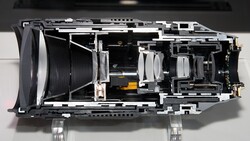
Lead image by 456 Photo, CC BY 2.0. Source.







.jpg)

Join the Fstoppers community for free
-
Post comments and join in the discussions
-
Browse the site ad-free
-
Share your work and get featured in the community
-
Compete in the photo contests for fun and prizes
No comments yet