
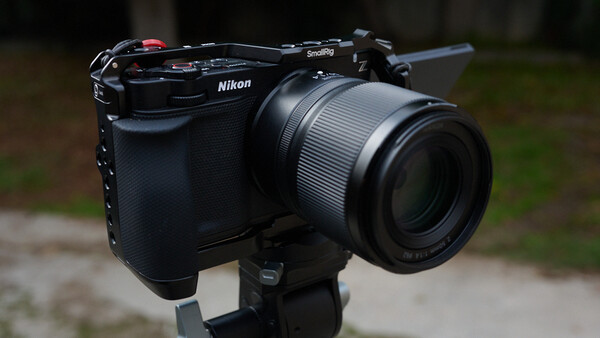
Now that you have your new Nikon ZR in hand, you’re probably already thinking about ways to dress it up. Well, if I were you, here are the first three accessories I would add to my shopping cart.
Every time I buy a new camera, I somehow magically trick myself into thinking that the total cost of the camera is the body itself. And, while this is technically true, no matter how much I try to have everything in place prior to the camera’s arrival, inevitably, when I start working with a new camera, I will find myself wanting to add to the overall package. Sometimes these purchases are small. Sometimes they are large. But there are always at least a handful of items I’ll add to make a camera all the more effective.
The ZR is no exception. I’ve written here before how one of the main motivators for me to purchase this camera was a desire to keep things as small as possible. I already have larger cinema cameras. With this one, my plan was to actively stay naked. Camera-wise, I mean. But, as always, there are a few things that have proven downright necessary once I got the camera in hand, so I thought I’d share a few with you.
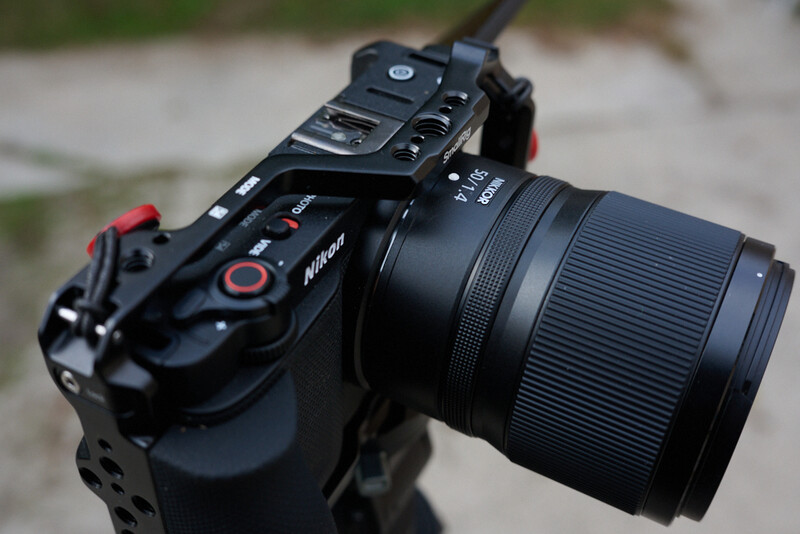
SmallRig Camera Cage: $69.99
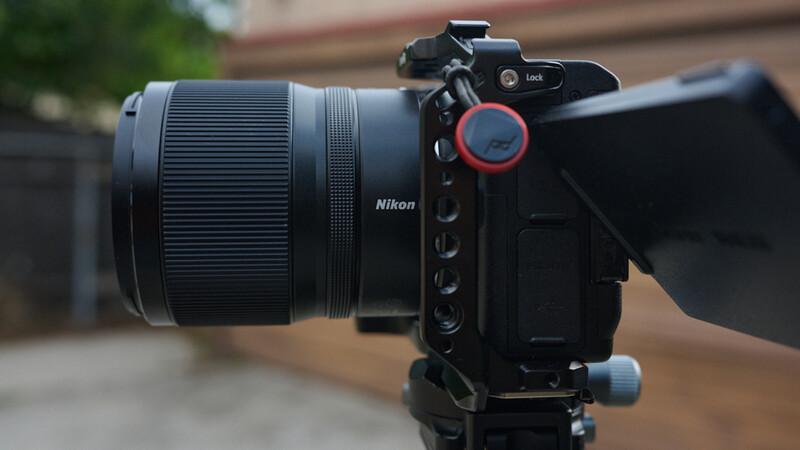
Initially, I wanted to have this ZR be the one camera in my kit that did not use a cage. I have cages on everything else. I’ve even gotten used to shooting stills with a cage on my hybrid cameras. But, for video, a solid cage is usually the first thing I buy for any new body. I had hoped to skip this for the ZR, but, right out of the box, a few things forced me to change my tune.
I wrote about this in my full review, but one of the oddities of the ZR is that the bottom of the camera only features one mounting point (I’m discounting the side-positioned registration pin because that is more of a photo-centric benefit than a video one). When traveling light, one mounting point is fine. But, for any mildly rigged camera in video, one of the chronic complications you will have is your camera loosening on the tripod/gimbal and twisting left or right. For this reason, most cinema bodies will have two mounting screws on the bottom in a line to prevent the camera’s ability to twist. Because the ZR doesn’t have this, the SmallRig Camera Cage adds a more optimal baseplate for connecting the camera in a more secure fashion.
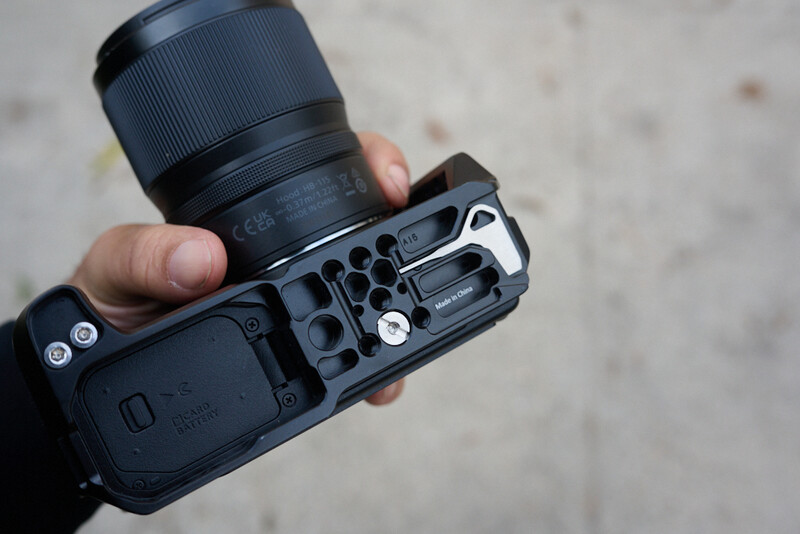
The cage also offers me an additional cold shoe mounting point. This isn’t always necessary, but I usually like to have, at minimum, a microphone and/or wireless receiver connected to the camera for better sound plus some sort of video transmission device. That’s already two. You add a timecode device and the single hot shoe atop the ZR is quickly going to come up short. The smart hot shoe is an excellent addition, and it opens up using something like the ME-D10 microphone. But the cage just gives me extra options, including connecting to a top handle, which gives me even more cold shoes and mounting points as options.
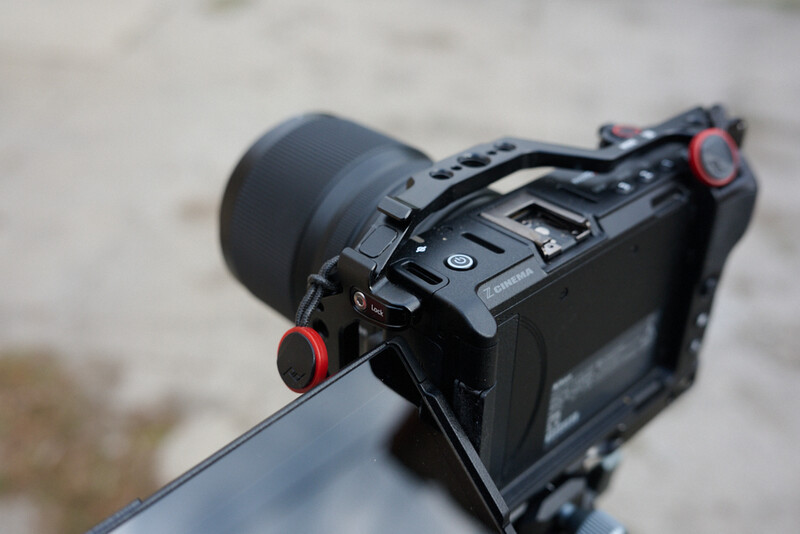
Another one of the tradeoffs of the ZR’s small size is that the handgrip is not at all robust. It’s more one of those camera bodies you hold with your fingers as opposed to a full grip. At least that’s the case for me with the size of my hands. The SmallRig cage adds a deeper grip, which I personally find a requirement to really hold the camera steady—especially if you are mounting any lens longer than one of the compact muffin lenses like the 28mm or 40mm f/2.
Lenses
Speaking of keeping things small, breaking my gear acquisition fast for the ZR has required me to break it again to add a pair of new lenses to my kit. Again, with the idea of keeping things small, my original plan was to mount the 40mm f/2 muffin lens to the ZR most of the time. The ZR plus the 40mm makes a terrifically small combination and is the ultimate in portability.
There was only one issue I found when I took that combination out for my initial test. While focus speed and even breathing were sufficient for my needs using the 40mm, I did find that the focusing motors in the lens emit a small buzzing sound. It’s barely audible to the naked ear. But, when I mounted the ME-D10 to the smart hot shoe and played back the footage, I could hear a barely discernible sound when the camera racked focus. Not at all the end of the world for casual B-roll. But, since that type of thing would drive me crazy if it subtly found its way into footage I wanted to use for a more prominent purpose—especially if that footage found its way into something that would play in a movie theater, where the sound would be even more noticeable—I needed to find a solution.
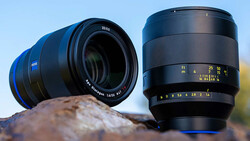
Knowing I still wanted to try and keep things as small as possible, I opted for two new lenses: the Z 35mm f/1.4 ($576.95) and Z 50mm f/1.4 ($496.95).
They are definitely not as small as the 28mm and 40mm, but they were far quieter for focusing. And they were the smallest I could get that fit that bill (I also already own the 24-70mm f/4, which is comparable in size). Interestingly enough, getting to know those two lenses has been one of the most enjoyable parts of this particular kit build. Neither is as clinically sharp as the more expensive (and massive) f/1.2 counterparts. But, since I’m using these as primarily video tools, the added character of the f/1.4 lenses is a real benefit to me rather than a curse.
SmallRig V-Mount Battery Mounting Plate: $59.99
Once more, I had to break my mantra of keeping it small. But at least I stayed within reason. The battery life of the Nikon ZR is reasonable given the size of the battery and the small form factor of the camera. I will admit that I have become incredibly spoiled by my Z9. The massive battery in that larger body can pretty much run all day. Even on a video shoot, I rarely change batteries more than once during a production day. Maybe twice for a longer shoot. I can go hours without having to swap things out.
With the ZR, swapping batteries is more of an issue for two reasons. One, as I said, the battery is understandably smaller, so it will require more changes. And, two, because of Nikon’s decision to put the battery door on the bottom of the camera, it can be difficult to access when the camera is rigged out. It would often require you to take your camera rig at least partially apart to access the battery door. Not the end of the world, just an inconvenience.
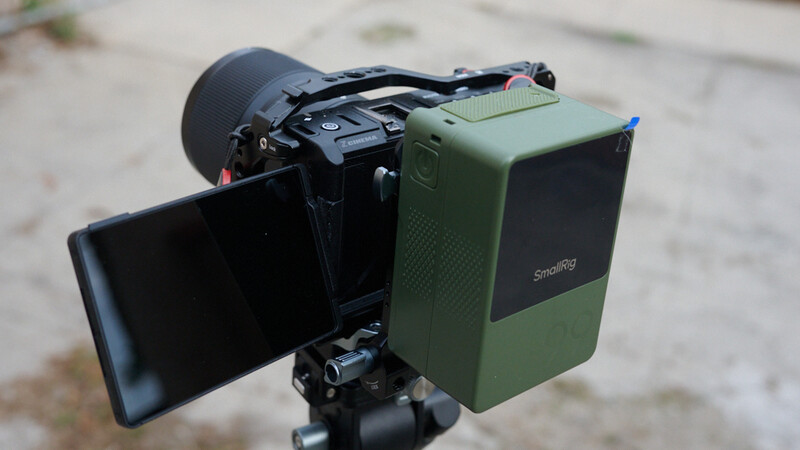
Well, the SmallRig V-Mount Battery Mounting Plate fixes both of these issues. Luckily, I already had a pair of these, so I didn’t have to purchase new ones. But this was one of the first things I added to my ZR bag.
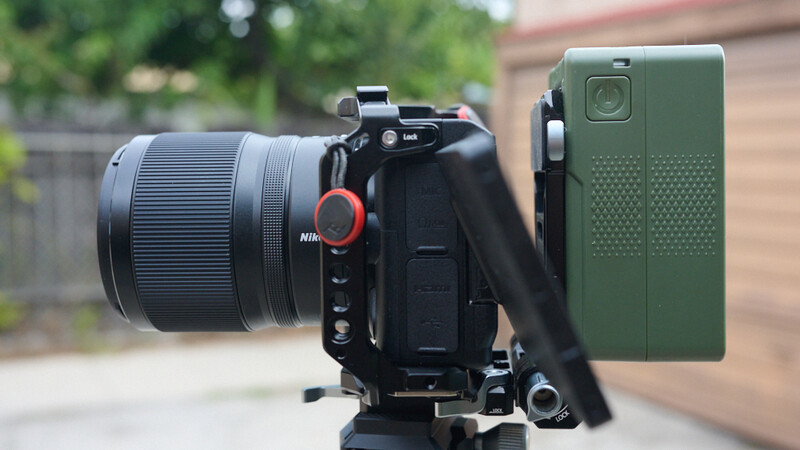
Basically, this little mini-sled-type device allows you to connect your ZR to the baseplate, which connects to a V-mount sled like you might find on much larger rigs (but minus the 15 mm rods and extra weight). The device is adjustable and will fit compactly against the ZR’s form factor, but now allows you to mount a mini V-mount battery to the camera. V-mount batteries are massive and can power the ZR for hours at a time without needing to swap batteries. You connect your V-mount battery to the ZR’s USB-C port to provide ongoing power, and the camera can pretty much run all day. If you do need to change your V-mount battery, there is no de-rigging involved. Just swap V-mounts on the back and keep on rolling.
No doubt all three of these additions have added a bit of size and weight to my ZR package that I wasn’t originally planning on adopting. But, given the increase in productivity they enable, these investments have proven well worth the money.


Join the Fstoppers community for free
-
Post comments and join in the discussions
-
Browse the site ad-free
-
Share your work and get featured in the community
-
Compete in the photo contests for fun and prizes
1 Comment
I have the same goals of keeping the setup small after getting the ZR a week ago now shopping for things to put on it. My needs are more modest.i dont think i need a cage or even a grip but some wind noise shield and a small compact prime would be nice.