Choosing between a 35mm and a 55mm lens for location portraits isn't just a focal length debate. Shot in harsh midday Texas sun, this head-to-head between two of Viltrox's most talked-about Evo lenses puts the decision in a real-world context that gear charts can't replicate.
Coming to you from Eli Infante, this detailed video takes the Viltrox 35mm f/1.8 Evo and Viltrox 55mm f/1.8 Evo through multiple locations during the same shoot, swapping between them at each spot so you can see exactly how the results differ. Infante shoots everything at f/1.8, keeping the variable consistent while the focal length does the work of separating the two. The Evo series sits between Viltrox's Air and Pro lineups, meaning you get a lightweight, compact body with a custom button and f/1.8 speed, without jumping to pro-level pricing. Both lenses run in the $350 range, which Infante calls out directly as remarkable for what you're getting.
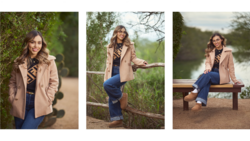
The 55mm gives you something close to what your eye naturally sees, which is part of why the 50mm range tends to become a favorite for so many portrait shooters. The 35mm, on the other hand, pulls in more of the environment, letting you incorporate leading lines, foreground elements, and wider context without backing up as far. Infante points out a real trade-off with the 35mm: get too close to your subject and distortion becomes a problem, especially with the body. You have to stay aware of your angles in a way you simply don't with the 55mm. At one location with tall grass in the foreground, the lower shooting angle on the 35mm actually kept the subject's boots in frame where the 55mm cut them out, a small but meaningful difference depending on what the outfit calls for.
Beyond the lens comparison, Infante shares practical directing techniques that don't get discussed enough. He rotates his subject's body in roughly 30-degree increments to break up repetitive shoulder-forward posing. He also uses a deliberate look-away-then-look-back technique, having the subject glance off camera to give them a mental reset before snapping back to the lens. The expression you get on that return tends to be more natural than holding a pose for extended periods. He shoots from varying heights at each location, sometimes low to pull in foreground texture, sometimes higher to control the color palette in the frame. His use of off-camera flash in direct sun keeps the light quality consistent even when clouds aren't cooperating. The video also includes an autofocus tracking test, putting both lenses through movement to show how they handle a subject in motion rather than standing still.
Check out the video above for the full breakdown, the autofocus results, and Infante's final verdict on which lens came out ahead at this location.



Join the Fstoppers community for free
-
Post comments and join in the discussions
-
Browse the site ad-free
-
Share your work and get featured in the community
-
Compete in the photo contests for fun and prizes