The 24-70mm lens sits in an awkward place. It is not dramatic like a 16mm and it is not selective like a 200mm, yet many strong outdoor images live right in that middle ground.
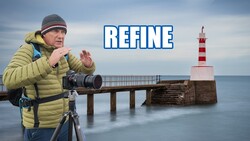
Coming to you from Ian Worth, this thoughtful video takes a hard look at the 24-70mm lens, a focal range you have likely used for years without fully understanding what it gives and what it refuses to hide. Worth argues that the reason it can feel flat is simple: it does not exaggerate perspective at the wide end, and it does not heavily compress at the long end. If the foreground is weak, you see it. If the spacing between elements feels awkward, it shows up fast. When you mount something like a Canon RF 24-70mm f/2.8L IS USM or a Sony FE 24-70mm f/2.8 GM II, you are working in a range that looks close to how you naturally see. That realism forces stronger decisions.
Worth spends time clearing up a common mistake. Zooming is not the same as moving. When you stand still and change the lens from 24mm to 70mm, you change angle of view and magnification, but not perspective. The relationship between foreground and background stays the same because the camera position has not changed. Step forward two paces, however, and perspective shifts: nearby objects grow relative to distant ones, and the spacing between layers changes. That change in perspective is what often shapes a strong composition, not the zoom ring. Expecting the lens alone to fix a weak camera position leads to frustration.
This matters when you work with layers. Outdoor scenes often fall into foreground, midground, and background. With an ultra-wide lens, even small movements create big shifts. With a telephoto, you can remove the foreground almost entirely and isolate distant shapes. In the 24-70mm range, you cannot rely on distortion or heavy compression. You have to think about where you stand. You decide how large the foreground appears. You control how it lines up with what sits behind it. The lens does not add drama on its own, so the structure of the scene carries the image.
Worth shares how he approaches a new location. He first decides on the width and height of the frame in simple terms. Then he zooms to match that rough framing and takes a test shot. After that, he adjusts his position, not the focal length, if something feels off. He moves forward or back while zooming slightly to maintain the framing, watching how the layers shift against each other. Only once the perspective feels balanced does he refine with the zoom. At that stage, the lens trims distractions from the edges or includes a touch more sky.
He also points out how prime lenses train this instinct. With a 35mm or 50mm, you have no zoom to lean on. If the image fails, you move. Over time, you begin to sense how a few steps change the spacing of elements without even raising the camera. Bring that discipline back to a 24-70mm and it becomes far more than a general-purpose zoom.
Worth offers a simple field exercise that reveals the difference between moving and zooming, and the comparison can surprise you when you review the files side by side. He also explains why this focal range shines in coastal scenes, woodland, and rolling hills where you want depth without distortion, and why images that work at 35mm or 50mm often rest on solid perspective rather than lens tricks. Check out the video above for the full rundown from Worth.




Join the Fstoppers community for free
-
Post comments and join in the discussions
-
Browse the site ad-free
-
Share your work and get featured in the community
-
Compete in the photo contests for fun and prizes
No comments yet