

Photography’s great revolutionaries didn’t just take pictures. They rewired how civilization sees truth, tragedy, and beauty. Capa risked death, Weegee stalked chaos, and Adams turned catastrophe into perfection, proving that the lens is both weapon and altar.
Robert Capa: The Gambler Who Bet His Life for Every Shot
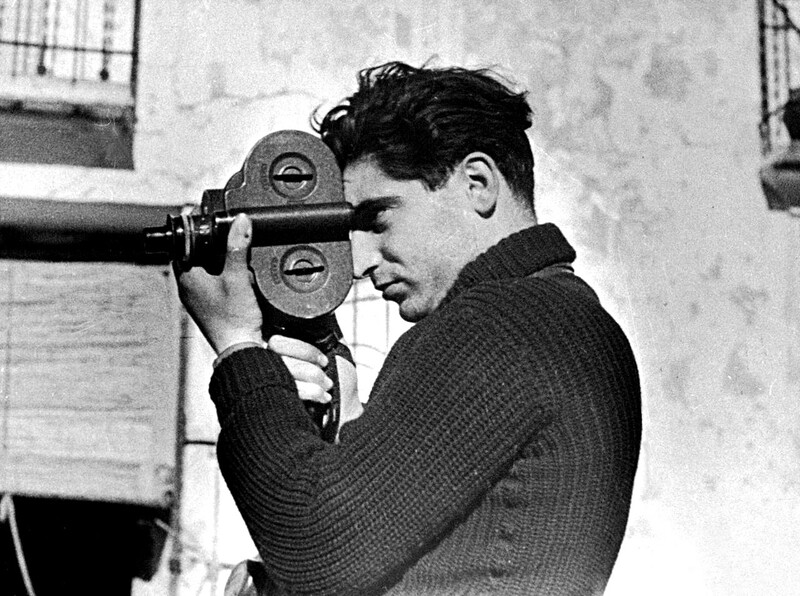
There's a maxim that became Robert Capa's personal religion, his professional compass, and eventually his epitaph: "If your pictures aren't good enough, you're not close enough." Most photographers treat such advice as metaphorical guidance about emotional engagement or careful composition. Capa interpreted it literally, physically, fatally. For him, quality meant proximity measured in feet and inches, not feelings. He treated the space between lens and subject as an enemy to be conquered, a barrier to be demolished regardless of what dangers filled that gap. Other photographers of his generation understood their role as witnesses standing at history's margins. Capa refused the margins entirely—he stepped into history's center, waded through its blood, breathed its smoke, and somehow kept photographing while bullets carved the air around him. What emerged from this suicidal methodology were images that didn't just document war but transmitted its fever directly into viewers' nervous systems. People argued endlessly about whether Capa represented the apex of journalistic courage or simply a man with a death wish who happened to own cameras. The debate misses the point: Capa fundamentally rewired how civilization understands conflict by eliminating the safe space between those who fight and those who watch. In an era when television hadn't yet arrived, when the internet remained decades away, when phones were attached to walls rather than broadcasting from pockets, Capa's photographs served as humanity's only unfiltered connection to what modern warfare actually looked like when you stood close enough to touch it.

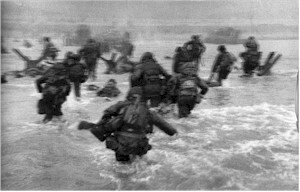
About ten photographs from Omaha Beach survive today in archives, though the explanation for this small number has shifted dramatically as historians reexamine evidence. For decades, everyone accepted a tragic tale of darkroom disaster: supposedly, a technician in London, desperate to rush Capa's precious film to press, applied too much heat during the drying process, causing the emulsion to melt on all but eleven frames, dubbed "The Magnificent Eleven" by editors who recognized their historic value despite technical flaws. This story of accidental destruction added another layer of near-tragedy to Capa's legend, suggesting that even more powerful images had been lost to simple human error. But contemporary researchers, examining evidence with modern methods, propose a different narrative. They argue Capa probably shot far fewer frames than legend suggests, perhaps just one or two rolls rather than the multiple rolls of myth. The famous blur and grain that give the surviving images their nightmarish quality likely resulted from the impossible conditions rather than any darkroom accident. Exhausted, terrified, standing in moving water while being shot at: of course the images would be imperfect. But here's the beautiful irony: those imperfections became the images' greatest strength. A technically perfect photograph of D-Day would feel false, staged, inadequate. The blur, the grain, the slight distortions: these flaws authenticate the images more powerfully than any sharp focus could. They look exactly like what combat feels like: confused, terrifying, overwhelming, impossible to fully grasp even while you're inside it. The images don't document war as much as they replicate war's effect on human perception.
When the war ended, Capa could have retired into comfortable celebrity, teaching workshops and selling prints to collectors. Instead, he channeled his battlefield experiences into revolutionary structural change within photojournalism. In 1947, alongside Henri Cartier-Bresson, David Seymour, and George Rodger—each a giant in their own right—Capa co-founded Magnum Photos, an agency that would transform how photographers related to their work and their publishers. Before Magnum, photographers were essentially servants to magazines and newspapers, surrendering all rights to their images in exchange for daily wages or assignment fees. Publishers owned the negatives, controlled distribution, and reaped the profits while photographers who risked their lives received little beyond bylines. Magnum inverted this relationship: photographers would retain copyright, control how their images were used, and share collective profits. It was more than a business model. It was a declaration of independence, a recognition that those who created images deserved to own them. The agency rapidly evolved into photojournalism's most prestigious institution, setting standards that defined excellence for generations. Yet while Capa helped construct this empire, he showed zero interest in running it. Administrative meetings, financial planning, organizational strategy: these safe, indoor activities held no appeal for someone whose identity had become inseparable from danger. Even as Magnum grew into an international force, even as it could have provided him comfortable executive positions, Capa kept accepting field assignments, kept seeking conflicts, kept pursuing the proximity that had defined him.
LIFE magazine's 1954 assignment to cover France's colonial war in Indochina brought Capa to his final battlefield. On May 25, while accompanying French troops through the Red River Delta near Thai Binh, Capa faced a choice he'd confronted thousands of times: remain on the raised road where the main column marched in relative safety, or descend into the fields where advance units moved through tall grass, exposed but offering superior photographic possibilities. As always, Capa chose possibility over safety. Stepping off the road's firm surface onto softer ground, perhaps crouching to capture soldiers silhouetted against sky, his foot triggered an anti-personnel mine. The explosion shattered his left leg and ripped through his abdomen. Death came quickly—within minutes according to witnesses—but even those final moments remained characteristic: soldiers reported he died clutching his camera, as if trying to protect it or perhaps attempting one final frame. He was forty years old. His death mirrored his life perfectly: voluntary movement toward danger, artistic vision prioritized over survival, the fatal step taken in pursuit of a photograph that would never exist.
That violent ending transformed Capa from legendary photographer into something more: a martyr to the principle that truth deserves any sacrifice. He had lived by his own law about proximity and died as its ultimate expression. His vast archive of images forced the world to acknowledge war's true cost in human terms, stripping away glory to reveal butchery, replacing abstract statistics with individual faces twisted by pain. But his death also raised uncomfortable questions that still haunt photojournalism: When does professional dedication become personal pathology? How much truth is worth a life? Should documenting suffering require sharing it? These aren't academic questions—they're actively debated every time a photographer enters a conflict zone. Capa's name gets invoked in journalism schools, ethics committees, and wherever photographers gather to discuss their craft's dangers. Because Capa represents both inspiration and warning, both the highest achievement of combat photography and its ultimate price.
Look at Capa's photographs today, eight decades after some were taken, and they still pulse with immediate danger. Bullets seem to still be flying just beyond the frame's edges, explosions about to resume, death hunting for its next victim. These images prove photography can transcend simple recording to achieve something greater: the transportation of viewers into historical moments they never lived. But they also remind us that such transportation sometimes requires the photographer's own life as payment. Capa paid in full, trading his future for our ability to see the past. His legacy isn't just the images he left behind but the principle he died defending: that truth is worth any risk, that proximity justifies any danger, that some things can only be understood by those willing to stand too close.
Weegee: The Nocturnal Prophet Who Turned Crime into Art
While Robert Capa hunted truth in foreign wars, Arthur Fellig, who branded himself "Weegee" like he was a product rather than a person, found his battlefield in Manhattan's streets after midnight. The nickname supposedly referenced Ouija boards and their mystical ability to predict the future, suggesting Weegee possessed supernatural knowledge of where violence would erupt next. The actual explanation was less mystical but more obsessive: Weegee lived in his car, a 1938 Chevrolet that served as home, office, darkroom, and dining roo, with a police radio chattering constantly, announcing the city's disasters in coded language that he'd learned to interpret like scripture. He didn't cover news in any traditional sense; he inhabited news, absorbed news, became news. Competitors waited for assignments from editors who worked banker's hours. Weegee created his own assignments by arriving at murder scenes while blood still steamed in winter air, at fires while flames still danced, at accidents while victims still breathed. His existence followed a relentless cycle: monitor radio, race through empty streets, photograph chaos, develop negatives in his trunk, sell images to tabloids, repeat until exhaustion forced brief unconsciousness, then repeat again. The city's catastrophes became his circadian rhythm, its violence his vitamins, its drama his drug. New York never slept, and neither did Weegee.
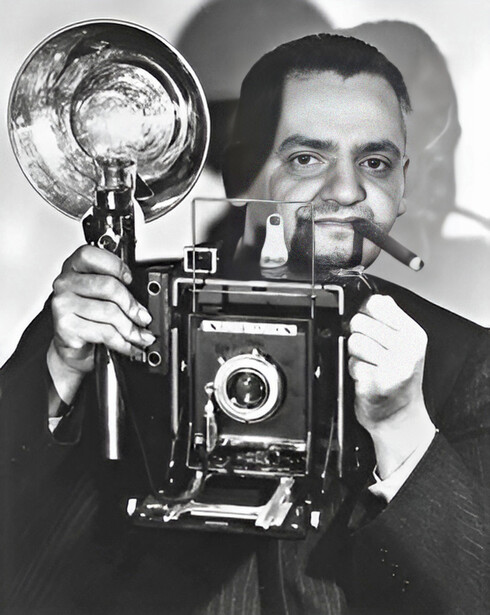
The photographs Weegee produced during these midnight hunts achieved a brutal poetry that elevated tabloid journalism into art, though he would have laughed at such pretentious description. His images showed reality without cosmetics: mobsters slumped in car seats with their final surprise still visible on their faces, bullet holes like dark periods ending life's sentence. Bodies decorated sidewalks like abandoned laundry, their dignity gone, their stories over, their only remaining purpose to sell tomorrow's newspapers. Widows collapsed against policemen's shoulders, their grief so naked that looking at the photographs feels like intruding on something sacred. Children slept on fire escapes during heat waves, their innocence creating heartbreaking contrast with the harsh city surrounding them. But Weegee captured more than just tragedy. He documented the entire spectrum of urban existence in its most extreme expressions. Society matrons stumbling from nightclubs at dawn, their makeup smeared, their elegance dissolved in alcohol. Couples groping in movie theaters, believing darkness granted privacy. Beach crowds so dense that individual humans disappeared into a singular mass of flesh. Celebrities caught between their public masks and private exhaustion. His camera found beauty in squalor, comedy in tragedy, humanity in chaos. He understood that the city wasn't one story but millions of stories colliding every night, and his job was to catch those collisions at their moment of impact.
Technique became Weegee's signature as much as subject matter. He used flash like a weapon, firing it point-blank to create violent contrasts between blazing white and absolute black. No subtle gradations, no gentle transitions, just harsh reality stripped of softness. Critics accused him of sensationalizing tragedy, of exploiting suffering for shock value, of turning death into entertainment. Weegee's response was characteristically blunt: "News is news, but when you make it art, it's something else." He never claimed to be objective or respectful or dignified. He was after something more visceral than truth. He wanted impact, wanted his photographs to hit viewers like the events themselves hit participants. That harsh flash didn't distort reality; it revealed reality's inherent harshness. The city itself was sensational; Weegee just had the honesty to show it that way.
Fame found Weegee quickly because his images gave readers what they secretly craved: authentic glimpses of the violence and passion usually hidden by darkness or distance. Tabloid editors fought for his photographs, knowing that "Photo by Weegee" guaranteed sales. His credit line became a brand promising genuine urban drama, unfiltered and unsafe for work. By 1945, his collection "Naked City" achieved massive commercial success and critical recognition, presenting crime photographs alongside street scenes in a format that suggested both were equally valid subjects for artistic consideration. The title itself was perfect, suggesting a city stripped bare, exposed, vulnerable. Hollywood adapted the book, cementing Weegee's transformation from photographer to cultural icon. He'd become a character as vivid as any he photographed: the rumpled prophet of urban chaos, the democracy of disaster's recording angel, the man who transformed murder into art. Museums that had once dismissed photography as mere documentation began exhibiting his crime scenes like paintings. Critics who had condemned him as vulgar started analyzing his work with the vocabulary usually reserved for fine art. The streets had made him famous, and fame gave his street photographs immortality.
But here's what really set Weegee apart from traditional photojournalists: he regularly violated the profession's most sacred rule about never interfering with events being documented. If he arrived after the interesting action had concluded, he'd recreate it, directing witnesses to point where bodies had lain, asking bystanders to reproduce their reactions. Sometimes, he'd carry props—a drunk's hat, a child's doll—to add poignancy to otherwise mundane scenes. When photographing the aftermath of violence, he might adjust positions for better composition, move objects to improve framing, essentially directing reality like a film. Traditional journalists condemned these practices as unethical fabrications, but Weegee never claimed to be a traditional journalist. His goal wasn't courtroom evidence but emotional truth, not documentation but interpretation. The famous photograph titled "The Critic" from 1943 perfectly exemplified his approach: it showed two society women in fur coats and diamonds being observed by a disheveled woman who appeared homeless. The contrast was so perfect, so pointed, that viewers immediately suspected staging—correctly, as it turned out. Weegee had brought the disheveled woman to the opera opening specifically to create this moment of social commentary. But did the staging make the photograph's message less true? Didn't wealth and poverty coexist exactly this way throughout the city? Wasn't the staged photograph more honest than pretending these worlds never intersected?
As Weegee aged and his reputation solidified, his work grew increasingly experimental, abandoning any pretense of documentation for pure visual exploration. He began using infrared film that could see heat rather than light, creating images where human skin glowed white against black backgrounds like ghosts or angels. He attached distorting lenses to his cameras, turning celebrities and politicians into funhouse mirror grotesques, their features stretched and multiplied until fame itself seemed like a deforming disease. He'd photograph audiences in darkened movie theaters, catching private moments—tears, kisses, sleep—that people believed hidden. These later works baffled critics who'd finally accepted him as a documentarian only to watch him abandon documentation entirely. But the experiments revealed what had always driven Weegee: not journalism's pursuit of facts but art's pursuit of impact. He'd conquered crime photography, defined its aesthetic, influenced generations of followers. Repetition bored him. He needed new ways of seeing, new methods of shocking viewers from complacency. Even when photographing the wealthy and famous at exclusive galas, he applied the same merciless perspective once reserved for corpses—finding vanity where others saw beauty, desperation where others saw success, mortality where others saw glamour.
Weegee's influence on photography extends far beyond the specific techniques he pioneered. He proved that sophisticated equipment and formal training weren't necessary for creating lasting art, just dedication and distinctive vision. He demonstrated that the border between high and low culture was arbitrary, that a crime scene photograph could hang in a gallery beside a landscape. He showed that photography didn't need to be beautiful or pleasant or technically perfect to matter: sometimes, the most important images were ugly, disturbing, technically flawed. His aesthetic anticipated everything from cinema verité to reality television to social media's unfiltered glimpses of private moments. Contemporary street photographers, whether they know it or not, work within traditions Weegee established. When they use harsh flash to create drama, when they capture urban grotesques, when they blur the line between documentation and interpretation, they're following paths Weegee blazed with his Speed Graphic and exploding flashbulbs.
When Weegee died the day after Christmas in 1968, he left behind more than 20,000 photographs and negatives: a complete visual record of New York during one of its most dynamic and dangerous eras. These images preserve a city that no longer exists: grittier, poorer, more violent, but also more vital, more surprising, more alive with possibility. Looking through Weegee's archive is like excavating an urban archeological site, each photograph another artifact of a vanished civilization. But more than historical documents, these images remain artistically powerful, still capable of shocking viewers accustomed to far more explicit imagery. They remind us that photography's strength doesn't always come from what it shows but from how it shows it, that perspective matters more than subject, that one person with a camera and inexhaustible energy can document an entire metropolis's dreams and nightmares.
Weegee proved that obsession doesn't require war zones or exotic locations. Sometimes, it just requires one city and the patience to wait for it to reveal its secrets. His legacy teaches that the extraordinary exists everywhere if you're willing to stay awake long enough to witness it, that drama doesn't require staging if you position yourself where reality performs nightly. And perhaps most importantly, Weegee demonstrated that photography could be simultaneously journalism and art, documentation and interpretation, truth and theater. The city was his stage, and he was both audience and critic, watching its performance through his viewfinder and judging it with his flash.
Ansel Adams: Rising From the Ashes of Destruction
The public knows Ansel Adams as photography's zen master, the patient craftsman who waited days for perfect light to kiss Yosemite's granite, the technical genius who could extract symphonies from silver and paper. His name evokes pristine wilderness captured with scientific precision, black-and-white prints so perfect they seem less like photographs than platonic ideals of photography itself. This reputation for serene mastery, for art achieved through meditation and method, tells only part of Adams's story. Buried in his biography lies a moment of catastrophic loss that nearly erased his artistic legacy before the world recognized its value. This wasn't the dramatic danger Capa courted or the urban chaos Weegee chased. It was the sudden devastation of accident, arriving without warning in what should have been his sanctuary. A fire that could have ended Adams's career instead transformed him into the obsessive perfectionist whose name became synonymous with photographic excellence. The flames that almost consumed his work ultimately forged the discipline that made him immortal.
The catastrophe arrived in 1937, when Adams was still building his reputation, years before museums would compete for his prints or presidents would hang his photographs in the White House. Fire erupted in his Yosemite darkroom studio. The exact cause remains uncertain—perhaps chemical accident, electrical failure, or simple tragic chance—and spread with terrifying speed through the wooden structure filled with paper and chemicals. Adams could only watch as flames devoured years of work, each negative representing not just an image but an expedition, a conquest, a moment when preparation and opportunity had achieved perfect union. Understanding the magnitude of this loss requires appreciating what each negative cost to create. Adams would wake before dawn, load cameras and tripods and lenses weighing sixty pounds or more onto his back, then hike for hours through wilderness to reach vantage points he'd scouted in previous expeditions. Once there, he'd wait, sometimes for hours, sometimes returning day after day, for conditions that might last only seconds: the right angle of light, the perfect cloud formation, that miraculous instant when the landscape transformed from beautiful to sublime. Each negative represented not just artistic vision but physical ordeal, temporal patience, and lucky convergence of factors that might never align again. The fire consumed these irreplaceable documents, each one a unique recording of light that would never fall quite the same way again.
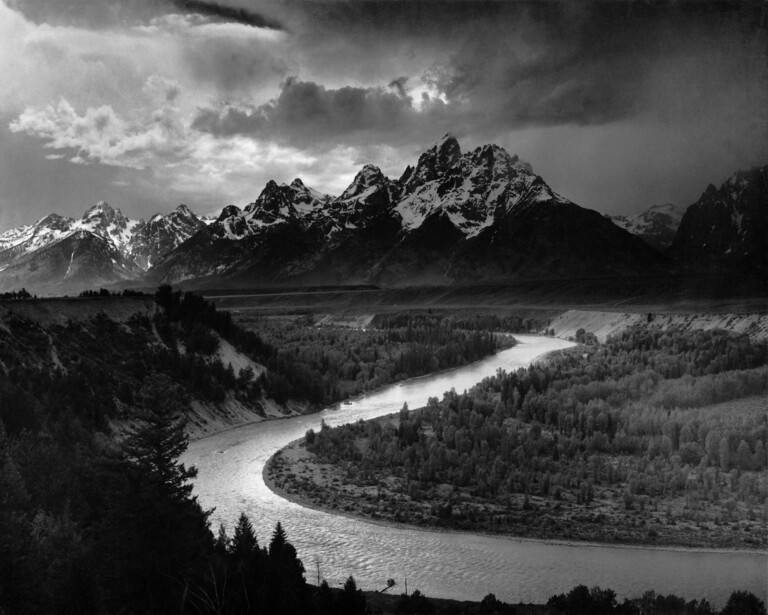
Most artists would have been destroyed by such loss, but Adams transformed catastrophe into catalyst. The casual approach to archiving that many photographers maintained became impossible for someone who'd watched years of work vanish in minutes. He developed organizational systems that bordered on obsessive compulsion: negatives stored in fireproof safes when available, duplicate prints maintained in separate geographic locations, comprehensive cataloging that tracked every image's location and condition with scientific precision. Some might have seen this transformation from artist to archivist as creative death, but for Adams it enhanced his art. The discipline required to maintain perfect archives influenced his approach to creation. If every negative was precious because it could be lost, then every exposure deserved maximum effort because it might be the last. The fire had taught him that photography danced constantly with destruction—chemicals could fail, equipment could break, accidents could destroy everything—and the only defense was perfection in every aspect of the process.
This period of rebuilding coincided with Adams's collaboration with Fred Archer to codify what became known as the Zone System, formalized between 1939 and 1940. The timing seems more than coincidental, as the fire clearly influenced Adams's thinking about control and predictability in a medium plagued by variables. The Zone System represented nothing less than an attempt to transform photography from art into science, from intuition into calculation, from chance into choice. By dividing the full tonal range from pure black to pure white into eleven distinct zones, photographers could previsualize exactly how every element in a scene would render in the final print. They could measure light with precision, adjust development to expand or compress contrast, and achieve exactly the emotional effect they intended before ever releasing the shutter. For Adams, still processing the trauma of watching his work burn, this system offered more than technical innovation. It provided psychological comfort through control. If fire could destroy existing work, at least future work could be created with such systematic precision that recreating it became theoretically possible. The Zone System wasn't just methodology. It was philosophy, arguing that photography could achieve the predictability of mathematics while maintaining the soul of art.
The fire's impact extended far beyond technical considerations to reshape Adams's entire understanding of photography's purpose and preservation. He began seeing himself not merely as an artist creating images but as an educator responsible for ensuring photography's knowledge survived beyond individual practitioners. His workshops became legendary for their rigor, with Adams demanding students understand not just the how of each technique but the why of each decision. He published technical books that read like scientific treatises, documenting every aspect of his process with exhaustive detail that some found tedious but others recognized as invaluable. This pedagogical urgency, the compulsion to teach, document, preserve, stemmed directly from his experience of near-total loss. If negatives could burn, then the knowledge that created them needed to exist in forms fire couldn't touch: in books distributed across thousands of libraries, in students carrying techniques forward through generations, in systematic approaches that others could replicate even if Adams himself disappeared. The fire had transformed him from solitary artist into movement leader, from someone making photographs into someone ensuring photography itself would endure.
The catastrophe also fundamentally altered Adams's relationship with the landscapes he photographed. Before the fire, he might have unconsciously assumed these places would always exist, always wait for his camera, always offer themselves for documentation. After watching his visual record of them burn, he understood viscerally that both landscape and photograph were temporary, that preservation required active effort, that beauty could vanish as quickly as flame consumed paper. This recognition added political urgency to his conservation work. He began collaborating more actively with the Sierra Club, providing images for publications and campaigns. His photographs became weapons in legislative battles, appearing in Congressional hearings and presidential presentations. When he showed politicians and business leaders his photographs of threatened wilderness, he wasn't just sharing aesthetic experiences—he was documenting what fire or development could destroy forever. The memory of flames consuming his negatives gave him unique understanding of permanent loss. Every pristine valley that became a reservoir, every ancient forest that became lumber, every wilderness that became wasteland represented destruction as final as that 1937 fire.
Through the decades following the fire, Adams achieved levels of technical mastery that seemed to violate the laws of photographic physics. His prints exhibited tonal ranges that shouldn't have been possible with existing materials—highlights that retained detail while shadows revealed subtle information, creating images that seemed to glow with internal light rather than reflected illumination. Museums paid enormous sums for his prints, recognizing them not just as photographs but as pinnacles of human craft. Collectors studied his work with magnifying glasses, finding perfection at every level of scrutiny. But inside this perfectionism lived the permanent memory of imperfection, of failure, of loss. Every meticulously produced print carried the ghost of prints that never existed because their negatives had burned. His famous patience in the darkroom, the ability to spend eight hours producing a single print, adjusting contrast in different areas with surgical precision, wasn't innate personality but learned behavior. The fire had taught him that haste led to mistakes, that impatience created vulnerabilities, that only through absolute attention to every detail could he protect his work from the chaos always threatening to consume it.
Students who studied with Adams often remarked on his seemingly contradictory relationship with failure and perfection. He demanded technical excellence that bordered on impossible, yet readily shared stories of his own disasters and mistakes. He insisted on systematic precision, yet acknowledged that accidents had shaped his career as much as planning. This paradox only made sense when understanding the fire's central role in his artistic development. He knew from experience that perfection was aspiration rather than achievement, that every photographer would face catastrophes beyond their control, that the medium itself was inherently fragile. The goal wasn't to avoid all failure, but to learn from each failure, to build systems that minimized future failures, to accept that destruction was part of creation's price. He would tell students about the fire not as tragedy to fear but as teacher to respect. His example demonstrated that careers could survive even devastating losses if the photographer's commitment remained stronger than circumstances.

As Adams aged and his reputation evolved from famous to legendary, he never stopped refining his archival systems. Storage evolved from basic organization to museum-quality preservation. He created printing notes so detailed that future technicians could recreate his exact intentions. He established legal frameworks ensuring his work's survival beyond his lifetime. This might appear as ego or paranoia to those who didn't understand his history, but it was actually wisdom earned through trauma. The 1937 fire had demonstrated how easily life's work could vanish; his response was to make vanishing as difficult as possible. By his death in 1984, his archive had become so thoroughly organized and protected it seemed designed to survive apocalypse, which, in a sense, it was, since Adams had already experienced his personal apocalypse and built everything afterward to prevent repetition.
Today, visitors to museums stand before Adams's prints, those perfect symphonies of tone depicting American wilderness at its most sublime, and see serenity, beauty, technical mastery that appears effortless. They don't see the invisible flames that drove such mastery, the memory of loss that made each print precious, the knowledge of fragility that made perfection necessary rather than optional. Yet that phantom fire influenced every creative decision Adams made for nearly fifty years. It transformed a talented photographer into an obsessive craftsman, a casual artist into a systematic technician, a young man making pictures into an institution ensuring those pictures would outlive civilization itself.
The fire that nearly ended Ansel Adams's career instead defined it, proving that sometimes destruction creates more than it consumes, that from ashes can rise not just phoenix but phenomenon. His story reminds us that photography's greatest enemy isn't war or crime but entropy itself—the universal tendency toward disorder that threatens all human creation. And it demonstrates that the only response to entropy is discipline so complete it becomes art, control so absolute it achieves transcendence, dedication so profound that even fire becomes merely another teacher in photography's endless education. Adams learned from flame what others learn from time: that everything we create is temporary, that preservation requires constant effort, that the only immortality possible comes from work so excellent that strangers will fight to protect it long after we're gone.
Lead image of Yellowstone Falls by Ansel Adams, public domain


Join the Fstoppers community for free
-
Post comments and join in the discussions
-
Browse the site ad-free
-
Share your work and get featured in the community
-
Compete in the photo contests for fun and prizes
2 Comments
The truly sobering thought about war photography is that despite its ability to bring the horrors of war into the home for everyone to see, the human race still chooses war over peace. And for what? More dirt to call your own? Hatred of another race of people? Whether photos of the Civil War showed the aftermath of battle, or Robert Capa showed the decisive moment, civilization has been shown the gruesome reality of war for 160 years.
Speaking of the three photographers for which this article was written: "They rewired how civilization sees truth, tragedy, and beauty." For what purpose? I am not familiar with Weegee, but I do know that New York was fed up with crime in the 1960s and demanded something be done about it. I also know the photography of Jacob Riis in the late 1800s as having a profound effect on recognizing poverty in NYC. Theodore Roosevelt used his work as motivation to change "how the other half lived." Ansel Adams' photography had a significant beneficial impact on federal land protection.
But how has the human race improved because of war photography? Nothing has changed over that time since the Civil War other than man's ability to raise the level of destruction. In that respect, Capa's life, in my opinion, was lost in vain. If anything, photojournalists and the stories shown in a 24/7 news cycle have exacerbated the hatred humans have for one another.
Great writing. Excellent. A keeper.
If you write more photographer's stories and make a book out of them, I will buy it.