
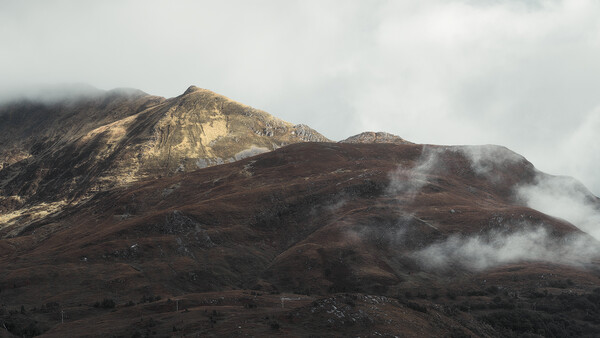
Modern mirrorless lenses are beautifully crafted technological masterpieces. Yet, these lenses come at an expense. What if investing in older technology provides a comparable, if not more pleasing, result at a fraction of the price of its modern-day equivalent?
If there’s ever a lens I’m glad I bought, it’s the Canon EF 135mm f/2L USM. Released in April 1996, this lens was designed primarily for use in portraiture and sports. While it’s not considered a landscape photography lens, I was thrilled to snag one of these on the secondhand market as a landscape photographer and filmmaker. Yes, the image quality is outstanding, but more notably, this lens has compelled me to change my photography style for the better.
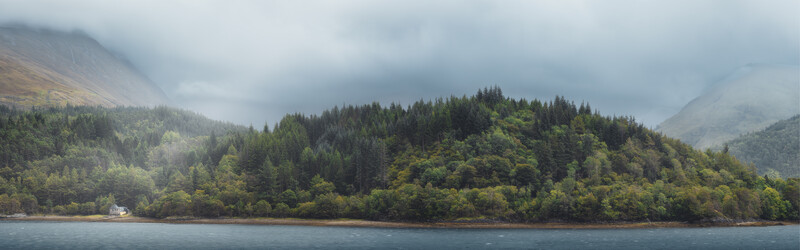
As I mentioned earlier, the 135mm f/2L is considered a portrait or sports lens, thanks to its focal length and quick focus. However, I was more interested in obtaining this lens for three reasons. One key feature is the large aperture; two, the compression; and three, it’s a prime lens offering outstanding sharpness. It’s also remarkably inexpensive these days. The going rate is approximately $500–$600 in the used market here in the UK, making it a no-brainer to purchase. This lens also boasts durability thanks to its all-metal construction, reminiscent of the ’90s. It would be challenging to find any modern Canon RF lenses with this sort of construction and optics for under $2,000.
The 135mm f/2 has forced me to change my style of landscape photography dramatically. I used to have a mindset of only shooting wide-angle landscapes, but I changed my approach after I bought the 135mm. Suddenly, I found myself studying other photographic techniques. I began using the lens to adopt a more minimalist approach to my landscapes. It does a great job of clearing the clutter and emphasizing only the crucial details in the image. After a while, I also took it a step further and used it as my dedicated panorama lens. Due to its compression, I can capture panoramas without any distortion, making them much easier to stitch together in Photoshop. What’s more, you can stop down the lens to f/2, focus on your subject, and continue the panoramic sequence to capture some incredible Brenizer Method panoramas as well.

On the video side, this lens performs exceptionally well. Yes, autofocus is not on par with today’s modern mirrorless lenses. However, it’s still fast and works well with the Canon EF-RF adapter on my Canon R5 C. I’ve had it hunt focus a few times in low-light conditions, but to be honest, I use manual focus most of the time when shooting video anyway, so it’s of minor concern. That being said, shooting low-light video with a 135mm f/2 is a dream. The bokeh is soft and pleasing to the eye, and the color is just beautiful. Somehow, Canon still managed to keep it relatively sharp at that aperture. Yes, there’s a subtle tinge of chromatic aberration, which can be easily removed in post-processing. Still, it’s a negligible trade-off for what you can achieve at such a wide aperture when shooting video.
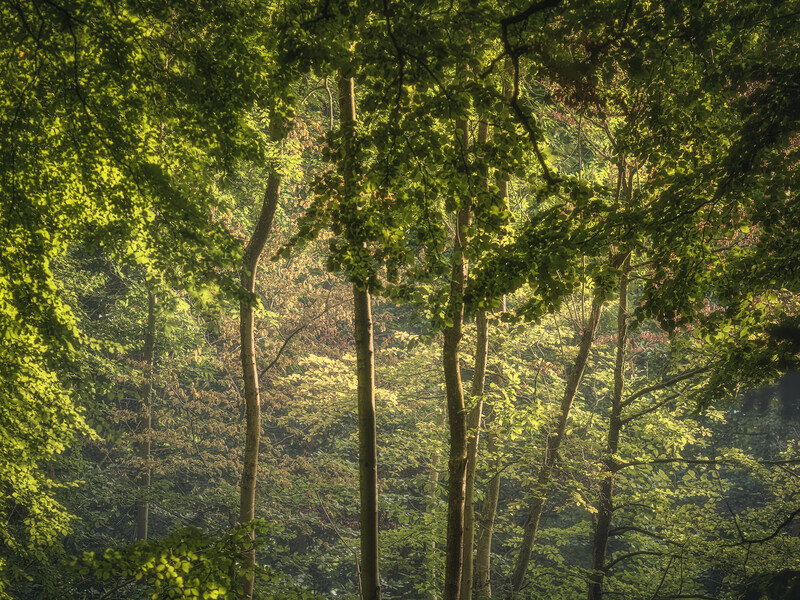
Since purchasing this lens, I’ve fallen in love with landscape photography all over again. It’s forced me to change the way I look at potential scenes and subjects when venturing outdoors. The lens has challenged me to spend more time refining compositions and allowed me to eliminate distractions. It’s one of the most perfect lenses for landscape photography. You can also add Canon’s 1.4x and 2x teleconverters for more reach, but this comes at a sacrifice. Using the 1.4x TC gives you a maximum aperture of f/2.8, a full stop reduction—still not terrible. From what I’ve seen, many astrophotographers swear by the 1.4x TC, as it’s a small sacrifice in terms of light and sharpness. On the other hand, when using a 2x TC, your maximum aperture decreases to f/4, and, according to my research, many users have reported softer focus as well. So, keep that in mind if you’re planning on adding a teleconverter to the mix. As I don’t own one yet, I’d also like to know whether the teleconverter would affect image quality when used with the Canon EF-RF mount adapter. Please let me know in the comments below if you have any experience with this.
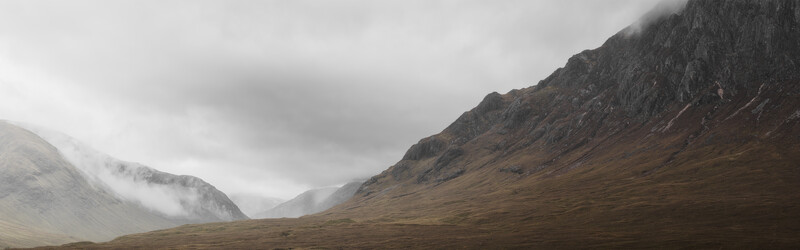
While out shooting one day, I thought I’d swap my circular polarizer for my infrared filter, and to my surprise, the 135mm handled infrared exceptionally well. I used a B+W infrared filter (820nm), which is quite dark and often difficult to focus if you’re not shooting in full sunlight. Still, thanks to the large aperture, you can open up to f/2 and see enough of the image to focus on it. I’ve used the filter on my Canon 16-35mm f/2.8L II, and I hated the result, as the lens produces a gigantic hotspot in the center of the frame. Quite odd, considering the 16-35mm has an IR focus marker on the barrel, while the 135mm does not. Besides the missing infrared marker, it’s yet another reason to acquire this lens if you plan on using infrared filters or have an infrared-converted camera.
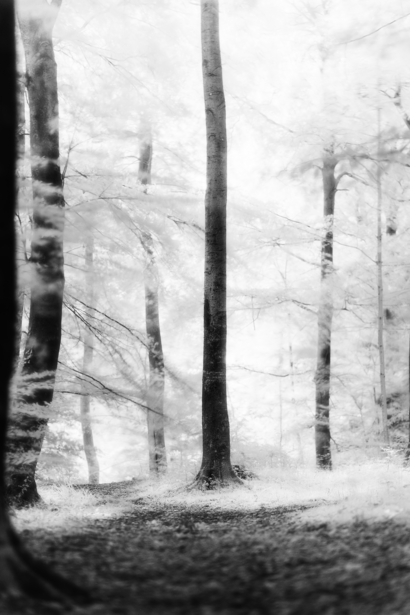
With comparable lenses, such as the Canon EF 70-200mm, still costing around $1,000 or more, the 135mm is a fantastic option if you’re looking for a compact, sturdy telephoto lens. The only downside to this lens is that it lacks the weather sealing of more modern EF and RF lenses. It’s understandable, considering Canon marketed this lens as an indoor or studio portrait lens rather than how I’m utilizing it. However, for my intents, this lens outmatches anything that comes close to it, so I’ll continue to be cautious and use it whenever the weather permits.
All in all, the Canon EF 135mm f/2L USM boasts superb construction and incredible color and contrast performance. It’s a versatile lens primarily developed for portraits and sports, yet it shines in other genres of photography, particularly landscape and astrophotography. A fast telephoto lens at a reasonable price—even if you’re only starting in photography—this is one of those lenses any Canon shooter should have in their bag. My only regret is not buying one sooner.



Join the Fstoppers community for free
-
Post comments and join in the discussions
-
Browse the site ad-free
-
Share your work and get featured in the community
-
Compete in the photo contests for fun and prizes
7 Comments
The single lens which could lure me back to Canon from Fuji. I spent 25+ years with Canon and owned maybe 3 of the EF 135. This lens on a 5D4 is a blast
What about the xf 90mm prime ?
I have had it, the compression, micro contrast and colors are very different. Then there's the dreaded 'clunk'. It's a good lens just doesn't live up to the hype, just like the 3XF 5 1.5.
"Canon has a 'magical' lens, let's dream up that Fuji does too"
Yeah I wasn't able to look past the dreaded clunk. I've owned so many lenses over the years and never heard something that bad. It's a shame because the lens takes great photos, it just doesn't sit well making that noise.
Samyang's excellent AF 135mm f1.8 for Sony FE mount is $599 brand-new with Lens Station.
One of my favourite lenses. I bought mine about 10 years ago to use on a crop sensor for hockey, and it was fantastic…then, I started using it for portraits (including a full family portrait shots on APSC!) and the results were not only fantastic, but the look was different than what any other photographer was doing (yes, there’s a lot of distance between the subjects to get them in, so had to talk them through that!). Anyway, bought it for $1100cdn new, and I’ll never let it go. It’s adapted perfect on RF, and what’s the replacement cost for similar now?? It’s light(-ish), tough, great IQ, and if you can find one, “affordable”.
Edit: I should add that I later added a 70-200 2.8 III for hockey, and while that has the focal range, I still use the 135 half the time because of the extra stop, and beautiful out of focus rendering.
I feel similar about the Batis 135 F2.8. It's obscenely overpriced new but almost criminally affordable used. It's rendering is fantastic, it's tac sharp, and the 2.8 aperture means it's pretty lightweight. Still creates lovely bokeh and is great for portraits, but I too, love it for landscape panos and detail shots.