
If you have been a photographer for any period of time, then perhaps, like me, you have a hard drive or hard drives full of images that you’ve taken over the years. But I ask you, how often do they see the light of day? Can reviewing them help you improve your photography?
This was a scenario I found myself in recently, and it really opened my eyes not only to finding forgotten gems but also to seeing how I have improved in both my skills and my post-processing over time.
I’ve been a landscape photographer for as long as I can remember. I’ve had a camera in my hand pretty much since I was twelve years old. I started with film and then moved into the digital world. However, I was quite late in getting my hands on my first DSLR, a Canon EOS 1000D, which I picked up while it was on sale in my local store way back in 2008. From that moment on, my addiction started, not for camera gear, but for getting photos in the landscape.
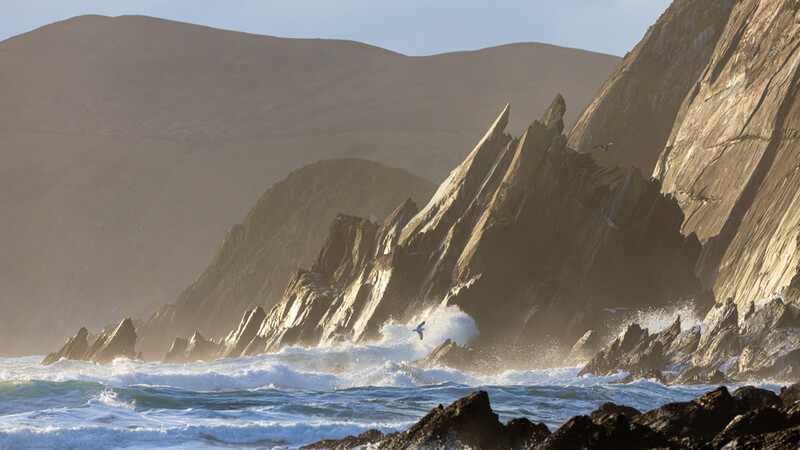
It’s very difficult for us to see how we’ve improved or developed a style in our photography when we look at it in a linear fashion and only move forward. But when was the last time you looked at images you took one, two, or even three years ago, or more? I’d highly encourage you to do it. You’ll be surprised at what you find.
I’ve always had this lifelong dream of producing a book, a book of photos of my stunning country, Ireland. I feel so lucky to call this my playground. The area I’ve been drawn to time and again is the coast. Ireland has some of the most raw, dramatic, and unspoiled coastlines in the world, ranging from towering cliffs to calm beaches and secluded coves, all shaped by wild Atlantic waves, wind, and storms. So naturally, if I were going to produce a book, it would have to be a book of seascapes. And this was when my eureka moment really happened.
Putting this book together, I wanted to look through all of the images I had taken. This was going to be my first printed book, after all, and I wanted it to represent not only my vision but also how amazing the Irish coast truly is. So, I took out old hard drives that had been sitting in drawers for years, searching for scenes I might have passed over, and I was amazed at how quickly my eyes were opened.
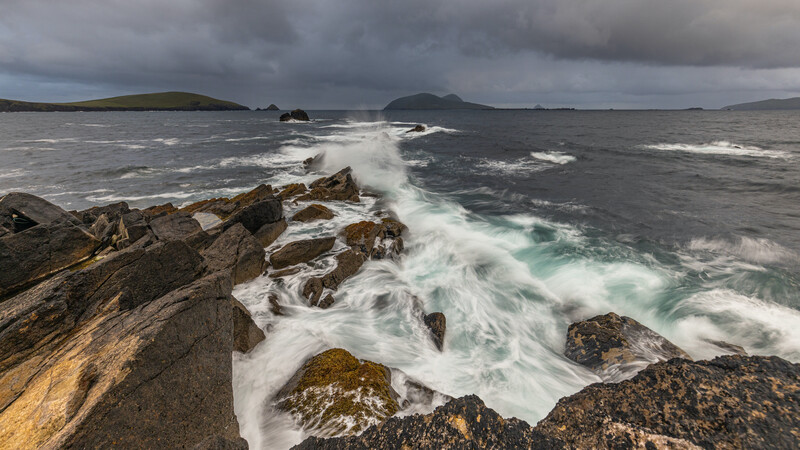
Images I had forgotten about. Photo shoots that no longer resonated with me, yet the moment I opened the image, I was immediately transported back to when I took that shot. Photography, for me, has always been a feeling. A feeling that perhaps only you know. I challenge you to look at any of the images you’ve taken and see if you remember: were you cold, were you warm, were you happy, were you sad? Was it windy? Were you content when taking the shot, or did the happiness (or disappointment, for that matter) come when you began to edit the image?
The best part of this idea—that photography is a feeling—is that if you can evoke a feeling in someone else when they look at your image, then you’ve succeeded. After all, they weren’t there when you took it. They weren’t there when you edited it. Yet the very scene you photographed can resonate on a completely different level with the viewer, one you might never have anticipated. This is what makes photography amazing, in my view.
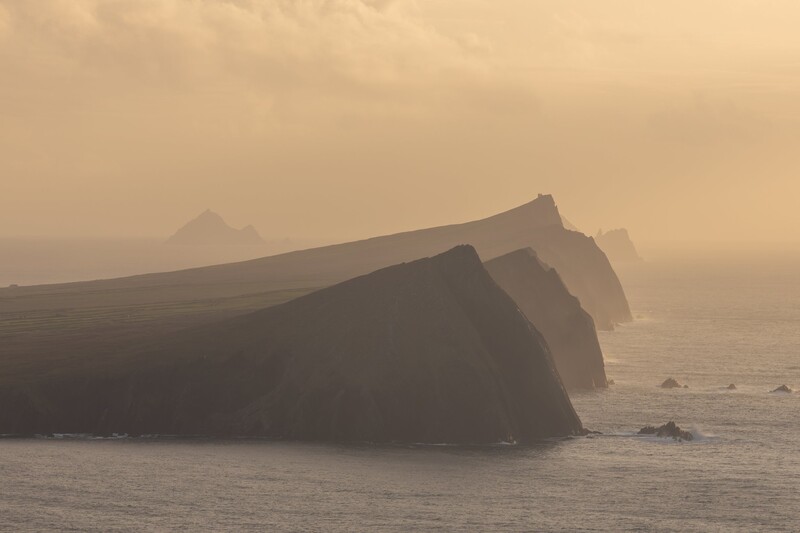
By looking back through my older images while forming this book, I realized how much I had improved. I hadn’t seen these improvements before; they were incremental and linear, as mentioned earlier. But when you look back, you can clearly see progress: in your composition, in your eye, and, more importantly, in your editing.
In digital photography, editing is far more important than gear, I feel. After all, I could have the best camera in the world and still ruin an image by over-editing it. I’m sure many of you are aware that the sliders in Adobe Lightroom or Adobe Photoshop were never designed to go all the way to 10 or 100. Yet looking back at my early images, it’s clear that I often tried to rescue shots I had messed up in the field, or became over-exuberant with the Vibrance sliders, creating images that looked like something from a psychedelic movie from the 1970s. However, among all of that clutter, I found gems I had completely forgotten about—images that immediately brought me back to the moment I took them, and ones I knew had to be included in my first-ever book.
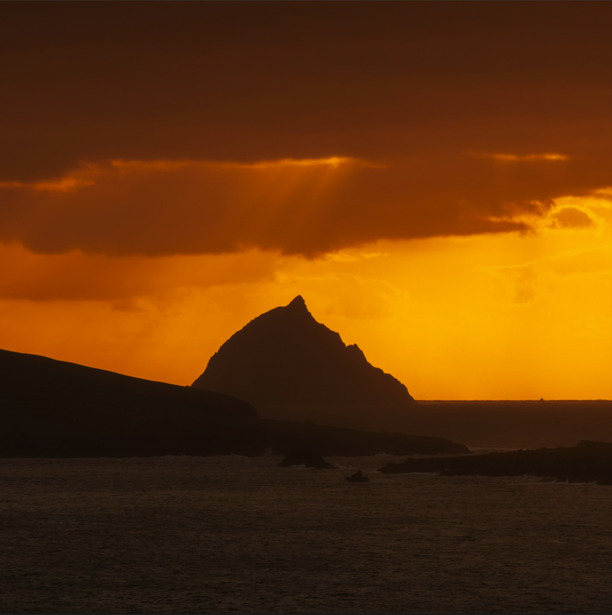
It was at this point that I realized that not only were the feelings still there, but so were the memories and stories behind each image. I could remember if I was alone or with someone, the challenges I faced to reach a location, and even the funny anecdotes that came with each image. This prompted me to write, and my book became more than a collection of images. It became a collection of stories that those images themselves created.
Of course, writing a book is a daunting task. If you don’t suffer from imposter syndrome at this stage, then perhaps narcissism has already set in. I often questioned what exactly I was doing. Who am I to write a book? Who am I to produce a book of my images? And who would want to even look at it, let alone purchase a copy? But as I went through my images and started to put them together cohesively, I realized there were fantastic stories to tell and a great opportunity not just to showcase my images but to showcase the beauty of Ireland’s coast.
Additionally, while putting this together, I realized that because I also make videos on YouTube, I often had footage of my shoots showing exactly how each image came to be. So I figured I’d include this in the book, but how? Well, if I were writing this book fifteen years ago, I couldn’t have done what I can now: include QR codes. This means someone reading the book can instantly scan a code and be visually transported to see the actual photographic adventure take place. It’s one big advantage of modern technology that we simply didn’t have back then.
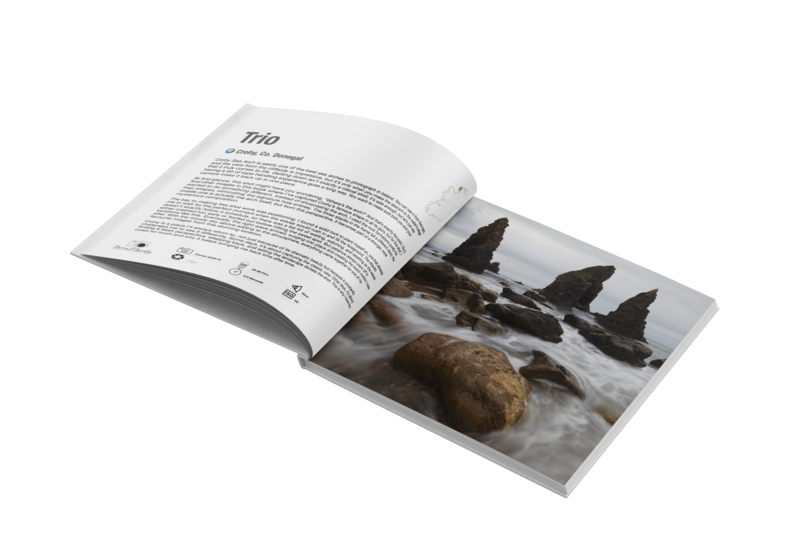
I also knew that people often want to know what settings were used to capture an image. So, of course, I decided to include the settings for every photo in this book. That way, readers can see exactly what was dialed into the camera to capture each shot.
After doing this for several months, I was amazed to see I had collected a body of work that truly showcased the beauty of Ireland’s coast. It was something readers could benefit from, not only by seeing the image but also by reading the story behind it, viewing the settings used, and, where applicable, watching the video of how it was made. This meant the book would not just be a coffee table book of pretty images; it would be something that appealed to a much wider audience.
An audience of photography lovers. An audience of photographers. An audience of people with Irish heritage, or those who have always wanted to visit Ireland but never had the chance. An audience of people seeking inspiration to explore. This is my hope with my first-ever printed book, aptly called:
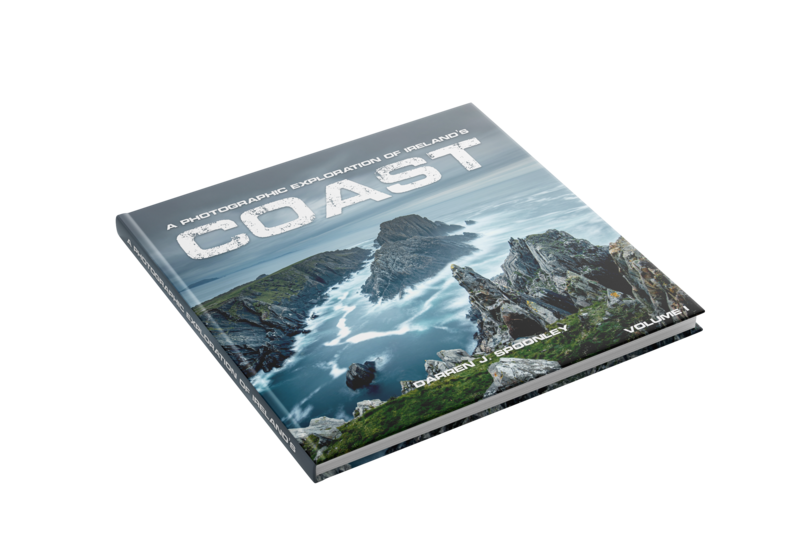
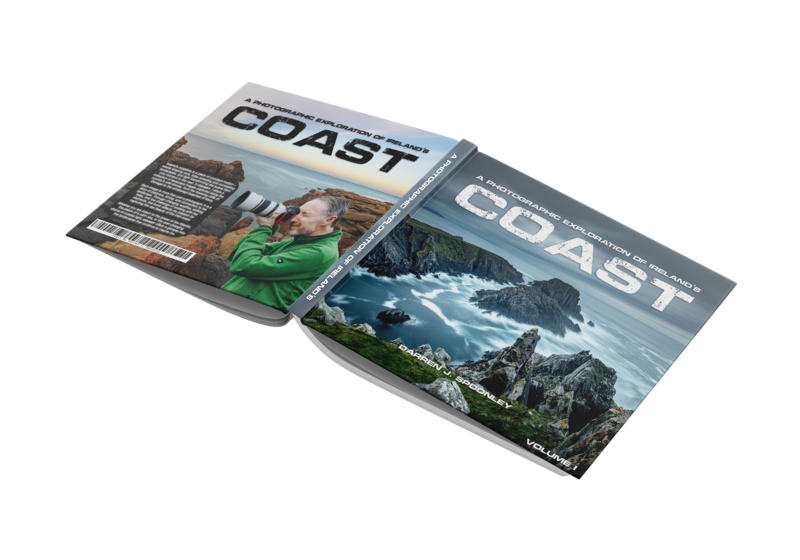
Coast: A Photographic Exploration of Ireland’s Amazing Coast
But how would I get it into people’s hands? Publishing a book can be quite complicated. A publisher can help, of course, but they also take a significant cut and may impose creative constraints. I knew that route wouldn’t suit me. So instead, I decided to self-publish.
Self-publishing, though, brings its own challenges. There’s a large capital outlay, a lot of time, effort, and personal cost involved in bringing it together. I didn’t want to end up with boxes of books sitting in my house, scrambling to sell them and recoup the cost. That’s when I decided Kickstarter would be the way to go.
All of this has been happening over the last twelve months, and now I am finally ready to launch it publicly on Kickstarter. I believe this book will resonate with many different people, and I’m both excited and nervous. Kickstarter is an all-or-nothing platform: if it doesn’t reach the goal, it doesn’t happen.
This entire process has been an eye-opener. It’s shown me that I have, in fact, improved and that I have something to offer. If you’d like to support me, I’d love to have you on board as a backer when the Kickstarter goes live.
Have you ever gone through this process, looked back over your images, and seen your own improvement? If you haven’t, I’d highly recommend it. And if you have, let’s continue the conversation in the comments below.

Join the Fstoppers community for free
-
Post comments and join in the discussions
-
Browse the site ad-free
-
Share your work and get featured in the community
-
Compete in the photo contests for fun and prizes
2 Comments
What a solid article! Many valuable insights you give us here - thank you!
"I ask you, how often do they see the light of day?"
My old images are viewed and shared constantly. I typically spend about 10 hours each week going back through my archives, which date back to 2007. Show me any photo I ever took, and I can tell you what year I took it in, what time of year, and in many cases I can recall the exact date.
With wildlife photography, our image file archives aren't just a collection of pretty photos; they are biological data that can help us know each species better. For instance, a photo of a male Yellow-crowned Night Heron holding his wings up in an unusual pose serves as a record of when that species performs courtship displays at that latitude. Combined with other photos of Yellow-crowned Night Herons, it can help us determine whether this species courts and mates at the nesting location, or far from the nesting location. The date of the photo can be compared to the massive record of birding data on eBird to see if this species had been in this region for several weeks prior to courting, or if they start courtship rituals as soon as they arrive each spring.
Ditto for garnering information about various warbler species, about Whitetail Deer, about Snowshoe Hares, about White-breasted Nuthatches, Mallard Ducks, etc, etc, etc.
For these reasons, it behooves any wildlife or bird photographer to look through all of their old images on a regular and frequent basis. Otherwise, they're not learning as much as they could about the species they photograph.
Thanks, Tom, I'm glad you enjoyed the article... It's good to see that you also go through your archive, it's been an eye opener for me and very rewarding too..