A polished product shot can look effortless, and that illusion can mess with how you judge your own work. This video is a straight look at how one advertising-style image is built, and it pushes you to stop guessing and start planning.
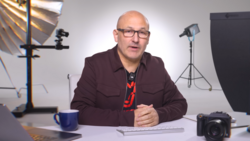
Coming to you from Karl Taylor with Visual Education, this detail-heavy video takes one hero image, a pint of Guinness, and treats it like a real client brief. Taylor starts where most people rush: lens choice, camera angle, and what the light is doing on the left edge of the glass versus the right. You get a clear sense that “nice lighting” is not the goal, control is. He also makes a point that will irritate anyone who wants a shortcut: the shoot is simple only after the prep is nailed. If you’ve ever wondered why your product photos feel flat even when they’re sharp, his breakdown of what makes an image read as “advertising” will land.
He gets specific about focal length and perspective without turning it into a gear debate. In his case, he uses a medium format body, the Hasselblad X2D 100C, paired with a longer lens, the Hasselblad XCD 120mm f/3.5 Macro. He explains how you can translate that to a 35mm setup and still get the same feel, as long as you respect what the angle is doing to the “power” of the subject. Depth of field becomes a real constraint, not a style choice, because the liquid is moving so focus stacking is off the table. He shares the working aperture he settled on, and you can hear the practical tradeoffs behind it. If you tend to lean on “fix it later,” his approach is the opposite: build the shot so post work is assembly, not rescue.
The part worth watching closely is how he thinks about surfaces that fight you. The background is not a random sweep, it’s a controlled wall color and a controlled glow, placed so it sits behind the product without stealing attention. He talks through why a smooth wall behaves differently than paper when you’re trying to make a gradient look expensive. Then he gets into the glass itself: those condensation droplets that look natural, but are engineered so they do not sag, evaporate, or drift during long lighting setups. That alone should change how you approach any “fresh” look in a studio, because it’s not about speed, it’s about repeatability.
Lighting is the center of the video, and it’s not the usual “put a softbox here” advice. He describes shaping reflections so you don’t see a big obvious modifier stamped onto the glass, using diffusion material to create edges that fade exactly where you want them to fade. He also hints at a specific method to make the Guinness branding read cleanly, involving reflectors and careful placement, but he holds back the full placement logic unless you watch the walkthrough. The turbulence in the liquid gets its own attention too, including the fact that it can require a dedicated light position just to make that motion show up the way your brain expects. He finishes by explaining why the final image is a composite of multiple frames, and how that can still be “honest” when each piece is captured on purpose instead of patched after the fact. Check out the video above for the full rundown from Taylor.





Join the Fstoppers community for free
-
Post comments and join in the discussions
-
Browse the site ad-free
-
Share your work and get featured in the community
-
Compete in the photo contests for fun and prizes
No comments yet