
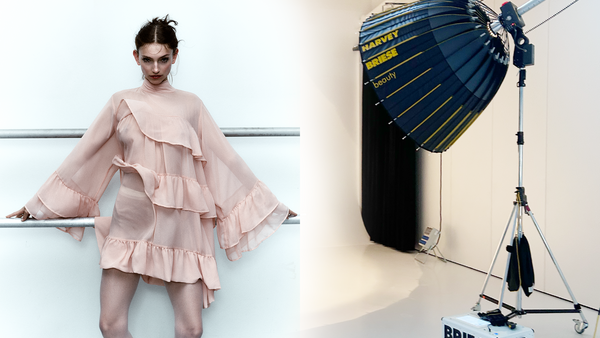
A while back I was very focused on having complex lighting for my editorial work. I would often create precise setups with many light sources. Yet, as time went on, my setups became simpler. So much so that my recent editorial for Numéro was done with only one light. Here is how.
When I pitched my moodboard to Numéro, I didn't expect it to be accepted. It was one of the moodboards I pitched to a series of magazines, as I wanted to shoot an editorial. Numéro came back quite quickly, asking me to improve and make the concept more detailed. I immediately involved my art director friend, and we were accepted.
The Idea
The idea was to shoot a ballet story. Spread across three different sets, we aimed to capture rehearsals, preparation, and performance. It was a long day, with about 15 final images planned, each with a different light mood. Some were supposed to represent daylight, while others were meant to mimic theatrical spotlights. Doing all of this with a single light modifier seems impossible.
The New Toy
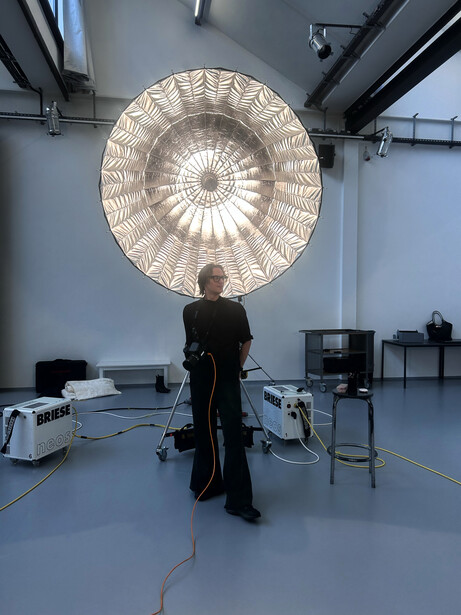
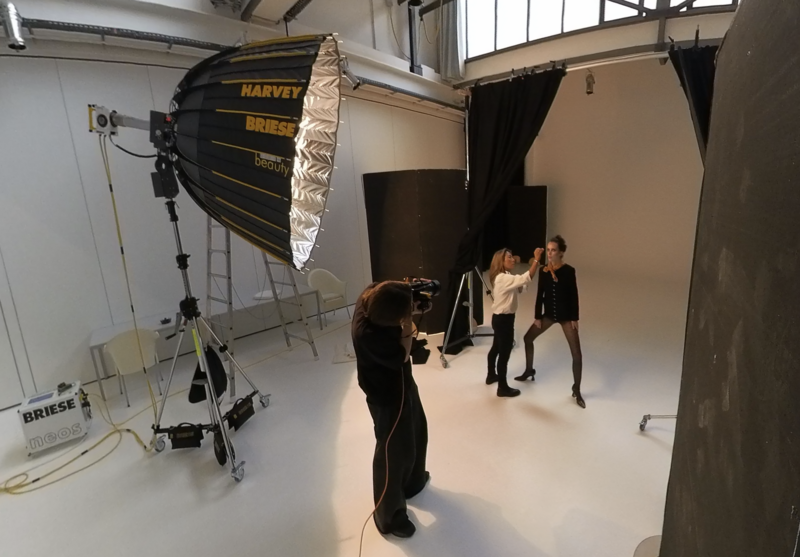
Around the same time, I received news of a new kid on the block, and I wanted to test it out. The new Harvey Briese beauty reflector was created for beauty photography, but who am I to use a modifier only for its intended purpose? Of course, I decided to use it first on a fashion shoot, and only a few months later on a beauty-specific shoot.
You might be familiar with my use of Briese light in my work. After all, there is no light quite like it. It's used by many photographers in the fashion world, from Steven Meisel to Ellen von Unwerth. Most recently, it featured on an Alaïa campaign, and so on. It's a privilege to have this equipment on set, as there is nothing technically stopping me from getting an image of the same level.
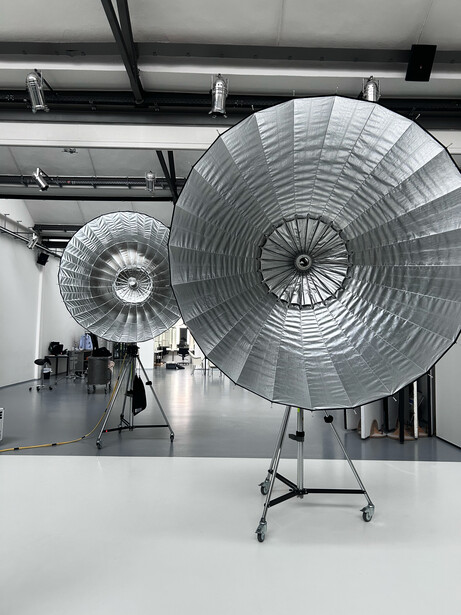
Before going into detail on how I shot each look, here is a bit about the Harvey Briese beauty reflector and what makes it special, at least for me. The coolest thing is probably that it has three different light curves. As such, it's hard like a downlight or a hard reflector when focused, with a 5.5-stop difference between the center of the beam and five meters away. At medium, it's a directed, focused light, but the shadows gain a lot more detail. At the flood position, there is virtually no difference between the center and the edges of the frame.
The reflector is made from one material with three different treatments, which gives it the ability to have multiple light qualities, not just focus modes. I quite like the fish-scale texture of the new Briese lights — they are far more efficient and advanced than the previous generation. Made for beauty photography, this reflector can be very nice on skin tones while also bringing out a lot of detail in the clothes and the scene. Think of a key and fill light all in one.
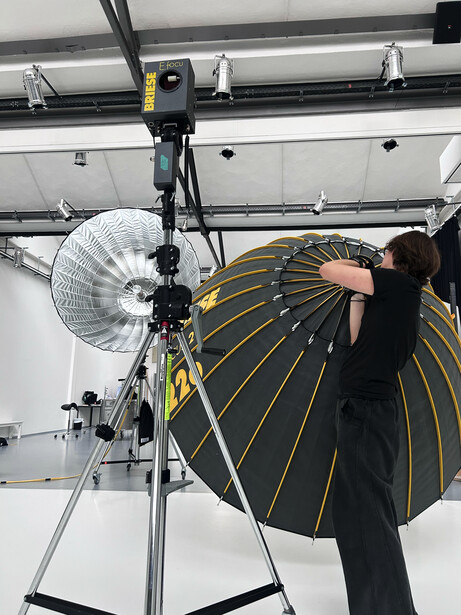
This is a very new modifier, and it's outside my budget for sure, which is why I am grateful that Briese offered the opportunity to try it out for this very special shoot for Numéro magazine.
Soft Light
When it comes to creating soft light, you have pretty much every option in the world. Bouncing from a scrim, using huge modifiers, bouncing from walls, and so on. The key to creating soft light is to create a light source that is large in comparison to the subject.
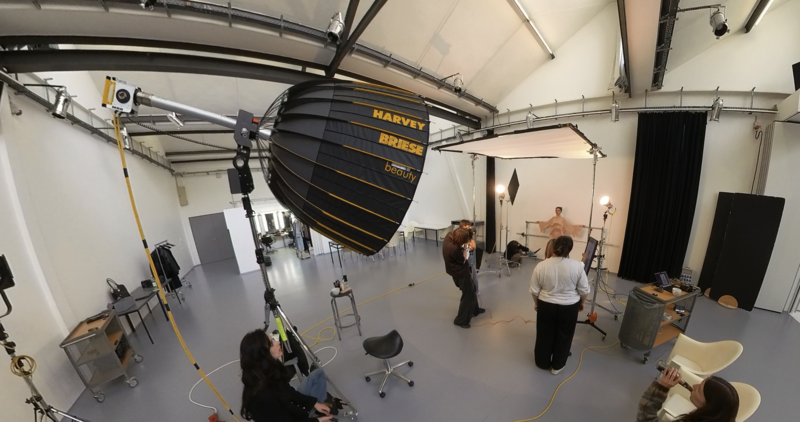
The way I was able to do that quickly was simply by changing the position of the flash tube inside the reflector. As such, on the flood position, it created a light without any significant shadows, which made it quite soft. At the same time, it was quite specular, but not excessively so.
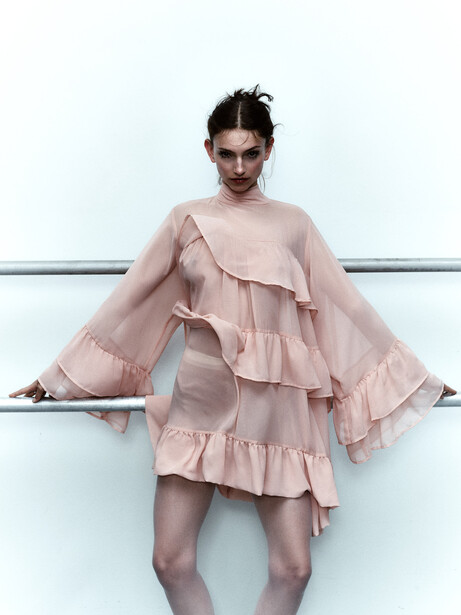
The essential quality of light that I am always looking for is a certain 3D effect. It has to be done in a way that adds dimension to the image. I hate flat soft light — it does not translate beauty as well as a more specular soft light does. As such, creating soft light is often best done with a large specular modifier. If you want to develop a deeper understanding of how different light sources and modifiers shape a scene, Fundamentals of Lighting is a great resource to explore.
The images with the pink dress illustrate this very well. I managed to get a picture that feels natural, as if it's being lit by a window of sorts. At the same time, the image has dimension and movement, which was key to the story.
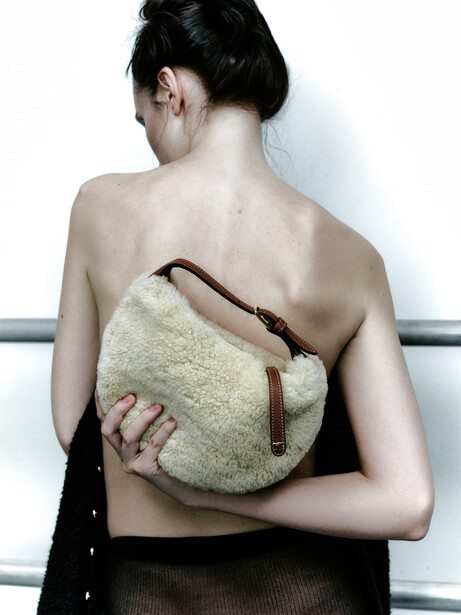
A second image where soft light with dimension was crucial was with the white Celine bag. The bag has a very important texture that has to be translated in the image. It's soft to the touch, which is exactly the feeling I wanted the audience to have when looking at the image. Because of the 3D soft light, I was able to do just that: create light that feels like the bag itself.
Focused Light
When it comes to focusing light, the idea was to create something between soft and hard. I wanted contrast, but not so much contrast that it would hurt the eye. This was the set aimed to symbolize performance. The set was intended to be quite bright, with a clean white background. Given the size of the studio, it was simply impossible to get a clean white background and the desired light on the model with one light. This is why I had to bring out two standard reflectors and aim them at the background to blow it out.
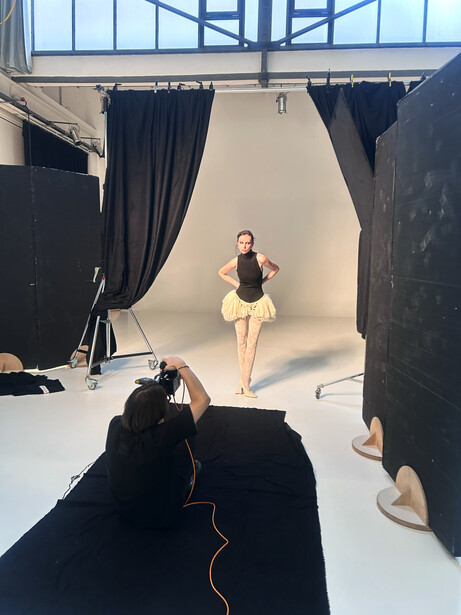
In the first shot, you see a "behind the scenes" vibe. This was achieved simply with the beauty reflector in the middle position. This image has the necessary "imperfect" lighting with random shadows and so on. It was actually one of the first shots taken on the day, and I am surprised it made the final cut. But I love it nonetheless for the raw nature of it.
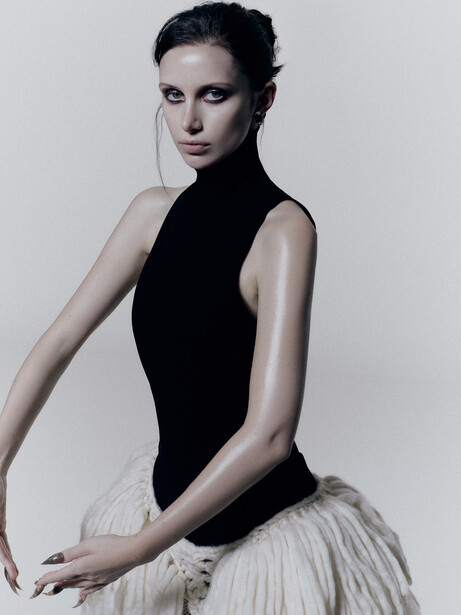
It gets a lot more interesting when you look at the second shot. The background is clearly blown out. At the same time, the model has contrast on her face. The body has controlled highlights and detail in the shadows. At the same time, the face looks sculpted. This combination of specular and semi-hard light is what allowed me to create this image. I find it somewhat hard to believe that this was created with the same modifier as the other image.
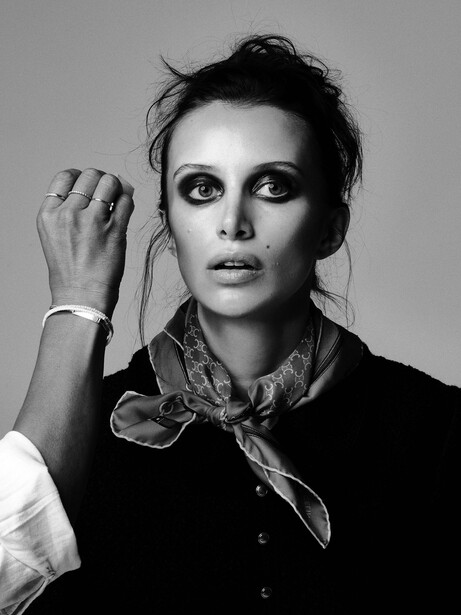
The same can be said about the portrait, once again taken by accident. The shadows are deeper, while the modifier was not moved. The only thing that I changed was the focusing and the power (to keep exposure the same). If you examine the Raw file, you will quickly notice that the shadows actually retain a lot of detail, and you can bring them up if needed. At the same time, all objects and people in the scene are well exposed. The jewelry on the makeup artist's hand has the characteristic glow. Even the eyes of the model look somewhat watery, which makes the image look that bit more realistic. As for the scarf, I can almost touch it.
Fresnel Light
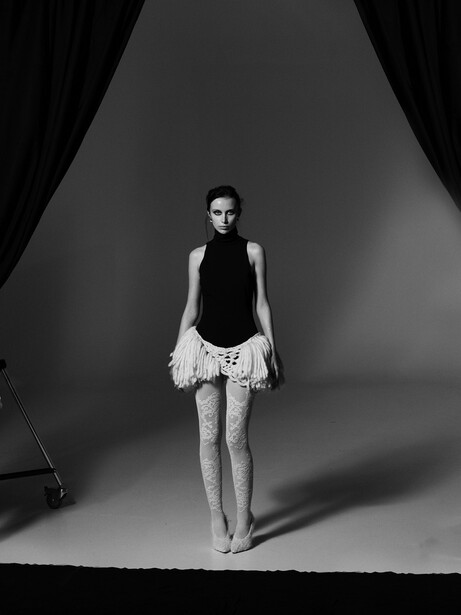
The last part of the editorial was meant to be shot with focused light. What I want to focus on are the last shots of the day, where we wanted deep shadows, contrast, and an almost perfectly dark background. While we shot more looks with this light, the one that made it into the final cut is this image. You will notice quickly how the shadows become harder, deeper, and contrast is at its maximum.
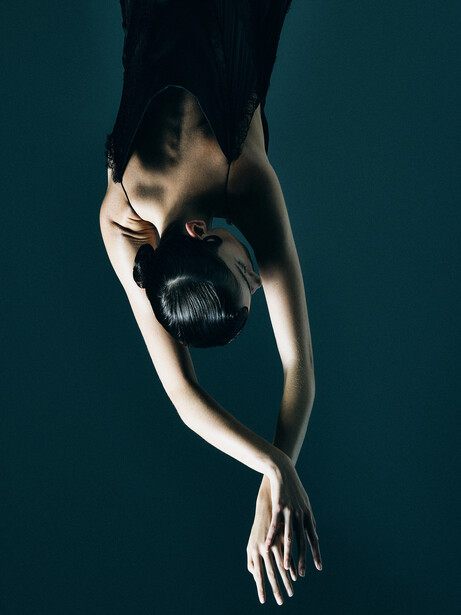
Funny enough, I did not like the modifier in the fully focused position. It was too much contrast for my taste. In the picture below, it's almost, but not fully focused. In general, my work has more subtle contrasts these days, and I try not to push contrast too much, so this was a position I did not use as often.
Closing Thoughts
It was an unforgettable experience to photograph this work in such a big and beautiful studio with top-of-the-line equipment. It's a privilege to work with this, for sure.
Can this be done with a lot of softboxes, hard reflectors, and a team of 10 assistants? Probably yes. But at the same time, I personally think it would take so much time that you would be lucky to shoot half of what was done on the day. Quick light changes, mobility, and simplicity are the cornerstones of my on-set approach these days. A modifier that can do that for me is a modifier I will use. For anyone looking to push their fashion and editorial work further, Fashion and Editorial Portrait Photography is worth a look.
Is it for portable on-location use? Probably not. Is it necessary for corporate headshots? For sure not! Yet, is it the most versatile studio modifier I have ever used? Yes, by far.
So much so that I did a beauty story using just it — but I can't quite share that yet.
Finally, I would like to thank each department and the entire team for being a part of this special project. <3
Join the Fstoppers community for free
-
Post comments and join in the discussions
-
Browse the site ad-free
-
Share your work and get featured in the community
-
Compete in the photo contests for fun and prizes
1 Comment
How much did they pay you?