Medium format keeps pulling you back when prints start getting big and your files need to hold together under picky edits, and that is the exact lane where the Hasselblad X2D 100C starts to look less like a luxury and more like a tool with a point. If you have ever looked at a finished print and felt the color and shadow transitions were just slightly brittle, this video is aimed straight at that frustration.
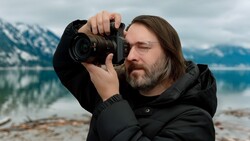
Coming to you from Dominik Wojtarowicz, this reflective video walks through how medium format earned a permanent spot in Wojtarowicz’s kit, then lost it, then won it back. The story starts in the early digital era with the Nikon D100 and a film backup plan that did not deliver the advantage you might assume once the scans hit the computer. You get a clear explanation of why “more pixels” in a scan can still look like less real detail, especially when the subject has smooth tones and film grain becomes part of the problem. He also talks about when grain helps, when it fakes texture, and when it turns into a veil that you cannot unsee. If you still romanticize film as automatic “quality,” you will want his take on where that look comes from and where it falls apart.
Wojtarowicz then ties the obsession with subtle rendering to a specific moment: seeing Adams’s prints in person and realizing the look was tied to bigger capture formats, not magic. That naturally leads into his first serious digital medium format step with the Pentax 645D, including the launch-era D-FA 645 55mm f/2.8 AL (IF) SDM AW and why stopping down mattered to get the best from it. From there, he contrasts that slower, sturdier medium format approach with the smaller, tempting Sony a7R era, where convenience and modern lenses were real advantages but the raw files could fight back in post. He does not make it abstract: he calls out banding risk, vibration sensitivity, and the kind of mid-trip failure that forces you to rethink what “reliable” actually means when you are far from home. If you shoot travel or landscapes, the tension between portability and file integrity will feel uncomfortably familiar.
Where the video gets especially useful is in the printing angle, because Wojtarowicz is not judging cameras by social media crops. He describes going back through older archives while preparing exhibition-sized prints and noticing a pattern: medium format files often stayed smoother when you pushed tones around, while some full frame files could “snap” into new colors during subtle moves, especially around greens and magentas. He also explains why doing your own printing can hide the cost of that trial and error, while sending files to a lab can turn small color problems into expensive back-and-forth. You will also hear how the Pentax 645Z changed the usability equation with live view and a more modern sensor, and why that still did not end the debate once high-resolution full frame matured with bodies like the Sony a7R III and later the Sony a7R V. He brings Fufjilm GFX100, GFX100S, and the newer GFX100 II into the mix, but he is careful about what actually changes day to day, including speed, size, and whether the camera complements a fast full frame system instead of replacing it. Check out the video above for the full rundown from Wojtarowicz.


Join the Fstoppers community for free
-
Post comments and join in the discussions
-
Browse the site ad-free
-
Share your work and get featured in the community
-
Compete in the photo contests for fun and prizes
1 Comment
Ever notice how great old black and white photos taken by your grandparents look in albums from the 1940s or so. Yes,small prints, but the negatives on those inexpensive cameras were nearly as large as the prints. 2.25x3.75 inch negatives.
I went from 35mm (Nikon) to 120mm (Bronica ETR-S system) to 4x5 inch view cameras for film. Then the Nikon D40 DX 6MP DLSR to the Nikon D850 46MP DLSR.
When I went from 35mm film to the Bronica 6x4.5cm negatives in the early 1980s, I was a bit disappointed in the dark room. The Bronica negatives did not appear as sharp as the Nikon on the 10x easel magnifier when focusing on the enlarging paper plane. However, despite the less sharp lenses than the Nikon lenses (in my opinion) when making 16x20 inch prints, the larger Bronica negatives made better prints with nice tonal gradiations on the Ilford paper.
Now, I also use a few Franka "folders“ for 6x6cm as well as 6x9cm negatives with Schneider lenses.
There is nothing like large film in an enlarger.
64 year old guy here. started with an inherited Nikon F and several lenses when I was 15, built a darkroom at 16, ..,....