Stop relying on chance and hoping for the best when you press the shutter button. Let's see how asking three simple questions can instantly transform your photographic process and knowledge of the scene.
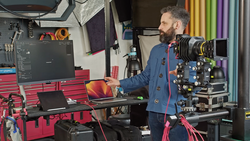
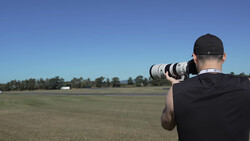
Greg from the U.K. explains three crucial questions to ask yourself before taking a picture in this video and demonstrates how to apply them on location. He highlights that this slow, deliberate approach is ideal for static subjects, such as buildings or landscapes, but not for capturing fast-moving moments.
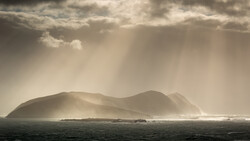
The first question he addresses, and the one I find crucial, is analyzing what the light is currently doing. This step is vital not only for the immediate shot but also for understanding the location for future visits. It involves more than just glancing at the sky; it means checking the sun's position and observing whether clouds are rapidly changing the illumination, creating a dynamic environment, or, on an overcast day, providing a consistent softbox effect. Understanding the current lighting helps you decide whether to wait for a patch of light to illuminate your scene or to shift your focus away from the light and concentrate on composition. Regardless of the conditions, the key is to be aware of how the light impacts the subject at that moment.
While other points are discussed in the video, the remaining questions focus on simplifying your composition by choosing your favorite angle of the subject and identifying any distractions or additions within your frame. These steps help unify the first point—the lighting—and the composition, resulting in a cohesive final image.
This methodical approach not only helps you capture a great photograph on the day but also improves your knowledge of the area for future visits.
To learn the remaining two questions and see Greg apply these steps in real-world situations, be sure to watch the full video.
Join the Fstoppers community for free
-
Post comments and join in the discussions
-
Browse the site ad-free
-
Share your work and get featured in the community
-
Compete in the photo contests for fun and prizes
6 Comments
The ingredients of an image which Greg from the UK discusses are arguably pretty basic to photography. Certainly an intermediate level photographer would consider light and distractions before clicking the shutter. And he also qualified his goal initially as making "better" images. I would say his images are solid, possibly portfolio worthy as defined by Fstoppers competition guidelines.
So maybe it's an argument of semantics, but the title of this article speaks to making great photos. For some people, a great image might be interchangeable with good or solid, but not in my book. Solid images are a dime a dozen. In fact, I feel totally capable of churning out good solid images, but struggle with the idea of what constitutes an exceptionally great photo. Is it simply a matter of how I feel about the photo, or is there some sort of quality or ingredient that a textbook for great images would include. I often think that it depends on the uniqueness of an image, but the more unusual or deviant from, say, common grand landscape sunsets, the greater the likelihood seems to be that a very small audience will think the unique or creative image is great, while the large majority will think it sucks... mainly because of the choice of subject and style. So if there's a nice neat little checklist of what constitutes a great photo, I'd love to hear it.
Some excellent points there, Ed. I once interviewed a photographer, and he told me that he met a great photographer named Eli Reed. When Eli Reed was asked by him, "What makes a great photo?", Eli replied, "It's the one you cannot forget.'
So, copying what you said in your comment above: "Is it simply a matter of how I feel about the photo...." , I believe this is what Eli was referring to.
For me, technical execution, post-processing, lighting, or whatever qualities we discuss can all be present, or a few could be missing, but if you cannot forget the photo, I am sure it was a great photo that evoked emotions that resonated with you.
Virtually all of my images are memorable... to me. But possibly very few, if any, would be for someone else. Therefore a great photograph would be in the eye of the beholder, or subjective. It might be easier to call someone a great photographer than isolating a great photo. After all, great photographers have generally become well known or famous for some reason, not entirely because of making universally agreed upon great images. William Eggleston comes to mind as a famous photographer, arguably great, because of his choice of common subjects and adoption of color. Neither of which were necessarily considered great at the time. Sam Abell, National Geographic photographer, once said in a video not to worry about making great photos. Make good solid images and great will take care of itself. Since I really haven't fully embraced the idea of great, that will have to do for now.
Some of my most memorable images are the ones that were least admired by the audience. I guess those were memorable and special for me, not the viewer, because they didn't know the story behind those images. However, keeping Eli Reed's opinion in mind, my most admired images have been the ones to which people refer back from time to time in discussions. I like Sam Abell's advice, "great will take care of itself". I need to use this as an inspiration to keep shooting. It has planted a seed for an article in my mind, too :-)
Expectations can be a blessing and a curse. Of course, as a businessperson we need to constantly strive for making better images. Our livelihood might very well depend on it, but there's a certain amount of stress and anxiety in feeling like we must always make great images. I enjoy occasionally just going out with my camera and making bad images. Not necessarily with intention, but just simply clicking the shutter at whatever happens to cross my path without concern for whether it's great, good, or bad. It keeps photography fun and relaxing.
If there's no fun left, then it's no longer a passion, I suppose.