
Photography once had clearer purposes. Everyday images were made for practical or personal reasons, while others sought to express meaning. Technical prowess was the hallmark of professionals. Now the lines are blurred, and the resulting confusion may be reshaping how we understand photographs.
Proliferation of Photography
Whether we celebrate it or deride it, we all generally agree that photography has been wildly democratized. More people can participate now than at any other point in the medium’s history. In general, the tools are cheaper and more capable. Smartphones give millions of people the ability to create images. People who would never have touched a camera twenty years ago are now generating images every day.
I believe this is a feature, not a bug. Still, it comes with side effects when the vast majority of photos are created by people without any sort of formal artistic training.
Huge numbers of photographs are being made, shared, and viewed by people who approach images with the same mindset that used to belong mostly to casual snapshots. Even as the volume of images increases dramatically, the way they are understood has not changed as much for most people.
What I’m seeing is that this tension has forced photography into something like an identity crisis. We used to have what felt like two broad tiers of image-making: one centered on making art and one centered on capturing moments or other utilitarian tasks. The democratization of photography is leading many to apply the understanding of the latter to the former, undermining the distinction and cratering meaning.
Gaining a clearer awareness of each of these core types of photography might help us regain the significance of our work.
What Is Vernacular Photography?
Vernacular photography is basically the everyday language of the medium. It covers the enormous range of images made by ordinary people for ordinary reasons, without artistic intent driving the decisions.
This encompasses a huge array of image types: family photos, travel shots, quick pictures with friends, the meal you wanted to remember, the concert you did not want to forget. In these cases, the subject matters more than the process of photographing it. In that sense, these are taken largely unconsciously, without any interpretation.
It also includes more than snapshots. Functional images such as ID photos, medical images, documentation for insurance, school portraits, X-rays, and many other types of images are part of this vernacular photography, too. Instead of expression, the point is usefulness, memory, or record keeping.
This kind of photography is practical and direct by nature. It also means it is more utilitarian and ordinary.
The Value of Vernacular Photos
None of that makes vernacular photography trivial. In fact, a lot of these images have become more valuable over time.
When old snapshots lose their original specific context, they can gain historical or cultural weight. The found photos people discover at flea markets or estate sales can feel unexpectedly powerful because they show how people actually lived, dressed, gathered, and celebrated, without anyone trying to shape the message. This immediacy carries an honesty that more intentional work may struggle to convey.
Vernacular images are also democratic in a very literal sense. They are not limited to people considered important or noteworthy. They are created by anyone and everyone, and anyone or anything might be their subject. They aren’t limited to subjects that are deemed “important” by a people or culture. Because of this, these photos form a broad visual record of ordinary life across decades and cultures.
On top of that, plenty of visual ideas have migrated from vernacular work into more intentional photography. Flash looks, awkward crops, offbeat timing, and accidental compositions can all define stylistic eras. What started as unselfconscious record-making often becomes aesthetic reference later on, likely driven by nostalgia.
Vernacular photography is not lesser than art photography. It’s just suited for a different job.
The Difference With Fine Art Photography
Fine art photography starts from a different intention. The goal is not simply to record what was there, but to express something about it or through it. It’s about conveying a mood, a concept, a question, a tension, a point of view, sometimes even an argument.
The expected audience is different, too. Instead of friends and family, the intended viewer is often the general public or members of the artistic community. Gallery owners or patrons, a reader, a collector, a critic, or just someone encountering the image online without personal connection to the subject could all be the eventual consumers of these images.
Money may be involved or it may not, but intention always is. Choices are made for their expressive effect, not just their descriptive accuracy. The result is that the photograph stops being mainly about preservation and starts leaning toward interpretation.
The camera is a tool that serves both vernacular and fine art photography. The act of taking a photo is also shared and is fundamentally a means to an end. The objectives are just very different.
The Issue With Confusing These Approaches
Because the barrier to entry is now so low, a lot of people come into photography through the snapshot path and stay there. Their goal isn’t some lofty artistic ambition, but rather to build up a visual memory of their lives. There is nothing wrong with that. Creating photos that serve memory and personal history is entirely valid and worthwhile.
The issue arises when someone reaches for artistic expression using that same snapshot-based framework. Their understanding of photography is rooted in record keeping or surface meaning, even as they aspire to make art.
These individuals sense that photography can operate at a deeper level, but they do not yet have the language for how that happens. Remaining in their vernacular understanding, an elevated or “artistic” photo becomes defined as a more technically well-executed one. The result often remains a faithful description rather than interpretation—more mimicry than a unique statement.
Making a “beautiful photo” quietly becomes the stand-in for expression. However, a technically excellent photograph of a mountain bathed in morning light, flawlessly composed and perfectly sharp, still functions mostly as a direct description of a mountain in morning light. It can be beautiful and satisfying without actually saying very much.
If you look at other visual arts, we expect them to be based on interpretation. Different movements are valued precisely because of how they filter reality, not how accurately they copy it. We might be drawn to Expressionism or Cubism because they reflect our experience of the world. Even highly representational painting carries visible choices in color, exaggeration, posture, and light that shape how the subject is understood. Some of these elements have found their way into photography as well, such as Rembrandt lighting.
If we lack a comparable language and set of concepts to express ourselves with our photography, we’re reduced to using the lexicon we are familiar with. We talk about capturing moments, seeing beautiful or stunning landscapes, or preserving something as artistic elements. Without that broader conceptual vocabulary, it’s easy to aim at fine art and land somewhere else.
A New Photography
There is nothing inherently wrong with chasing technical excellence. There is nothing wrong with wanting to show the world at its most striking and awe-inspiring. A perfectly executed image can be deeply satisfying to make and to look at.
What has emerged is a third path that sits between snapshot work and fine art work. It is not vernacular photography, because it is not focused on memory or function. It is not quite fine art photography either, because it often avoids conceptual or expressive goals. It does not ask much of the viewer beyond appreciation. Instead, it centers on polish and technique.
When this mindset completely takes over, exploration tends to move toward equipment and measurable performance. People talk about sensors, sharpness, dynamic range, and lenses. Composition gets reduced to rules and placements rather than visual language and intent. Considerations about meaning or the impact of certain choices on the viewer’s experience are sidelined. In essence, we trade artistic growth and expression for technical mastery.
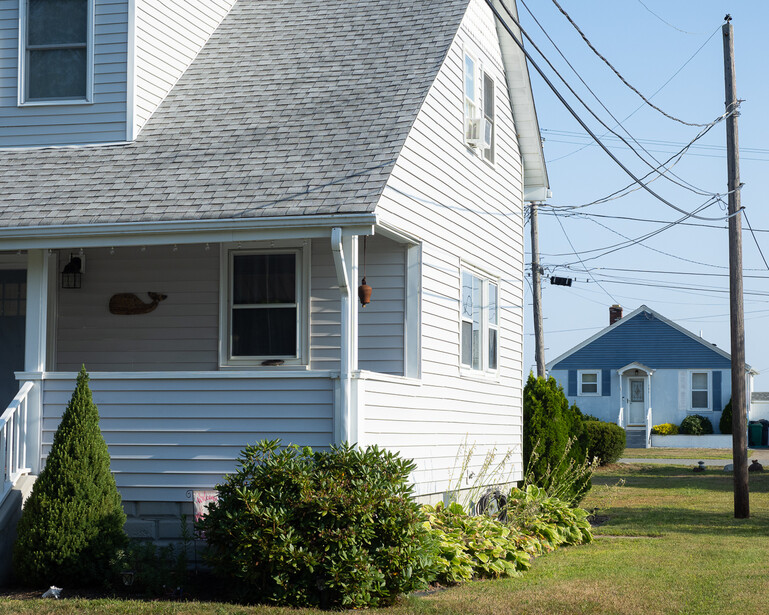
This new, third way is a technical vernacular photography. The photographer points at the world and says, “Look at this, isn’t it incredible?” They do this with a high level of craft. The image is elevated above a snapshot through the use of more fine art–related techniques and tools, but not necessarily through interpretation.
In many cases, technical vernacular photography aims to show the world in its most perfected form. It seeks a result that is cleaner, better, or more polished than everyday perception. However, it does not live in the fine art space. It does not challenge our relationship with or understanding of the world. In fact, it may deliberately reject what it might consider conceptual baggage.
The Risk of Confusion
All three approaches are valid. Snapshot work, expressive art, and highly technical descriptive work can all coexist. Most photographers will probably move between them depending on the day and what they want to accomplish in a given moment.
Trouble starts when we quietly swap one for another without noticing.
If technical vernacular photography gets treated as a full replacement for fine art photography, the medium loses some of its ability to explore ideas and question experience. The images impress, but they do not probe very deeply.
It can also create a strange kind of frustration.
When your ambition is to emulate the masters of fine art, you need the right roadmap for developing those skills. Lacking that, the winds of current photographic educational content will blow you toward focusing on highly technical skills. This will land you squarely in technical vernacular photography, which may be at odds with where you hoped to be.
Final Thoughts
Modern photography is heavily shaped by technology. Our cameras can do extraordinary things, and they keep getting better at doing them. What they do not do is tell us what is worth saying or why we might want to say it.
The result is a flood of images that look like art at first glance but behave more like display pieces than expressions. They are easy to admire and easy to replace. There will always be another technically excellent photo of a dramatic place waiting just a scroll away. It seems to me that this adds to the feeling that photos are more disposable now.
Photos that carry interpretation tend to last longer in the mind because they offer more than appearance. They challenge us in some way, and so we’re more likely to return to them to explore the fullness of their meaning.
It might seem that I reject technical vernacular photography, deeming it a lesser form. That isn’t my goal, and I’ve made plenty of photos in this space myself. Instead, I’m arguing for clearer categories so we can have clearer intentions when photographing. Differentiating it from fine art photography gives it its proper value.
Cameras and lenses are tools. Ideas and concepts are photographic tools, too. Using them to understand what you’re trying to accomplish with each frame will help drive stronger work. It will also drive more personal fulfillment from your photography.
Join the Fstoppers community for free
-
Post comments and join in the discussions
-
Browse the site ad-free
-
Share your work and get featured in the community
-
Compete in the photo contests for fun and prizes
8 Comments
I appreciate Matthews' earnest efforts and obvious experience in his craft but I do wonder if his article doesn't take a straightforward idea—that technical proficiency is not the same as artistic expression—and stretch it into an unnecessarily elaborate theory of photographic categories. In reality, photography has always blended documentation, craft, and interpretation. Trying to divide it into rigid conceptual boxes risks overthinking what is essentially a simple creative distinction.
Thanks for the comment Hoag Levins , and it's a reasonable critique of the piece. There has been a defined difference between vernacular and fine art photography for quite some time, and this understanding has even underpinned the curation of some exhibitions or other publications. I started to get the sense that the distinction missed something integral to modern photography, though, which led me to the ideas I outlined here.
Am I getting wound around the axle? Maybe, but I tend to enjoy engaging in these slightly more "philosophical" topics. I also don't think of these boxes as necessarily rigid, although personally the distinction is helpful. So do I think you need to think about this or worry about it to enjoy photography? Definitely not! We each approach it on our own terms. In many ways, that's the beauty of it.
Well said!
We’ve reached a point of diminishing returns where sensors are so capable they’ve actually made us lazy storytellers. I see this constantly in my mentorship work—photographers with €10k kits who are technically flawless but 'narratively' silent. They’ve mastered the 'Technical Vernacular,' as you call it, but they’ve lost the ability to interpret the scene.
I think part of the problem is that cameras are so capable that they encourage reactive capture instead of intentional creation. 25 years of documentary photography has convinced me that moving from snapshots to narratives doesn't require a faster lens; it requires a structural reset of how we approach photography. Until we stop the reactive chase for technical perfection, we’re just making very high-resolution noise.
"..moving from snapshots to narratives...requires a structural reset of how we approach photography" I couldn't agree more! It's almost a decision point all photographers have to make: Stick with this more "technical vernacular" expertise, or put in the work to revamp our whole structural approach to the craft. And I think everyone's answer will be different, and likely dependent on how photography fits into their lives. I know it was worth it for me, and continuing to pull that thread and push myself is the joy I get from photography these days.
Thanks for reading and for the comment Jacob Watrous !
1. Between vernacular and artistic there's a lot more shades of photography.
2. "photography has been wildly democratized" > this is indeed a bug
Fair Giovanni Stoto ! I was speaking to one shade I see dominating a lot of discussion. What else do you see between vernacular and artistic?
I thought this essay was a superb way of creating the exercise to test the question of whether a photo is art or just factual testimony. The notion that art should create a question, or test interpretation, or just create a mood is really excellent. As we have moved from point and shoot, to smartphones, back to point and shoot and now out into far more advanced gear, I do like the notion that we should think of where our efforts sit on that continuum. Are we just creating really sharp wonderful testimony or are we creating something evocative? That is an excellent question to consider!!! Great essay.
Thanks for reading and for the comment Timothy Twining !