
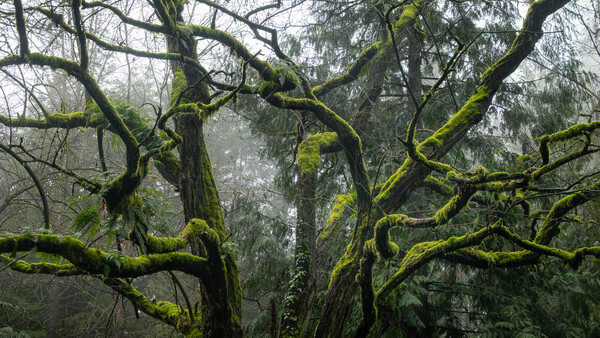
Did you edit that picture? Was it Photoshopped? These questions miss the point. Editing is a part of the photographic process from the outset, before the shutter is even fired.
It’s common to see pushback when it comes to editing in photography. The way people ask about it often carries suspicion, as if any edit is a form of deception. But artists and philosophers have long recognized the role of interpretation in expression. Constructivist artists deliberately arranged forms and lines to guide the viewer’s experience. The philosophy of phenomenology reminds us that we never perceive a scene neutrally; our past experiences, emotions, and attention shape what we notice. If all visual art involves selection and interpretation, why do so many people treat a photograph as if the moment captured in the field is somehow “pure” or a direct representation of reality?
Editing Begins in the Field
Any time you go out with your camera, you’re not viewing the world objectively. You’re filtering what you see through your experiences, interests, influences, mood, and emotions. You’re bringing all of your photographic knowledge and background to bear on how you’re seeing. As a result, the subjects you notice and choose to photograph are already an edited set of all possible subjects available to you.
If you’ve ever noticed that your photos look different depending on how you’re feeling the day you shot them, you’ve already experienced this. We don’t go out into the world as empty vessels, leaving our personality or selves behind. We are not impartial observers. This makes photography an art—and a powerful one that enables us to channel our worldviews into the finished photo. And it all starts before you even raise the camera to your eye.
Composition as Editing
Once you’ve chosen a subject, composition pushes the editing process further. Deciding what to include in or exclude from your frame, and how the included elements are arranged, shapes the story your photo tells. Tilting the lens, stepping forward or backward, and many other choices cut away part of the visible scene and refine what remains.
Lens choice is another layer of this. A wide focal length tends to emphasize relationships and context, while a telephoto will compress and isolate. Or perhaps you select a specialty lens like a macro or fisheye. In any case, you’re editing the scene in front of you to match the outcome you’re aiming for. Perspective, vantage point, focal length, and depth of field all shape the meaning of the photograph while you’re still out in the field.
Editing via Selection
Back at home, scrolling through potentially hundreds of frames, the act of culling is another crucial layer of editing. More than rejecting technically flawed images, you’re selecting the photographs that feel most true to what you experienced or envisioned.
This stage has long been a core part of photography. After shooting fluidly in the moment, culling refines your core message by selecting the frames with the strongest composition and lighting. Photographers like Joel Meyerowitz and Matt Stuart talk about editing in this way—choosing the photograph from many possibilities, not by what is achieved on the computer or in the darkroom. The history of photography is filled with this kind of editing, where the act of choosing defines the final work as much as pressing the shutter.
Post-processing
The most visible form of editing comes last: post-processing. Working in your favorite software (or darkroom), you’re refining aspects of the image so that the final photograph aligns more closely with your intent. Adjustments to exposure, contrast, color, dodging and burning, local updates, and whatever else you feel is needed all bring the photo closer to the vision you had when you settled on a subject and composition.
Photographers tend to use “editing” as shorthand for post-processing. But to many outside photography, this is the only step they think of when hearing the term. To them, the word “photoshopped” has become shorthand for digitally altering a scene, usually by adding or removing objects. This narrow view of editing can flatten the general public’s understanding of the art into something mechanical, as if the camera alone should be responsible for the final image.
Why It Matters
When the merit or value of a photograph is tossed out based on the answer to a simple question like “Did you edit it?,” it shows a lack of understanding of the craft. Many outside photography see editing only as an unwelcome digital manipulation, and in doing so, they miss the countless choices that shape a final image. Helping non-photographers see editing as part of the entire photographic process, rather than in a simplistic way, can raise appreciation for the art form and for the photographer’s role within it. A photograph isn’t the product of random luck or a machine pressing a button; it’s the outcome of a chain of decisions that begins the moment we step out the door with a camera.
And for us as photographers, embracing this perspective can change the way we think about our own work. In some sense, every step of the process is creative because every step amounts to editing. The act of noticing, framing, culling, and postprocessing all refine and shape the final image into what we want it to become. It’s also another way to understand our role as active authors of the photographs we make, above and beyond passive documenters. This highlights the role our decisions play not just in shaping the aesthetics or style of the final photo, but in shaping its very meaning.
This perspective also connects photography to the broader traditions of art. A painter edits through their approach and process, deciding what belongs on the canvas and how colors should appear. A writer edits with each draft, cutting and shaping words until the story takes its finished form. Composers, too, edit by choosing which notes and rhythms carry the piece. Photography belongs in that same lineage. To edit is not to cheat the medium or its viewers; it is to practice the art form.
Has recognizing the role of editing across the whole process changed the way you approach your photography?
Join the Fstoppers community for free
-
Post comments and join in the discussions
-
Browse the site ad-free
-
Share your work and get featured in the community
-
Compete in the photo contests for fun and prizes
40 Comments
Well said. I imagine that some may argue about the extent of editing. Post processing has always been part of image making. Darkroom skills were an important and vital portion of the photographic process .
Definitely Howard Dester ! Thanks for the comment!
There is a great term: Cropposition. I agree that especially with primes composing in post is inevitable in many cases as the crop is the ziomnof the prime, especiallybwhen we have ridiculously large megapixel count. Moreover in landscape and architecture, you can either use tilt shift or perform perspective correction which gives alot of flexibility and is mathematically equivalent.
That is a great term Amir Leshem ! I hadn't heard it before. Especially since "zooming with your feet" while using a prime does inherently change the relationship between objects in your frame.
Again Well Said!!! One important thing is the beginning before the shutter button is even touched is the "photo eye" of the photographer for a scene has to be seen but the eye of one. Example I have been out with others some photographers others just along but it never fails someone saying "I didn't see that".
Also it does not matter with either film or digital both are edited before with film its speed or even type where example Fujifilm cameras have presents for for types of film and the different colors they have and even post editing in many post processing programs you can use presets many are sold every hour.
Just to add in the digital camera the photographer can select a white balance or just use auto, but then the camera maker does the choosing - many times the right white balance will take the place of a filter or two. There are things you can do in camera that the camera maker added for your selection of outcome. Very few know about the Sony A7M1's and 2's where Sony put a hook and line for buyers that today is gone. When ever one went to the Sony camera support page where you will find mainly firmware updates but also a Play Memories section at the bottom this is where there was a link to apps for on camera use where the app processed and sent an image to the SD card in jpeg or raw or even both. For us who used our old film lenses with adapters (Sony gave makers spec's) there was a on camera Lens Correction, a filter app with pre programed sunrise/set selections for sky and foreground but the big one was where you could program both sky and foreground with any of the many camera settings you choose letting you not buy or carry a lot of filters. The muti image of a skate boarder or skier flying through the air in muti images of the subject only but again processed in camera. All making the camera a tool with choices for before the press of the button and again stirring the photographers imagination of thought or dream on the spot or days before the capture, we all are dreaming before!!!
For info the old film lenses never really needed lens corrections just the digital lens of other makers.
Another thing Astro Milky Way Photographers even today with their super f/1.4 or f/1.8 lens head for the darkest skies playing with rattle snakes in the desert while not testing in their own neighborhood over their roofs is the MW for their camera can capture both sky and ground.
2. Lunar eclipse using a film FD telephoto on a A7SM1
3. the camera captures what the eye can not see, again what dreams are made of MW over neighbors house while under a street light dreaming again before pressing the shutter button.
4. another great thing is camera Bracketing some times 5 at +/- 3EV giving indoor and out door views and colors yes a post processing thing but you get what the eye sees bringing a dream to others way later and asking is that PS'ed
Absolutely EDWIN GENAUX ! You make a great point about choosing what film to use as part of this whole editing flow. There are so many ways to look at this!
You say: "But artists and philosophers have long recognized the role of interpretation in expression.... If all visual art involves selection and interpretation, why do so many people treat a photograph as if the moment captured in the field is somehow “pure” or a direct representation of reality? "
However, photography has never been universally accepted as an art form. Painters begin their work with a blank canvas, and have always been afforded freedom to paint a scene detached from reality. The invention of the camera as a mechanical device was rooted in an honest portrayal of reality. In 1860, one did not point his camera at a house and capture a picture of a lake. But with the introduction of Photoshop in the early 1990s, anything and everything can be edited to the point where the finished image bears little resemblance to the reality of the scene captured by the camera. Up until Photoshop, society believed in a picture as reality. Magazines and newspapers hung their reputation on accurate reporting, and altering images was not allowed. Nowadays so many images are accused of being fake, that the credibility of photography has become a victim of its own evolution.
At this point, you may think I abhor any sort of post-processing, but that is not true. In fact, I spend far more time in Photoshop than with the camera. Indeed, I couldn't possibly tell you what was going through my mind as I clicked the shutter each of fifty or a hundred times that day. So post-processing becomes a separate, creative task in and of itself. If the sky seems like it would complement the photo much darker than it really was, I have no qualms with making those adjustments. But I have boundaries that maintain the realistic integrity of the photo, because, yes, I believe that photography is rooted in reality.
Black in white is not precisely real because we see the world in color. However, it's a credible form of photography because of its history. I do not disagree with the majority of points you make, Adam, in your article. I would just caution against disconnecting photography from reality, or we end up in a discussion of AI generated images. And the last thing I want is to be accused of using AI to create my photos. Photography is still about the experience.
Unless a camera can capture the world exactly as it is down to an exact colour match, then it can't really be considered pure. I don't really care for that anyway. To me, that is just a snapshot.
True, Art is generally perceived to be individual human creativity.
The more the Automation involved, especially with IA, the less the human creativity, and thus the less it can, or should be considered Art.
Thanks for the thoughtful comment Deleted User ! And a very fair point that especially initially, photography wasn't seen as being an art form. It's interesting, because that response by the public modified how early photographers were shooting, leading to Pictorialism. And I would argue that in itself is an artistic choice -- and one resoundingly rejected by Ansel Adams and his F/64 group.
I agree with you in that my own photography is largely based on the reality of what's in front of me. And also that I can't remember what I was thinking (if anything!) when pressing the shutter button. But I do think that to say photography has to be grounded in reality can become its own trap. What about abstract photos? ICM? In-camera multiple exposures? Sure, it's a valid argument to say that even with those you're always capturing something that exists "out there"...but can we call the resulting photo truly rooted in reality?
But you're right, I wouldn't want to push it so far as to end up in AI-generated territory. Photography is about the experience for me too. Just maybe that experience isn't always so literally represented.
Photography can be anything you want. The debate as to whether it's a valid art form has been going on forever, and grounded in reality can be interpreted differently on various levels... from tinkering with saturation to totally abstract. To each his own. Nothing is inherently right or wrong. I'm merely expressing my position which has evolved over the years. My earliest images were oversaturated by today's comparison.
Speaking of ICM, I became enamored with it about five years ago, probably because I was bored at the time with straight photography. We go through stages like that where motivation seems to die. So I took my camera out, constantly wiggling it around during long exposures. Creative stuff, I thought! I was further encouraged from having sold a few prints of that style. Interior designers love abstracts. It's about all I photographed for a year. But the novelty of ICM eventually wore off, and it virtually all looked the same to me. It also masked the unique advantage that photography has over all other art forms: the ability of the camera lens to capture detail that the human eye is unable to discern.
So my attention these days is back to creating richly detailed images. I'm tinkering a bit with soft focus, but still within the parameter of clearly defined subjects. Reality must be given a wide berth, but abstraction in my opinion presently seems better suited to painting where actual textures can be employed. However, I might change my opinion tomorrow, which is the beauty of photography.
Interior designers really do seem to love abstract work!
You're right, of course. Photography -- or any art -- can be anything each person wants it to be. Although I guess within certain parameters that would classify it within that artform. And I agree that evolving through different aspects is one of the beauty of creative pursuits.
Interior designers are focused on color schemes. Few of them look at a photograph the way I do, which is to sit quietly with it in hand and explore the fine details. Once it goes on a wall, the viewing experience changes and colors and subject matter take precedence.
Fully agree - but then the question as to whether an image is "edited" is not really asked by anyone who matters. Any reasonable photographer would not think of raising that question, and the people who do ask are probably not relevant and worth the time to answer. To this extent, this article is a good one, but it's answering a question that no-one relevant to photography will ever ask.
Stephen Andrews wrote:
"The question as to whether an image is "edited" is not really asked by anyone who matters. Any reasonable photographer would not think of raising that question, and the people who do ask are probably not relevant and worth the time to answer."
I disagree with you. I have gotten several phone calls and emails from editors and art directors asking if a particular photo was edited, and to what extent. The person deciding whether to purchase rights to my photo or someone else's photo is most definitely "someone who matters".
Your comment makes me think that you don't sell photos to publishers at all, and are oblivious or entirely unfamiliar with that aspect of commercial photography, because publishers regularly ask about what editing was done, and often have strict Submission Guidelines that specify what can and can't be done in post processing.
Many, if not all, major publishers have their own in-house photo editor (who may also be the Art Director), and therefore require unedited images because they want the purest digital file as a starting point when editing for their specific purpose(s). This is how SO MANY of the photos we see in books, magazines, advertisements, and websites are sold. Given that, editing really doesn't matter to the photographer as much as the author seems to think, because so often the editing is done by the end user, not the photographer.
This is an interesting one Tom Reichner -- you've used "editing" as a synonym for "post-processing" in your publishing example. And it is an interesting example, because in splits the creative process of a final image between different people. Dividing labor like this isn't all that uncommon in many "creative" jobs.
My argument is that you still "edited" the photo before they acquired it, through the creative choices you made in terms of subject, lighting, time of day, lens used, how much or little context you showed, etc. So in that sense they aren't really getting an "unedited" image, they're getting one without any post-processing done! They also edited by choosing your photo out of all the possible options.
I recognize that this goes against the common usage of the term "edit," but that's my point in this piece 🙂
if you have a narrow, precise, and rigid definition of "editing", then I have used the word correctly. If you have a broader, looser definition, then I don't know how to converse with you because language is supposed to be rigid and exacting, the way court documents are.
Language is not at all supposed to be rigid and exacting! That's exactly why the vast majority of what we read is nothing like court documents. Granted it often leads to miscommunication, but it also gives us the gift of using it in unique and creative ways. For example, Miriam-Webster offers 4 different definitions for the verb "edit." Not to mention how words can mean different things to different people (e.g., "pants").
One reason that English has survived as long as it has as a language, and even only became modern English after a French invasion, is because of it's flexibility and adaptability. It can readily incorporate new words from other languages, and has evolved and continues to evolve. In fact about 400-500 years ago, all the English vowels even shifted in their pronunciation! The history of the English language is pretty fascinating to me.
You are most welcome to maintain a rigid definition of "editing" if you wish -- I took advantage of the flexibility of language to push the concept to a slightly different place. I don't think that prevents us from conversing, but at the end of the day that's up do you.
And this is why I cringe when selling digital one-time use rights. Editing, post-processing and the whole nine yards matter greatly to me. It might take three or four prints to get colors and contrast exactly as I want. And those are from my same inkjet printer using the same consistent settings. I cherish that control. But I know full well that other printers who my clients are using to make metal or canvas prints are going to make a slightly different looking print, even if they haven't made any edits to the file. Color management only takes it so far... different substrates print differently. And then my client is putting something up on the wall that, while in the ballpark and they're happy, isn't exactly what I would have printed. I know what you're thinking.... I'm sacrificing my principles to make a buck.
I'm different than you, Ed, inasmuch as how I feel about my photos being used by others.
When editing for my own use, or my own enjoyment, I am extremely particular about every little detail, just like you. But when my photo is used by someone else, for their purposes and/or their own enjoyment, I couldn't care any less about what they do to the photo.
I don't even care if my photo is used to head up some campaign for a cause that I have extreme moral objections against.
And this indifference doesn't have anything to do with the money I may (or may not) receive for the usage. It's just that if it is not my personal usage and I'm not the one looking at it, then why would I care about how it looks? It's not like "my reputation as an artist" is at stake or anything ... photo usage just isn't personal like that in this day and age. Plus I don't really care too much about what others think about my photos.
If somebody puts Mickey Mouse ears on one of my deer, and replaces the background with a wall of obscene graffiti, and uses it for some politically progressive cause (all of which I categorically despise), I honestly do not care at all, and it wouldn't bother me in the least.
Why?
Because if I don't like it, then I'm not going to be looking at it, so what does it matter? I'll always have my preferred version of the image and that's the one I'll look at when I want some visual satisfaction.
".... photo usage just isn't personal like that in this day and age." I mostly agree with your comment, but it really makes me sad. For my whole life, pictures have been something to touch and hold. Something one of a kind. Something tangible. Nowadays, beyond what I print for myself, that connection is lost. And I honestly hate letting go of my digital files. I'm at the crossroads of trying to fit into the expectations of digitally oriented clients, or saying "screw it," buy the prints that I make or nothing.
Ed,
I should have expressed my feelings about this more clearly in my earlier comment (the one you just replied to).
While I am not at all sentimental or emotional about what others do to and do with my photos, I understand how you and others can feel the opposite way. It makes sense to me that you would have deep feelings about each of your images, and only want them to be used in a way that fulfills your personal vision for each image.
I think one reason why I am emotionally detached from the usage of my photos is because so much of my emotional energy is spent looking forward, that it doesn't leave much emotional energy for looking back. What I mean by this is that the things in the forefront of my brain are the things that I want but don't have yet. I am very driven to do more, see more, document more, and accomplish more.
I look at the list of all the species of mammals and birds and reptiles and amphibians that live in the U.S., and see so many species that I have not seen yet, and not photographed yet, and I feel this immense drive to get quality photos of as many of them as I possibly can before I die in approximately 25 years (I am 57 now).
I also look at the map of the United States and see many regions within the country that I haven't explored; regions in which I don't have many experiences and in which I have not amassed a broad collection of the region's fauna. It frustrates me that there are these areas I haven't spent a lot of time in yet, and I feel this immense drive swollen up within me to spend 10 or 20 years in every state so that I can really learn about the wildlife there. But there isn't time to do even 2 percent of what I am driven to do, and that fuels me with a desperation wanderlust that can never be satiated.
So given that this is the head space that I live in, can you better understand why I would not be so concerned about how people use my photos? There just isn't enough emotional space left in me to fill with such concerns, because it is already full with the unrelenting drive to do do do and go go go.
I understand you perfectly... your subject (the wildlife) is relatively more important than the form or physical properties of the photograph. You value the experience, the seeing of the animals, the capture of the photo, the categorizing, the planning of your next trip, and possibly the traveling itself, more than the manner of expression of the photograph.
I am mostly the opposite. While I enjoy exploring new subjects to photograph (beats sitting around getting bored), my greatest satisfaction comes from watching the print emerge from the printer. The subject of the photo plays only a minor role. I love experimenting with different textured papers and analyzing each one for how it affects the tonal range and colors of the image. Making a print that I truly cherish for me is like you discovering a new species that you'd never seen before. Where we overlap is that we both seek fine detail in our images.
Yes, Ed ... exactly!
I think another difference between us may be that while I value the quality of the experience and the image, I value the quantity of experiences and images even more.
Whereas it seems that you aren't pushing yourself to amass as many good images as possible, but would rather have the opportunity to create true masterpieces, even if that means you'll only get a few such images each year.
A masterpiece might be a stretch of the imagination but, yes, I focus on quality over quantity.
'When the merit or value of a photograph is tossed out based on the answer to a simple question like “Did you edit it?,” it shows a lack of understanding of the craft.'
Precisely. It's laughable the people who say they don't edit but shoot jpegs only and go nowhere near a computer. Turns out they are using a film simulation/picture profile/lut which in itself is a form of processing the image. We also use the exposure triangle to change the way a photo looks too. Slow shutter for creamy looking waterscapes or exposing for the highlights to give very dark shadows or using depth of field for creative effect like Saul Leiter and many others. All forms of editing. I don't crop if I can help it but plenty do which again is editing. You could say taking a photo in itself is cropping out a very particular viewpoint of the real world.
Exactly Sam Sims ! Thanks for the comment!
To me, I think we should rather look at the meaning of that question, cause if it comes from someone with little knowlegde on the subject, I would think what they mean, at least most of the time, is "Is that a realistic photo?" Which, is a fair question to ask, especailly today, where "going over the top" is as easy as it is, when it comes to editing in post. Yes, you could argue that "No picture is 100% accurate!" But, that's being stubborn, just for the sake of it :P Cause, a picture with just small adjustments in post, or a soc picture (without using any drastic film-profile/lut etc), IS a lot more realistic than a picture that have been edited to look nothing like what you started out with (using masks to add tons of light where there wasn't any light irl, making the sky look like a stormy day, when it was only partly cloudy, changing the hue of all the colors, removing a couple of building you didn't like the look of, etc) Also, editing is a matter of taste. Personally I think a lot of pictures are "over the top", but, that's just my opinion. And it doesn't have to mean I think it's a "bad picture". It's just not how I would have edited it myself :)
Very valid point Thomas Skjeggedal ! You're right, understanding the person asking and why they're asking is something we should all do. I think if we can do that well, and redirect them to see how many decisions (edits?) go into making a photo, we can help to increase appreciation for artistic photography. Especially now when so many feel that it's under siege for one reason or another.
Photography is the art of seeing. rest is manipulation.
Good article, well said. One elephant in the room, however, was not addressed: that blurry or blurring line of "generative fill", which could be as benign as cloning out airplane trails from my night photo skies, or filling in the empty corners after correcting for keystoning, but gets a bit more questionable about removing things we don't want to see (making a scene all empty after removing dozens of people with PS's new "remove distractions" feature). And it goes all the way to adding things that weren't there (PS can harmonize it to look like it is supposed to be there) or replacing entire skies. I believe the latter two should be called "composites". And, of course, we definitely crossed the line to non-photography once AI creates the whole image, but that's not what I'm talking about here, I am talking about AI features that are considered edits to an actual photograph. Whenever I ask a question "did you edit this", that is what I mean: is it all photography or did you add or remove anything in post?
That's a pretty big elephant, for sure Jurgen Lobert ! Your take on "did you edit this?" relating specifically to those AI tools is interesting, too. I agree the line is very blurry, and highly individualistic. I like the idea of calling them out as composites -- not disparaging the outcome but just differentiating it. It isn't without it's own skill in some ways, after all.
n/c
The difference between photography and art is that art gives impressions, insights through alteration, whereas photography tells us what is truly real. I can see why editing can help create insight into what a person saw, but, that is art and not photography.
I'm curious as to why you think photography is incapable of giving impressions? Or what about all of the artistic styles of painting that were meant to convey a reality? I'm not convinced the line is particularly clearcut, or why you would argue that photography is not art.
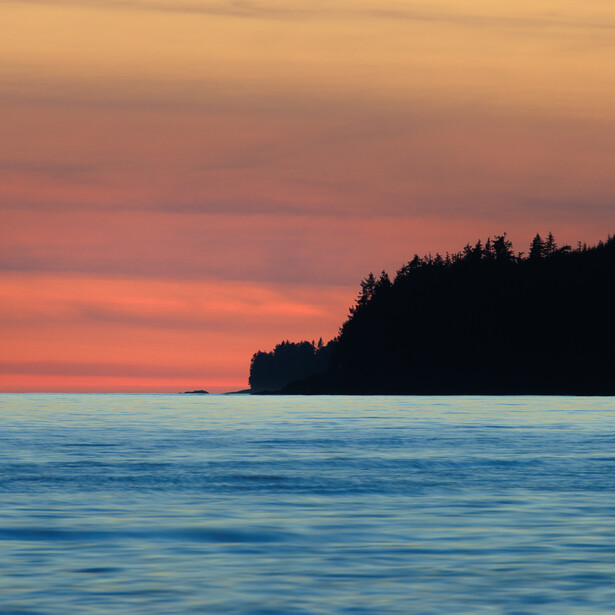
For example, my first photo in this article is a 0.6s exposure -- much slower than our eyes and brain interpret the world. It's also highly compressed as I used a 300mm focal length on an APS-C camera. So is that really what I saw? The ocean was not as smooth as that photo. That headland didn't feel quite that flat in person. I was standing on a beach, which isn't conveyed here at all. Or is it more my impression of the scene, through a series of editorial choices?
The line between fiction and non-fiction is never clear cut, no matter whether we're talking photography or literature. And ever since digital manipulation became mainstream, photography has become a mixture of realism, fiction and art. Therein lies the conundrum of viewing photography. We simply don't trust photography any longer as being honest.
You asked: "Or is it more my impression of the scene, through a series of editorial choices?" It was an impression, just as the impressionist painters put their unique twist on reality. Again, the lines between art and reality are usually blurry, and I don't feel a need to draw that line.
Thanks; fine article! I like your way of putting it; I see it as "editing starts in the viewfinder." Or, before you pick up the camera. It's something we all likely do but don't formally think about it.
The goal is to manage each step of the process for a final picture that says what you want it to say. Accurate to what you remember. Or interpreted for a mood, a message.
Again, thanks.
Thanks for the kind comment Tom Mathewson ! I like that phrase, "editing starts in the viewfinder." I might borrow that one in casual conversation!
nah, that is curating the view, not editing the view
editing is making changes to something that already exists
when a writer writes an article he or she does not edit as they initially decide what words to include ... that's just writing
editing is what is done AFTER the article is written; it involves making changes to that who is already written
please do not play fast and loose with semantics; it is crucial that we all preserve the precise definition of words, and do not use them in a way that is even slightly different than their literal meaning
Your comment provoked an interesting question about the stage at which work is considered to be editing. So I asked Google Gemini this question: Can editing be applied to the idea before committed to paper? I figured it would base the answer on writing rather than photography but the concept is the same. Of course I've been told many times before that whatever Google says is probably wrong. But here it is....
AI Overview
Yes, editing can absolutely be applied to ideas before they are fully committed to paper, through outlining, brainstorming, structuring, and pre-writing revision, but the most substantial editing happens after a full draft is complete to focus on big-picture issues (content, structure) before detailed polishing (style, grammar). It's a multi-stage process: get ideas down first, then refine them.
Before the First Draft (Idea Refinement)
Outline & Structure: Map out your main points, arguments, or plot, ensuring logical flow and clear purpose.
Brainstorming: Flesh out concepts, explore different angles, and gather supporting details.
Mind Mapping/Freewriting: Get thoughts onto paper (or screen) without judgment to explore the idea's potential.