
Most photographers will tell you the same thing: don't use a fisheye for portraits.
It distorts faces. It bends lines. It makes people look weird. And honestly, they're not wrong.
But they're also not thinking about it the right way.
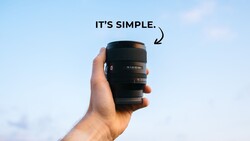
For one of our recent shoots, we built an entire portrait concept around the Sigma 15mm f/1.4 DG DN Diagonal Fisheye | Art. Not in spite of what it does, but because of it. Instead of trying to control or minimize distortion, we designed everything to work with it.

Image by Jada and David Parrish | https://www.jadaanddavid.com
What the Attic Series Actually Is
This shoot is part of a larger project we are currently working on called the Attic Series.
We took a small attic in our house and turned it into a working photo studio. It's not a perfect space. The ceilings are low and slanted, the footprint is tight, and getting materials up there is a challenge every time we build something new. At the highest point, we're working with about seven feet of clearance, which immediately limits what you can do with both set design and lighting.
Instead of seeing that as a limitation, we built the entire project around it.
The goal is simple but demanding. Build 25 completely different sets in that attic and photograph 25 fully realized creative shoots inside it. Everything is constructed by hand using flats, plywood, and paint. Each set is designed with a specific concept in mind, and every decision — from color to lighting to lens choice — is made based on how the final image will be captured.
We're documenting the entire process as we go. The builds, the problem-solving, the mistakes, and the final images. It's a way to show that you don't need a massive studio or perfect conditions to create something that feels intentional and finished.
This fisheye shoot is Set 4 in that series, and it pushed that idea further than anything we had done up to that point.
Why This Lens Changes How You Approach Portraits
On paper, the Sigma 15mm f/1.4 DG DN Diagonal Fisheye | Art is not a portrait lens.
It's a 15mm prime with a 180-degree diagonal field of view and very aggressive edge distortion. It was designed with applications like astrophotography in mind, where the ability to capture a wide field of view and gather a lot of light is more important than rendering straight lines cleanly.

Image by Jada and David Parrish | https://www.jadaanddavid.com
But that's exactly what makes it interesting.
Most portrait lenses are built to compress space and flatter a subject. They simplify the scene. They minimize distortion and guide you toward a predictable result.
This lens does the opposite. It exaggerates space. It stretches whatever is closest to the camera. It bends the edges of the frame in a way that immediately changes how the image feels.
The center of the frame stays relatively grounded, but everything around it begins to warp. That combination creates something much more immersive. Instead of looking at a scene, you feel pulled into it.
That's not something you get from a traditional portrait lens.
Designing the Set Around the Lens
Once we committed to using the fisheye, the lens stopped being just a tool and became the starting point for the entire shoot.
At 15mm, there is no hiding anything outside the frame. You are capturing a massive amount of the environment, which means every edge, every corner, and every surface matters. If something is unfinished or out of place, it will show up.
So we built the set to match that.
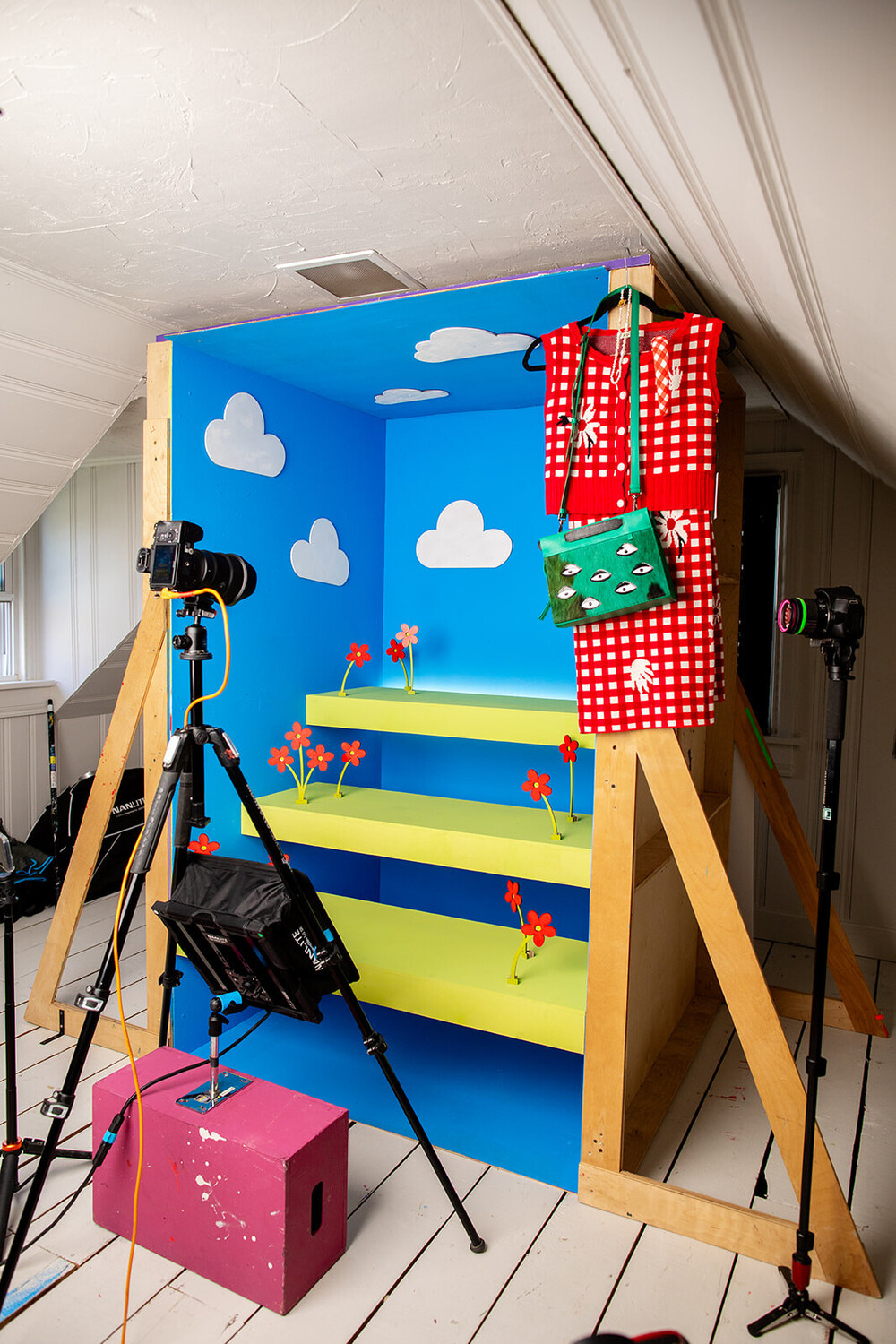
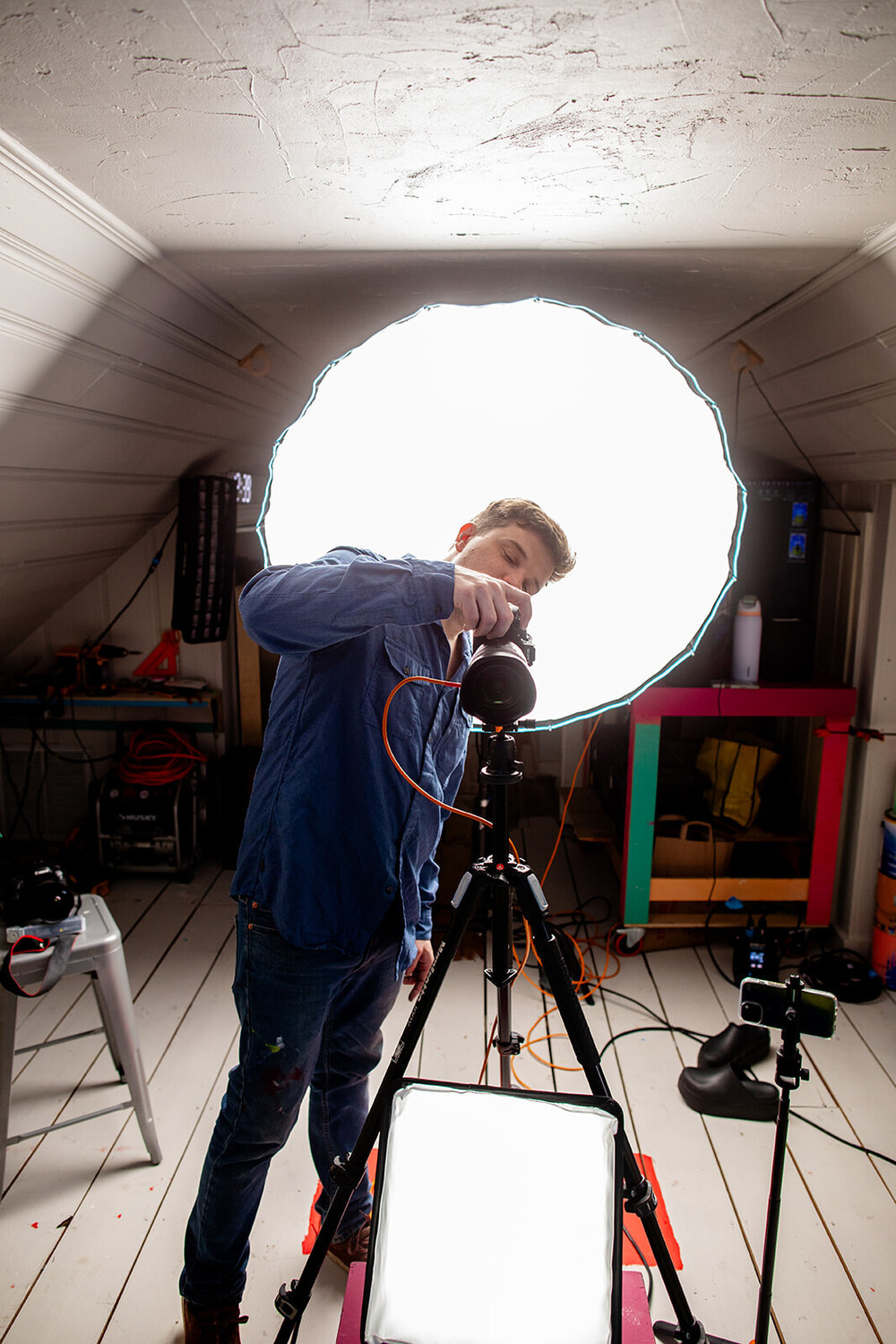
Image by Jada and David Parrish | https://www.jadaanddavid.com
We constructed a fully enclosed hallway inside the attic using flats, creating walls, a floor, and a ceiling that we could control completely. A flat is essentially a lightweight, reusable wall that can be built, painted, and reconfigured. It's the backbone of how we create all of our sets because it allows us to build environments quickly without starting from scratch each time.
That enclosure gave us the ability to shoot wide without breaking the illusion. More importantly, it allowed the distortion from the fisheye to feel intentional. Instead of seeing the edges of a real room or random objects creeping into the frame, every part of the image was designed to be there.
With a lens like this, control is everything.
Why the Fisheye Works So Well in Small Spaces
The attic is one of the most challenging spaces we've worked in.
The low ceilings limit set design possibilities, backdrops, and lighting. The lack of depth makes it harder to create separation. Everything feels compressed before you even start shooting. If you're working to develop your instincts around light in constrained environments, Fundamentals of Lighting covers the foundational thinking that applies directly to situations like this.
This lens flipped that.
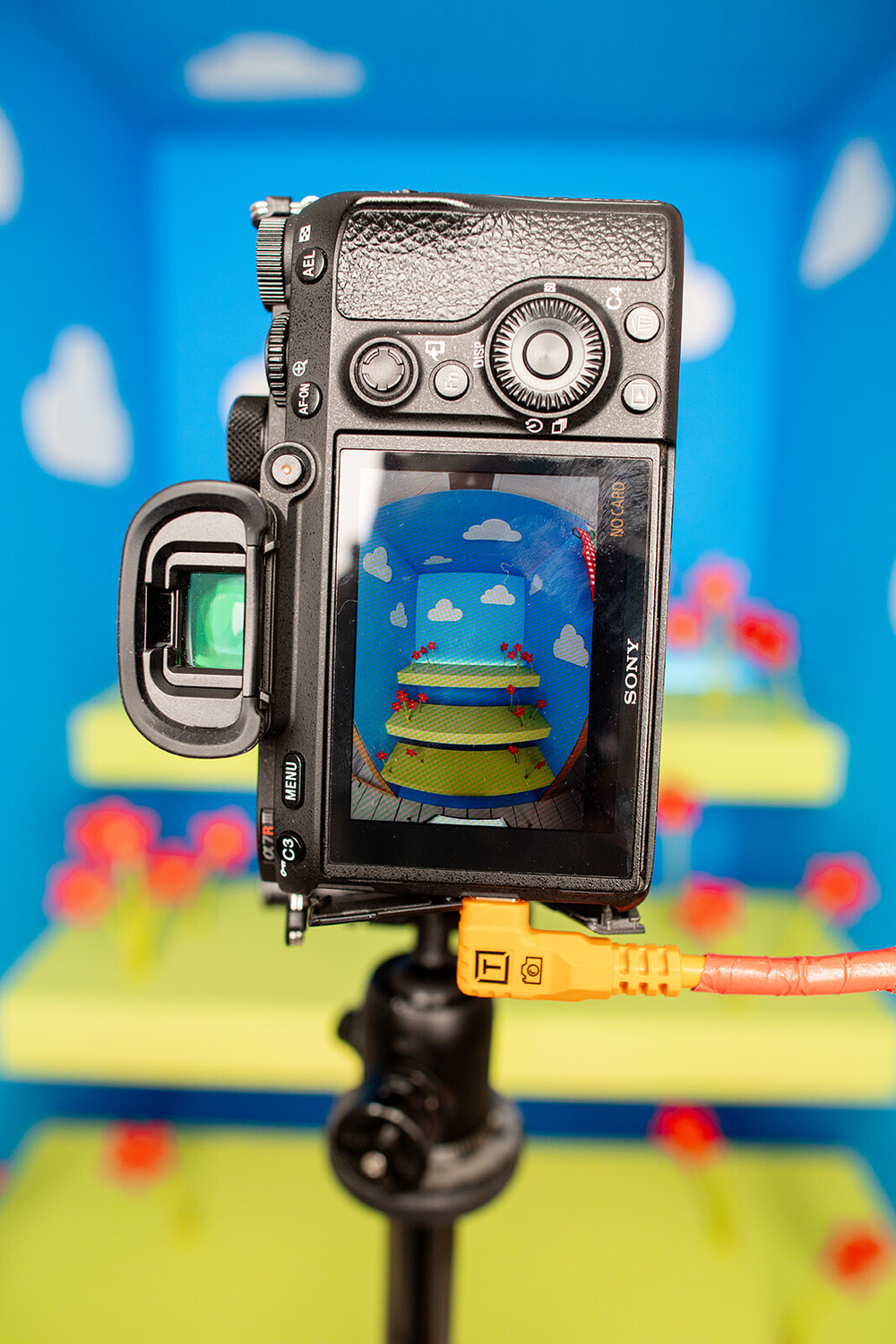
Image by Jada and David Parrish | https://www.jadaanddavid.com
The Sigma 15mm f/1.4 DG DN Diagonal Fisheye | Art makes small spaces feel larger and more open without changing anything physically. By exaggerating perspective, it introduced a sense of depth that simply doesn't exist in the room itself.
At the same time, it pushed the set further into something surreal. The design already had a stylized look, but the lens amplified it in camera. There was no need to rely on post-production to create that feeling.
The effect is baked into the image.
How to Approach Shooting Portraits With a Fisheye
Shooting portraits with the 15mm fisheye requires a different mindset, especially when it comes to distance and positioning.
From a few feet away, the image can feel relatively normal. As you move closer, distortion increases quickly. That shift happens faster than most people expect, and it's where a lot of fisheye portraits fall apart.
Instead of avoiding that, I leaned into it.


Image by Jada and David Parrish | https://www.jadaanddavid.com
I directed our model to extend her arms and legs toward the camera to exaggerate length. I moved between low and high angles to push perspective even further. When I wanted a more balanced look, I kept her face closer to the center of the frame where distortion is less aggressive.
After capturing cleaner images, I started pushing the lens harder. Getting closer. Shooting handheld. Letting the distortion take over more of the frame.
That's when the images stopped feeling safe and started feeling more interesting.
Where Fisheye Portraits Fall Apart
There's a reason people avoid this lens for portraits.
Small mistakes become very obvious very quickly.
If you get too close without thinking about it, faces distort in a way that feels distracting instead of intentional. If the edges of the frame aren't controlled, the image starts to feel messy and you can unintentionally get the studio in the frame. And if you're using distortion without a clear reason, it comes across as gimmicky.
The lens is unforgiving. But that's also what makes it powerful.
It forces you to be deliberate with every decision. Composition, distance, set design, and subject placement all matter more because the lens is amplifying everything.
But when you thoughtfully consider all of those components, this lens can produce insane environmental portraits that are strong on their own but also have a touch of a surreal effect.
To Sum It All Up
This shoot changed how I think about fisheye lenses.
They're not bad for portraits. They're just not passive. You can't point them at a subject and expect them to behave like a traditional lens.
You have to design for them, and make very intentional decisions with your set design, camera placement, and posing.
When you do, they open up a completely different way of working. They force you to think about space, perspective, and how a subject interacts with the frame. And when everything lines up, the result feels more immersive and more dynamic straight out of camera.
For this shoot, the lens didn't just capture the set.
The Sigma 15mm f/1.4 DG DN Diagonal Fisheye | Art didn't just capture the set. It changed how the set felt.
Check out the YouTube video to see this lens in action and exactly how we photographed this shoot.




No comments yet