
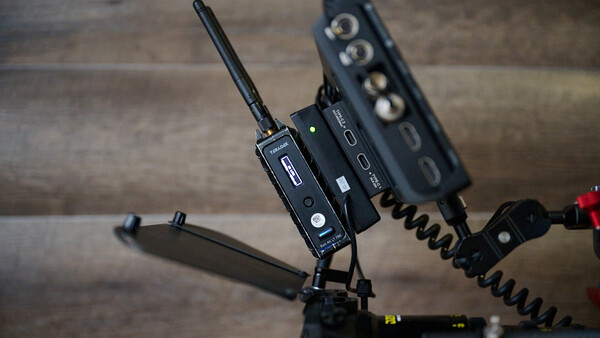
While overhyping new filmmaking and photography products is something of a spectator sport and phrases like "game changer" seem to be bandied about on a daily basis, it can sometimes come as a surprise which products actually move the needle.
Okay, I am no stranger to buying cameras. Some I needed. Some, it turns out, I definitely didn't need. And, as someone who writes about photographic technology, I've seen the numbers for what type of products spike the view counts for my articles. It's no surprise. It's always the hot new camera that does this or that. That miracle device that promises to take even the most novice snapshooter and turn them into Marty Scorsese overnight just by using a previously unimaginable cool new feature. Ignoring for a moment that filmmakers and photographers have been making great art for over a century without this new tool, we convince ourselves that our lives won't be complete until we have it.
But there's a lesson I've learned again and again, year after year of purchasing purported game changers, that holds true over and over. The products that tend to be actual "game changers" are very rarely the result of unicorn specs. Real "game changers" are most often the products that improve your workflow.
I'll give you an example. In the last year, I've bought three new cameras. It's a long story. I'm not proud of it. But, in fairness, all three do very different things. One is a personal fun camera. One is a true cinema camera built to be fully rigged. And another camera, which I won't mention because it, so far, hasn't quite lived up to my expectations. The exact cameras I'm referring to aren't important. What is important is that, in purchasing those cameras, I ended up, as tends to happen, needing to buy a host of new accessories to really maximize their potential. Some accessories I knew I would need to buy prior to purchasing the cameras. Other accessories were less than pleasant surprises that turned out to be less optional and more mandatory to fix issues the new cameras presented.
But after 12 months of buying accessories to fill the gaps, what I've discovered is that those accessories that fill those gaps have turned out to be decidedly more valuable than the products that caused their purchase in the first place.
The purchases that have legitimately transformed my workflow in the last 12 months are things like upgrading my wireless transmission system, overhauling my audio transmission system, and designing a more efficient video village for client monitoring. Hardly the full-on dopamine hit we all crave from owning the hottest new cameras on the internet. But fundamental building blocks that actually affect workflow.
Actually, if we're being completely honest, the most game-changing moves I've made overall were to finally sit down and learn every menu item on my six-year-old audio field recorder and to learn to more smoothly standardize my audio and picture workflow so that things like always shooting raw video or needing 32-bit float have become less necessary (all leading to significantly reduced file sizes per project).
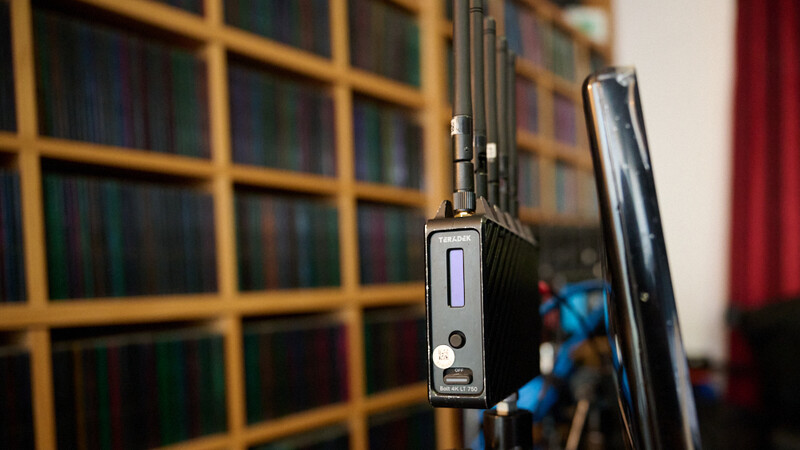
My most game-changing purchases have been decisions like buying a well-used Teradek Bolt system for wireless video transmission and stepping up from a prosumer-grade device to more industry-standard video transmission. It's the kiss of death for creating a buzzy game-changer article to talk about old used gear, but it has massively moved the needle and changed how I shoot. I can better integrate my workflow with the rest of my crew and have added solidity to my on-set process. And coincidentally, made my 1st AC's life a lot better due to the low-latency transmission providing an actual tangible benefit to pulling focus.
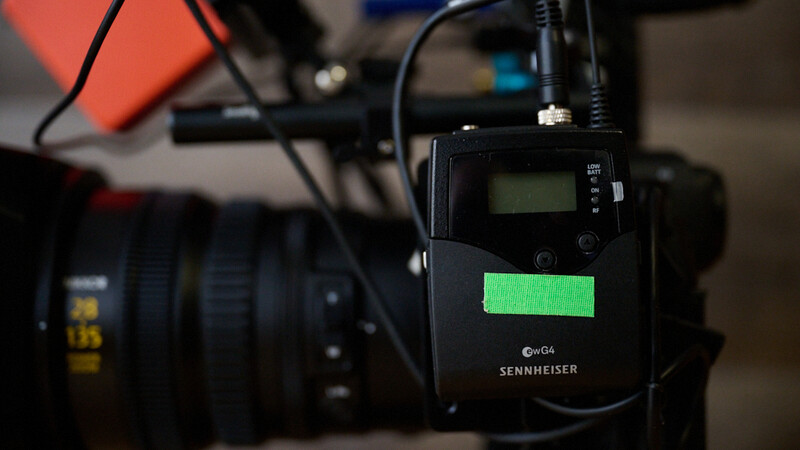
After a somewhat nerve-wracking experience on set where my prosumer-level 32-bit float lav and receiver pairings failed in the field, I doubled down on a brand I trust, Sennheiser. But, rather than investing a lot in another prosumer category, I again scoured the used market for an older industry-standard audio transmission system that may not be as fancy, but has notably added stability throughout my audio chain going from packet-based audio transmission to radio frequency while, again, better integrating with my team's workflow. None of that is particularly exciting, but overhauling this mundane system has significantly upgraded my audio stability on set. That has added more confidence. With more confidence, I have less to worry about. Fewer things on set stealing my focus from being creative.
The Teradek Bolt system, an accessory itself, actually led to another "game changing" accessory being brought into the picture. Actually, to be accurate, this game-changing system didn't require a big purchase at all. Rather, the fluidity of the Teradek Bolt system and scalable use of multiple receivers has allowed me to build out more effective director's viewfinders and a more expansive video village. In the past, I've mostly been able to cobble together something from disparate products already in my possession to serve a similar purpose. But focusing on building a stable, portable, and professional solution to on-set monitoring is the type of thing that pays for itself in efficiency and client satisfaction. Add in a couple of Blackmagic Design converter boxes to account for the range of different camera systems I personally flip between, and, suddenly, I've gone from a decidedly unsmooth DIY client monitoring setup to now having a rock-solid video transmission system that provides operator, client, director, and the DIT with real-time, stable video preview. All in a system that is both portable and scalable. Again, may not be exciting, but this new system has actually changed the game.
Now, to be clear, these changes haven't necessarily all been cheap. In fact, some of the new setups (if taken as a whole) have cost more than I would have spent on certain brand-new flashy "game changing" cameras. But, here's the thing. Those flashy new features on the hot new camera? In my experience, those almost always end up being the features I use the least. Even if I do use the feature, the novelty tends to fade the minute the next new shiny camera feature is announced.
Conversely, investing the same amount of money in foundational workflow tools instead has proven to be what actually makes me a better filmmaker and photographer. These very basic behind-the-scenes tools are what improve my efficiency and allow my team to work more smoothly together on set. They improve my client experience, even if it means I'm shooting with a camera model two generations old.
In short, what really changes the game when it comes to gear purchases is a product that allows you to be more effective on set, not the tool that trends the most in the comments sections. Game-changing tools allow you to worry less about gear, and more about creativity. Sometimes that's a camera. But, 9 times out of 10, it's more likely to be the Teradek Bolt-style product that most people aren't talking about that will give you the best long-term results.




Join the Fstoppers community for free
-
Post comments and join in the discussions
-
Browse the site ad-free
-
Share your work and get featured in the community
-
Compete in the photo contests for fun and prizes
No comments yet