
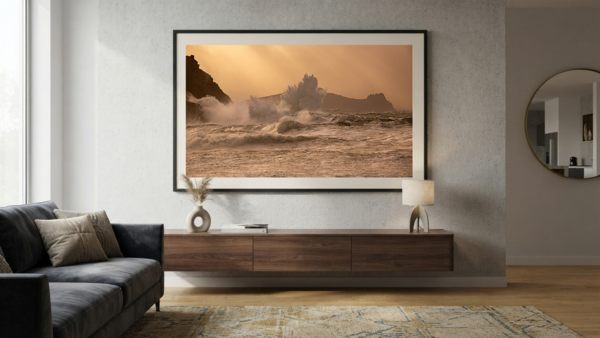
As a landscape photographer, I, like many others in this genre, take hundreds, if not thousands, of images every year. Some I like and others I love, but most of them stay on hard drives instead of being presented as prints, as they should be. However, what if we committed to printing more?
Over the years, photography has become easier and more accessible than ever before. We can capture thousands of images, store them instantly, and share them with people around the world within seconds. But in many ways, this has also made our photographs more disposable. We scroll past images on social media, we save them on computers and hard drives, and then we move on to creating the next one.
But what happens to the photographs that meant something to us? The ones that took effort to capture, the ones connected to a memory, a journey, or a moment that we experienced? Too often, they simply sit hidden away, waiting for the day we might open that folder again.
Looking back at my decade of taking my photography seriously, I have not only visited incredible places and had memorable experiences, but, most of all, I have come home with many images. That's the joy of photography, as we get to relive those moments almost instantly when we look back over a shot from an adventure.
Some of these images are meaningful just to me, while others stir an emotion in another person viewing them. But what if we could relive these moments whenever we wanted to or when we were doing everyday tasks? Well, we can when we commit to printing our shots.
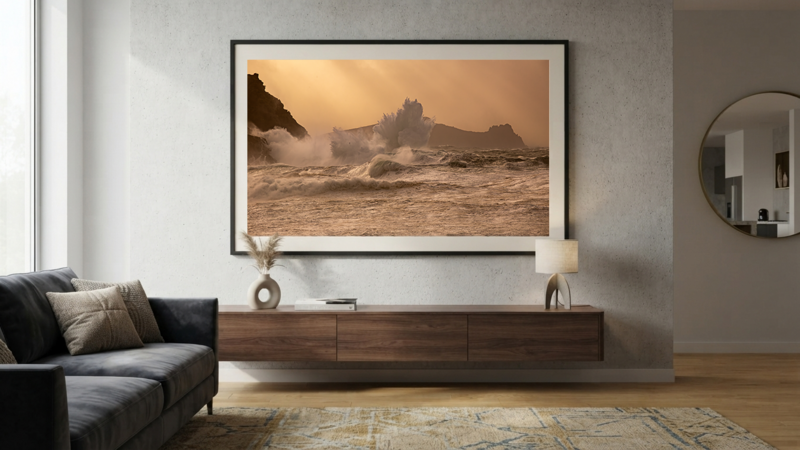
Opening the Virtual Cupboard
A photograph is more than just the final image. It is the memory attached to it. It is the early alarm, the long drive, the weather conditions, the people we shared the experience with, the struggles we had getting there, and the feeling we had when we finally captured the image. The photograph becomes the key that unlocks all of those memories again. The world is a big place, and even if we tried, and I mean really tried, we wouldn't be able to explore all of it, let alone photograph it. Yet we have spent time, money, energy, and effort to visit the places we have or could, and gone the extra bit to bring our camera gear with us. We then take those images and put them in a virtual cupboard, rarely opened and even more rarely consumed.
That always seemed strange to me. We put so much effort into creating these photographs, but once they are captured, many of them never get the opportunity to be enjoyed again. They become files rather than memories, stored away rather than experienced.
Printing changes that.
When we print an image, we are forced to slow down and really look at it. We have to decide whether that photograph deserves a place on our wall, in our home, or in a book. It becomes something tangible, something we can interact with, rather than just another file among thousands of others.
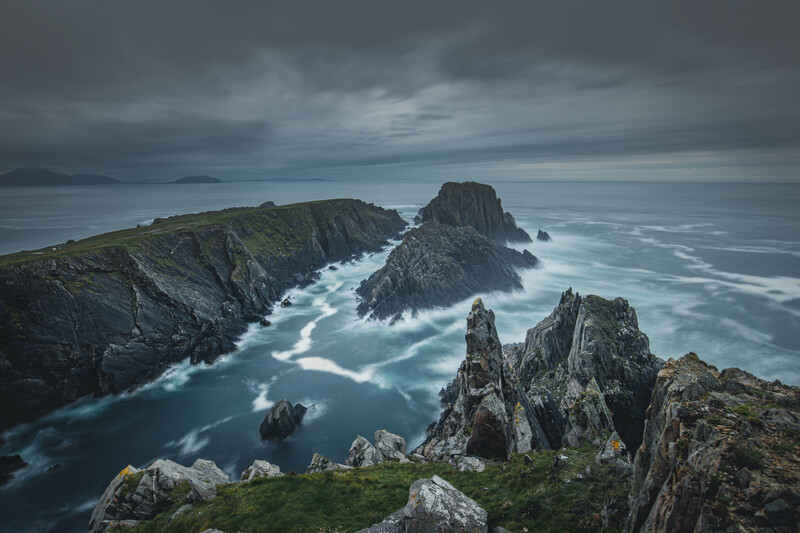
Take Action
Last year, I decided to do something about that. I already have images printed and hanging on my walls at home, but there's only so much wall space and, even more so, only so much my family can take from seeing my images, even while they use the bathroom!
That being said, though, the images still resonate with them, even though they didn't visit these spots, take the long hike in the rain, or take the photograph. So it got me thinking about how images can resonate with viewers differently, and not just when they are printed on the wall.
Because that is the interesting thing about photography. The person who takes the image will always have their own connection to it, but someone else viewing that same photograph can create their own connection. They might never have stood on that coastline, experienced that weather, or walked that path, but the image can still make them feel something.
My solution was to print a lot of images that I took over more than a decade of exploring with my camera, and I chose one single subject: coastal photography of Ireland.
My passion for the coast has been with me since I was a kid. It was as if the smell of the salt air, the sound of the waves, the pull of the wind, and the beauty of the coast fueled something in me. Being Irish and living in Ireland, I have one of the best coastlines as my playground.
So it seemed natural to focus on this subject, and when I did, I went through my archives and found so many images I had almost forgotten about.
Now, when I say forgotten about, that's not exactly true, because the moment I opened the image, I was immediately transported back to that exact moment.
I could recall how I was feeling, whether or not it was easy to get there, whether there were frustrations or happiness, and whether I was alone or with someone else. I could even remember if I was hungry, tired, or thirsty.
It was amazing, and I am sure I am not alone in recalling those feelings and emotions.
This was when I started to realize that the photograph itself was only part of the story. The real value came from everything connected to it: the experiences, the challenges, the failures, and the moments of joy that happened before the shutter was pressed.
The image was simply the reminder that allowed me to go back there again.
Images Tell Stories
I then began to recall the full story behind each image and, of course, the funny moments, the disappointments, or the elation that came with capturing each shot.
I started thinking about how these stories and experiences would resonate with another viewer. Would they see just a photograph, or would they be able to connect with the journey behind it? Would knowing the story change how they viewed the image?
Piece by piece, my idea turned into something meaningful, something relatable, and something that could potentially stir the emotions of others as they viewed the images.
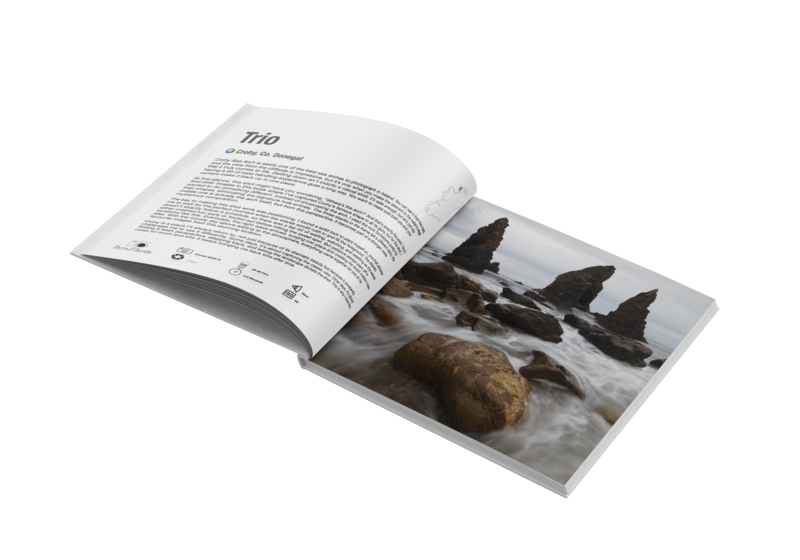
It was then that COAST was born.
I had my images, I knew the story behind them, and because I have created YouTube videos every week since 2017, many of these images were documented in video form as they were created.
This was something I felt was really important. The photograph alone tells part of the story, but being able to see the journey behind it adds another layer. The viewer could experience the conditions, the challenges, and the moments leading up to the image being captured.
It would allow someone to feel as if they were standing right there next to me when I pressed the shutter.
So I set about putting all of these ideas and concepts together as a cohesive collection of images and, ultimately, as a book.
This was when the real fun began, as I was not only able to go through my images, but I was also able to write the story behind them and share the process of taking every single one of them.
Pretty soon, I had the framework laid out for what I felt would be a very solid first book.
However, what was unclear at this point was whether or not anyone would be interested in seeing and reading about them and, even more so, whether someone would be willing to spend their money on picking up a copy.
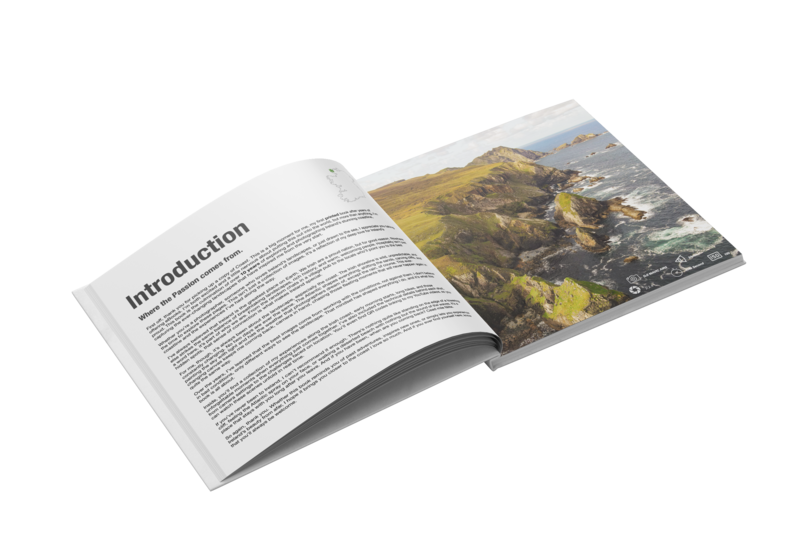
Photography Books
I own many photography books. I collect them, as they not only give me insights and inspiration, but they also kind of show me more about the style of the photographer.
But did I have a style? Were my images even good enough to showcase as a collection?
The curiosity was beginning to get the better of me. The images looked good on screen, but how would they translate when printed?
This was something I had never really considered before. Looking at an image on a monitor and seeing it printed are two very different experiences. Some images that look impressive on a screen don't always work when printed, while others suddenly come alive when they are sitting in front of you.
This was when I realized that printing wasn't just about displaying photographs. It was also another way of understanding my own work and seeing which images truly connected with me.
This was when Kickstarter came in, a crowdfunding platform that would effectively allow me to test the idea and see if there was an appetite for such a book of images of Ireland's amazing coast.
I can still recall the anxious feeling I had when I was putting the campaign together, and even more so when I pressed the go-live button on the campaign.
However, when I did, something amazing happened.
Not only was there an appetite for this book, but there was an insatiable appetite, and the book reached its funding goal in under 24 hours.
I had done some of the groundwork before this, finding and choosing a printing company that could do this book the justice it deserved, and I was even happier that it was an Irish business too.
Far too often, I see books being printed in Asia, and I understand why. It's a cost thing. However, because of the Kickstarter campaign, I knew how many books I would need to order, so I could match that need to the print run.
Instead of committing to a few pallets of books and paying extremely high shipping costs, I could instead have the orders in place before I even pressed the print button.
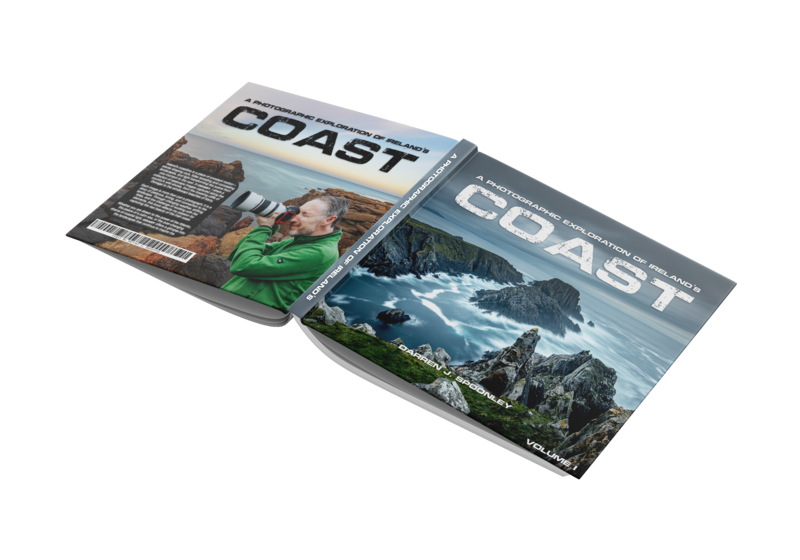
The campaign finished, and I sent the order. Weeks later, my Kickstarter backers had their books in their hands, and it was then that my dream was realized.
The feedback I received was amazing.
The images had resonated with people, the stories had filled in the blanks, and the videos had made the viewers feel like they were indeed standing next to me.
It was both amazing and humbling, but more than anything, I felt proud that I had achieved it.
This was the moment that really confirmed to me the value of printing photographs.
These images had existed for years on hard drives. They had been captured, edited, and stored away. But when they became physical, when people could hold them in their hands and connect with the stories behind them, they took on a new life.
The photographs were no longer just mine.
They had become part of someone else's journey too.
Despite this incredible feeling, I knew I wasn't done.
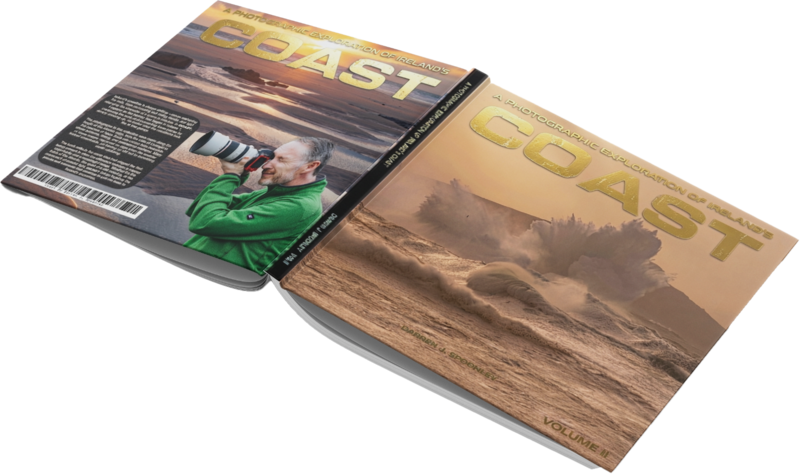
The Stories Continue
There were so many more images to show, stories to tell, and places to discover and even rediscover. So I immediately started working on Volume II.
Almost as fast as I started, I began to experience the same raw emotions as I did while creating Volume I, and I knew that these images and stories would also resonate with viewers when they picked up Volume II.
Fast-forward to now, and I am in the middle of my next campaign, COAST Volume II, on Kickstarter, and the response has once again been amazing.
It didn't reach its funding goal in 24 hours this time, and I never expected it to, but it is almost at its goal and looks like it will become a reality and go to print.
That's the risk with Kickstarter.
If the campaign doesn't reach its goal, then it doesn't get made.
Thankfully, these new stories and images look like they will be making their way around the globe once again, just like Volume I.
And just to think that the idea came from wanting to print more, evoke emotions in viewers, and take them on a journey with me.
I can't think of a more amazing place to do that than my playground, the incredible coastline of my home, Ireland.
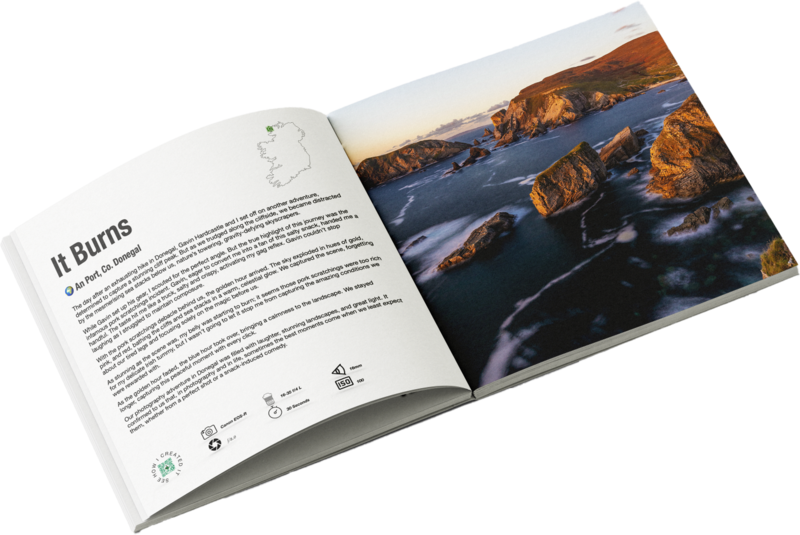
Have Your Say
So I ask you this: Do you have images that need to be printed? Do you have stories that need to be told? Do you have emotions that need to be revived?
Perhaps printing more can help you realize this.
Your photographs don't have to become a book. They don't have to be displayed in a gallery. They don't have to be seen by thousands of people.
Sometimes, printing an image is simply about giving yourself the opportunity to experience that moment again.
It is about taking something that happened once and allowing it to continue existing long after the day has passed.
A photograph stored away on a hard drive might be forgotten, but a photograph printed and placed somewhere you can see it becomes part of your everyday life.
If you want to be part of my journey, then I would be honored for you to join the campaign on Kickstarter and help get COAST Volume II made.
I can't tell you what feelings or emotions you will experience, but I can tell you that you will get to see some of the most impressive and raw coastal landscapes in the world, all because of the joy of printing more.
Join the Fstoppers community for free
-
Post comments and join in the discussions
-
Browse the site ad-free
-
Share your work and get featured in the community
-
Compete in the photo contests for fun and prizes
23 Comments
Making a photo book has always seemed sort of intimidating to me. However, I'm not sure why so many people feel like the only other reason to make a print is to hang it on a wall. We kept all kinds of binders with family pictures back in the day of Polaroid and Instamatic cameras. I still have many of them. But nowadays I turn my favorite pictures into A3+ (13x19) prints from a Canon inkjet printer of my own and store them in clamshell boxes. I look at them often because there is no comparable experience to holding a print in your hands. Unless someone is incredibly fussy over color management, inkjet printers are really simple to set up and operate.
Interesting. In June, I decided that I would print all of my digital family photos, and present a copy to each family member, so that they could have their own, old-fashioned family picture box. My wife said to make books, but I told her I didn't want to do that for the specific reason that family pictures belong in a box, under the bed (with slip sheets between each print).
Anyway, I started looking at printers, and had settled on pigment ink printers and archival paper (for longevity). I settled on the the latest Canon model that took large ink cartridges (the Prograph 1100). When I checked user reviews over on DPR, the 1100 seems to have pretty glaring banding problems that Canon hadn't fixed (hopefully, they will). Anyway, it made me gun shy — I don't want to waste time and money troubleshooting a faulty inkjet printer. Now, I'm afraid the "pull the trigger" on it.
What brand and model of printer do you use?
Canon 44" Prograf-4100 and Canon Pro-100 printers. I bought the 100 several years ago when Canon was selling them for peanuts. Being a dye ink printer, the 100 can sit neglected for months and start right back up without a hitch. Pigment ink printers must be used regularly, like every few days. I think the longest I've let the 4100 sit without printing anything is about a week. That's a major consideration since most hobbyists are not gonna have printing top-of-mind. Pigment inks have a reputation for greater longevity, but if you use Canon dye inks and not some cheap imitation, and store your prints in a box away from direct sunlight, they should last well beyond our lifetime. I suppose it boils down to how much in the way of prints that you want to give to your grandchildren.
The unit cost for ink is higher on the smaller printers, but an entire set is only about $125 for the Pro-100. I spend almost that much for each one of the 12 cartridges on the 4100 printer. The 1100 model falls in between at about $59 per cartridge as I recall. I would not sell a dye ink print, hence the reason for the 4100, but I get a lot of use out of the Pro-100. All of that only to say that progressively larger printers require a progressively larger commitment to printing. And the novelty might wear off after a few months.
Thanks for your reply. I also have an old Pro-100, but I moved homes and let it sit too long. I believe it's kaput. I was hoping to buy a pigmant ink Pro-1100, but the really long (3 pages) comment thread just had too many people complaining of banding. Maybe Canon will come up with a fix. I'd really like something as good as the pro-100, but with high capacity ink tanks.
Thanks again for the reply.
One more thing to consider about the cost of ink:
The cost of one ink cartridge for the Canon 1100 is $68 and it holds 80ml of ink. Works out to $0.85 per ml.
The cost of one ink cartridge for the Canon 200S (successor to the Pro-100) is $16 and it holds 12.6ml. Works out to $1.26 per ml.
But here's the catch... the 1100 printer uses 12 inks and the 200 uses 8 inks. So does the Pro-1100 actually use 50% more ink to make a print? Probably not, but if so, the cost to make a print is virtually the same. It's hard to calculate how much ink each printer actually consumes making a print, but there's a company in the US called Red River which does that sort of testing. They have no updates for the current models but have comparisons between the old Canon Pro-1000 and Canon Pro-100.
https://www.redrivercatalog.com/rr/cost-of-inkjet-printing.html
Their tests indicate that the cost of ink on the Canon Pro-1000 for an A3+ (13x19) page is $2.24. The same test run on a Pro-100 indicates the ink cost was $2.70. So the difference is $0.46 per page.
The Pro-1100 presently costs $1,300 and the Pro-200 is $549 at B&H. Given those prices, it will take you 1,632 A3+ prints to make up for the $751 difference in price for the printers... based on the cost of ink numbers provided by Red River. That's a lot of printing. Something to consider when buying a printer.
For what it's worth, I've always thought that the additional inks that have crept into the high-end printers serve a very limited niche market. I could never tell the difference in my prints between the 12-color Canon-4100 and my previous Epson P8000 which held 9 inks. Manufacturers are under a great deal of pressure to innovate, but I'm really suspicious that they're selling smoke and mirrors with new printers, and raking in more money on the ink. Just my opinion.
Thanks for the price breakdown.
We do an eight page,13x19 calendar every year for friends and family. One hundred and ten copies last year. Like Ansel said, "The negative is the equivalent of the composer's score, and the print is the performance.” Consequently, I print my own work.
What brand and model of printer do you use?
Epson Surecolor P800. Workhorse. Rebuilt once by a trusted tech.
Mostly writing here for John's interest in buying a printer.... I used Epson printers since the beginning days of inkjet technology up until about three years ago when my Epson 44" P8000 needed a second print head replacement. List price for the repair, which could only be done by a factory authorized person, was in the vicinity of $2500, eventually reduced to $1500 after a couple angry phone calls. Canon print heads, while arguably less durable, are far less costly and are user replacement parts.
The other thing I like about Canon printers is that they use duplicate nozzles so if one clogs during a print, the backup continues uninterrupted. I have never once had a ruined print on a Canon printer because of a clogged nozzle, whereas the Epsons gave me fits. That said, I live in a dry climate where low humidity is not inkjet friendly. No doubt whatsoever, Epson printers make great quality prints. I have a friend who swears by them for black and white work, although my eye can't see the difference. I just can't justify owning an Epson any longer for maintenance reasons.
My experience is the opposite. I have used an Epson 3880 now for 12 years, and print a lot. Never had a maintenance issue at all except that the toggles on the front cover broke off so I can't close the front. I live in the desert in New Mexico where a humid day has the relative humidity at 20%. Most often it's in the low single digits.
Thanks!
This is interesting. When the only option was the darkroom I spent MANY hours - days actually - printing, and the satisfaction of making an image from film exposure, processing each piece to my custom preference for that image, then proofing and eventually printing the ones I wanted to show people was an extremely gratifying experience. And the hand made prints were in black and white using papers that are no longer available and Ilfochrome, which is one of the most gorgeous color print materials ever made. Since the cost of a really good, fiber based multicontrast paper has gone to $10,00 a sheet at 16x20 size I have felt the need, indeed the necessity, to go to inkjet printing. The cost is about the same, however there is a lot less waste.
What I am interested in knowing is what paper people are printing on. I have tried Red River, Epson - since I print on an Epson printer, and Hahnemule. One was terrible, one was okay and the other is actually stellar. They are listed in the same order, so you can figure it out. Hahnemule very closely replicates my favorite darkroom paper. What has been disappointing with each paper in a lustre surface it the demarcation between the areas that received ink and the highlights where no ink was distributed. Does someone have a solution to that problem?
Nice article. Well written and I 100% agree. No photograph is complete if it is resting in a hard drive somewhere or in a negative file.
It won't solve your problem on an Epson printer but Canon pro printers use a chroma optimizer coating to solve gloss differential and bronzing issues on gloss and luster papers. To achieve comparable results, consider a post-print spray coating: Hahnemuhle Protective Spray.
My favorite papers are Canson Infinity Photo Satin Premium RC 270gsm, and Canson Infinity Arches BFK Reaves Pure White 310gsm.
Hahnemule Protective Spray? is that a luster or high gloss spray. I used to buy McDonalds spray lacquer by the case in my studio practice, and it worked very well. I knew hahnemule made a spray but I can't find if it's a high gloss or a luster finish. Krylon makes a luster spray but I question its archivability since it isn't designed as a product for inkjet prints.
Which Red River papers were you unhappy with? I get quite stellar results with their papers...
And which Epson printer...
I have the RR paper profiles downloaded to my Epson 3880. The RR paper I used most recently was Palo Duro Baryta, luster surface I believe. The complaint here is that the deepest shadow areas have a tendency to not have the depth of tone that I see in my darkroom prints when using a high silver content paper, though I do see the tone separation on my computer screen, and everything is calibrated using a Spyder. The paper has just not exhibited the richness there that I like to see. The Epson paper, Epson Exhibition Fiber is noticeably better there than the RR, but has a tendency to have muddy midtones - and midtones carry the image in my own judgement. I can work around that characteristic. Hahnemule, Hahnemule Fine Art Pearl seems to give the best all around rendering of the images with thunderous deep tones in the shadows, vibrant midtones and very delicate highlights that carry information into the highlights. The caveat here is that I do not print on RC paper, a prejudice that carries over from my darkroom days when RC papers lacked the permanence of Fiber Based paper. The difference for me may be the peculiarities of my work flow and patterns, and probably are based only on personal preference and not on any objective standard. I have used Epson printers since I got started in digital and currently use an Epson 3880. I do think that Epson has solved that issue with new iterations of their printers. I am just disinclined to spend $3 or 4K on another printer. I have used Canon printers, but got so frustrated with the last one I had that i did give it away - it was that or throw it out the window of my second story home/office space. I hated it, again probably just a personal preference
For me, I was never happy with the results with Baryta papers using that generation of Epson. The Palo Duro version was discontinued some time ago. The mat paper results could be stunning though... With the Epson 900 images just sing throughout the tonal scale on Red River Big Bend Baryta, their current Baryta.
I guess the upshot is that I am not very current on RR papers. I have part of a box of the Palo Duro still in my paper storage and didn't know the the PD paper was discontinued. Silly as it may seem I was curious about the paper since the actual Palo Duro canyon is only a few miles away. Mat papers have never worked well for me. I had tried them on when I was contemplating a series on New Mexico Cowboys, but the tones were just muddy so I abandoned it for the moment. I have been very happy with the Epson 3880, except for that one issue of dull spots appearing in areas of pure white. I did find a solution yesterday. I had ordered a couple of cans of Premier Photo Spray - sanctioned by Epson - and tried it out. It does greatly reduce that apparents of that issue without changing the surface sheen of the paper.
I sell a lot of prints in my local area to customers businesses and so forth and to be honest the joy comes from seeing my work on the wall not the money. The money is cool but honestly, I don't really need it but when I see one of my A1 GFX prints on the wall or bigger it blows me away. I get so excited seeing it on the wall and my house has got a lot of my own work in it and when you walk past a beautiful image on your wall it will inspire you to go out and take more photos and for anyone that hasn't printed. Just remember to do a little bit of research into colours and so forth as well but honestly, just get something up on the wall that you like and it will inspire you to keep taking great photos... I took this a couple of days ago and I've already sold an A1 print and it will look awesome on the wall
I love printing my pictures! Therefore, in our home all pictures which are hanging on the wall, were taken by me. All hanging paintings were made by my wife btw. Of course, there is only sooo much (or less) space, so we kinda have some workarounds:
- in the living room we have five frames which we fill with seasonal pics (spring, summer, fall, winter and Christmas). We change them regularly.
- one wall is reserved for family pics which get changed regularly. There is one wall reserved for the family "always and forever" keepers.
- There is a theme wall (atm North Sea)
- we print photos books and/ or albums of every trip plus a book for every year "2025"
As you can tell: I/ we really enjoy real prints!
I do print calendars for my siblings and a couple of friends, but other than that the "we gift calendars" spot is taken by my father-in-law.
The really, really tricky part are wall hanging that don´t come in exchangeable frames, but in metal frames or are printed on glass. There are only a few spots for those keepers and these prints are very expensive. We do have two pics taken in the Rocky Mountains, Colorado and "Garden of the Gods" in Colorado Springs which were printed very large. On that trip we got engaged, so we have a very special connection to Colorado.
Great article
thank you from https://jeffjansen.net.
Thanks a lot , really appreciate that