You keep hearing that a 50mm f/1.8 on full frame gives a look that smaller sensors cannot match. That might be true, but it misses the point when your goal is depth, not blur.
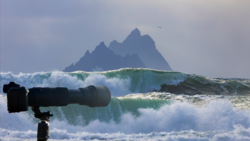
Coming to you from Chris Baitson, this thoughtful video centers on the OM System OM-1 and a simple idea: f/5.6 on Micro Four Thirds often gives exactly the look you need for long exposure coastal work. Baitson heads to Mapleton Beach with a rock wall and textured clouds, sets the lens to f/5.6, dials in 60 seconds at ISO 200, and builds the exposure with a polarizer and a six-stop ND filter. He watches the histogram instead of chasing extremes. The frame is vertical, heavy on negative space, with attention on balance rather than blur. You see how that moderate aperture holds detail from foreground rocks through to the sky without fighting diffraction or starving the sensor of light.
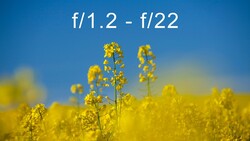
He addresses the common refrain about 50mm f/1.8 lenses by mounting a 50mm f/1.2 and shooting it wide open. On Micro Four Thirds, that field of view behaves like a 100mm lens on full frame because of the 2x crop factor. Wide open, the depth of field shrinks fast. Focus becomes fragile. Rocks that should anchor the frame drift soft. The scene loses structure. When he stops back down to f/5.6, the detail returns and the image settles. The comparison is blunt and visual. You see what shallow depth of field does to a layered coastal scene, and why it may not serve the subject.
There is also a practical angle. With Micro Four Thirds, you start with more inherent depth of field at any given aperture compared to full frame. That allows you to shoot at f/5.6 and still hold front to back focus while keeping shutter speeds flexible for long exposures. Baitson leans on Live ND and later experiments with Live Composite mode, stretching a base 3.2-second exposure into roughly five minutes. Clouds streak, water flattens, and the camera builds the frame in real time. He mentions one tradeoff with Live Composite: clouds can look slightly sharp or jagged instead of fully smeared, which may or may not suit the mood.
A friend joins briefly and adds another angle. Using the OM System 12-100mm f/4, they sometimes opens to f/4 to blur a foreground element while keeping the main subject clear. Same format, different intent. That exchange shifts the discussion away from sensor size wars and toward choices. Aperture becomes a tool, not a status symbol. You see two approaches with the same system, both grounded in control rather than chasing maximum blur.
There is more in the field footage and side-by-side results, especially around how the histogram guides exposure and how small adjustments in ND strength change the feel of moving water. Check out the video above for the full rundown from Baitson.



Join the Fstoppers community for free
-
Post comments and join in the discussions
-
Browse the site ad-free
-
Share your work and get featured in the community
-
Compete in the photo contests for fun and prizes
8 Comments
I have full frane and shoot at 5..6 with focus stacking. I think that i get a better image.
"You start with more inherent depth of field at any given aperture compared to full frame."
This is like saying European cars are superior to American cars because you can drive 100 more safely.
Aperture on FF and MFT is a simple 2X conversion, and you always have the option to shut the aperture down on a full-frame camera. Use f/11 on a FF camera instead of f/5.6 on an MFT camera and you get *identical* results. Full-frame has plenty of slower lenses available if you, for some reason, don't want the *option* to open up the aperture.
Lol. What? No you don't. Because obtaining DOF on FF includes a massive reduction in light at f11 versus f5.6. FF is soooooooo overrated. Such a waste of money all to carry GIGANTIC gear with a limited feature set.
Someone doesn’t understand equivalence.
I understand FF systems arent equivalent to m43 in cost, size, IS performance, durability, computational features or usefulness. And ... you might want to revisit your understanding of equivalence...
I guess the photographer needs to decide, do i need more depth of field with faster shutter speeds a d lower ISOs... (Lighter lenses and cameras) Or do I want to have shallower depth of field. The comparison can be made from iPhones to 4"x5" cameras and beyond. Just use the right tool for the job, if you can afford it!
Really fair discussion... I've owned and shot professionally with 4x5, Hasselblad 2.25", FF, APS-C. Now I have a new Micro Four Thirds. If you love shallow depth-of-field for some images, but you want more depth-of-field for others, it's not a "one camera fits all" proposition. To be able to allow more light to the sensor, but with more depth-of-field because of the smaller sensor AND allowing a faster shutter speed at the same time, can be really beneficial in many situations. Macro photography is a good example. Use the right tool for the job. There's no "best" sensor size, just as there is no "best" wrench, pliers, or screwdriver size.
I'll buy mft when it will be cheaper,lighter and smaller that FF. I can get the S5II paired with thet 20-60, 50/1.8 and 85/1.8 for the price of OM-3 body only LOL.
Pay 1000-2000 bucks for a Pro 1.2 lens just to get a bellow average DOF f/2.4-ekv. lens. Straight put insane. And don't forget its also bigger and heavier than FF f/1.4 lenses that have to cover 4x the sensor area.
I get it. You don't need the fastest Olympus Pro lens. Sure. Well why doesn't OM System continue in the legacy of Olympus and doesn't restrict some key camera features to the several Pro lenses only. 🤡
If there's a system to avoid,its OM / Olympus, sorry. Overpriced, overhyped and extremely shady. With bellow average optical performance.