
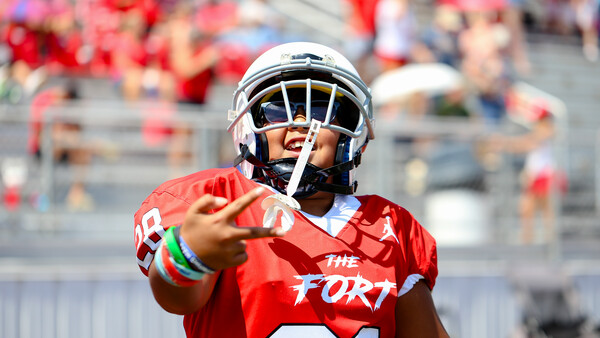
Tell most sports shooters you’re covering a football game with a 100mm macro and they’ll smile politely, the way you smile at someone who swears by decaf. But youth football isn’t the NFL. The field is smaller, the pace is choppier, and the best stories live within arm’s length of the sideline. In that environment—under sun, not stadium lamps—the Canon EF 100mm f/2.8L IS Macro on a Canon 6D is a secret weapon.
It’s brutally sharp, fast at f/2.8, stabilized, and capable of true 1:1 detail. More importantly, it renders youth football the way it actually feels in daylight: close, textured, and human. I learned this on a warm September Saturday, kneeling at the numbers with the chain crew to my right and a tangle of siblings to my left. A middle linebacker—pads a size too big—shadowed a rollout. I tracked him with AI Servo at 1/2000, f/2.8, ISO 200. The 100mm macro did something my Canon EF 70–200mm f/4L rarely gives me on youth fields: it breathed space into chaos. Spectators and the chain gang fell into a soft wash. The kid’s eyes stayed knife-edge crisp. The frame read like the game feels at ten years old—loud around the edges, quiet where it matters.
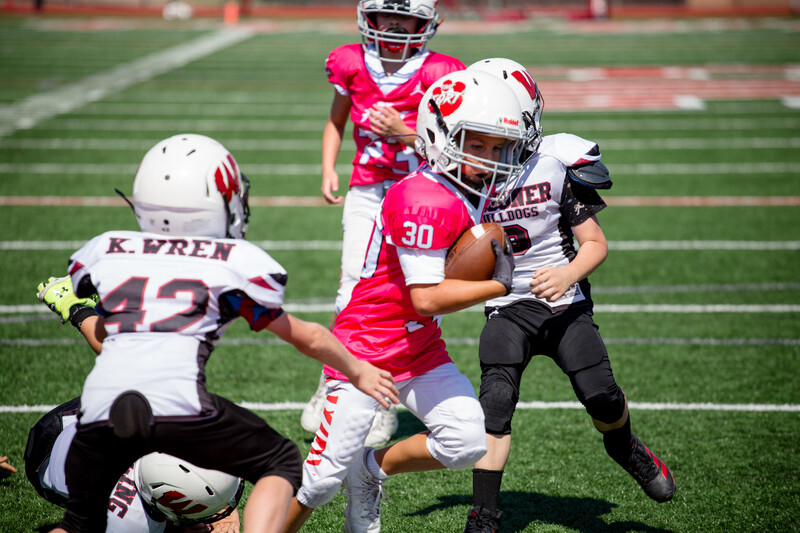
Why a Macro for Football in Daylight
At youth games, you usually work five to twenty-five yards from the play. On full frame, 100mm sits exactly in that sweet zone. In daylight, f/2.8 buys you subject separation when the field is cluttered with coaches, siblings, and coolers while still keeping shutter speeds honest. The optics are L-series honest: strong micro-contrast, crisp edges, and a rendering that flattens distraction without turning the background into soup. Then there’s the macro. Youth sports are a festival of small details—chinstrap rash, wristbands curled like tiny books, turf pellets pasted to sweat, decals peeling at the corners. Pregame and halftime become a buffet for a lens that goes 1:1 without flinching. Those cutaways aren’t filler; they’re glue. They bind a gallery into memory—the frame a parent lingers on because it feels like their kid’s ritual, not just their stat line.
Make the Macro Behave Like a Sports Lens on the 6D
The 6D is a modest-FPS, center-point-dominant camera, so lean into what it does well. Set the lens’ focus limiter to 0.5 m to infinity so it doesn’t hunt through close-up distances. Use AI Servo with back-button focus and live on the center AF point, adding four-point expansion only when you need a sliver of grace. The 6D’s center point is fast and accurate in good light, and the camera rewards short, intentional bursts over spray-and-pray. In manual exposure, start around 1/2000–1/3200 second at f/2.8–f/3.2 and ISO 100–400, or use Auto ISO in Manual when clouds keep drifting across the sun. If you’re fighting specular highlights on white jerseys, bias a third under or enable Highlight Tone Priority, understanding it nudges your base ISO. Picture Style set to Neutral or Faithful with modest sharpening keeps files flexible. White balance at 5,200–5,600 K gives you consistency; in open shade, push toward 6,000–6,500 K for skin that looks alive instead of cold.
Daylight Exposure That Protects Faces and Color
In full midday sun, 1/2000–1/3200 at f/2.8–f/3.2 with ISO 100–200 keeps motion frozen and highlights safe. Late-afternoon backlight is where the macro sings; 1/1600–1/2500 at f/2.8 with ISO 100–400 lets rim light trace helmets and shoulders while faces stay clean. In open shade or thin overcast, 1/1600–1/2000 at f/2.8–f/3.2 and ISO 200–400 gives you flattering skin and deep, believable color. A circular polarizer can tame glare on helmets and grass when the sun is high, but it costs a stop or more and can make blue skies uneven; I’ll thread it on for static details and portraits, then pull it off when the ball is live.
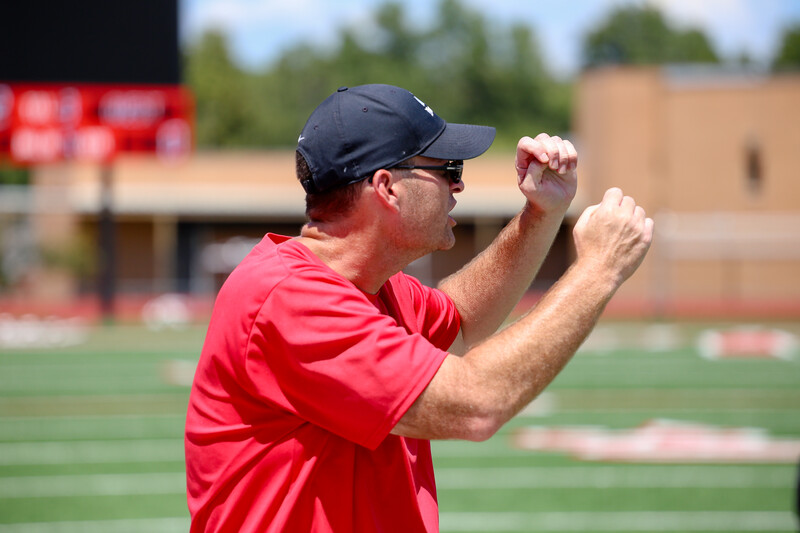
Where to Stand and What to Look For
Work from the near hash to the numbers, a step off the sideline, and shadow the chain crew so down-and-distance moves you rather than surprises you. In bright sun, aim for cross-light so faces pick up shape and the background falls away. When the play goes away, resist the temptation to chase with desperate crops. Turn to the sideline story: a lineman’s hand resting on a teammate’s shoulder pads, a coach diagramming in the dirt with a Sharpie, a little brother pressing against a portable fence to feel closer to the game. When the sun drops, embrace backlight. Get low and let the light draw silver outlines around helmets, shoulders, and wrist tape. The 100mm compression stacks crowds into soft geometry without isolating your subject into nowhere, and at f/2.8 the separation feels natural—clean rather than cutout.
Pregame and Halftime Are Where Macro Earns Its Keep
Arrive early and shoot like a documentarian. Lace-tying rituals, gloves with Sharpied initials, play wristbands unrolled on a knee, a mouthguard being chewed into shape—turn each detail until the sun grazes the texture, then let the lens do what it was born to do. With one piece of glass, you can move from an environmental portrait of a player in the bench tunnel to a true macro of frayed tape fibers and scuffed number decals. That continuity elevates a gallery: wide, medium, tight—all in one coherent look built from the same color and contrast signature.
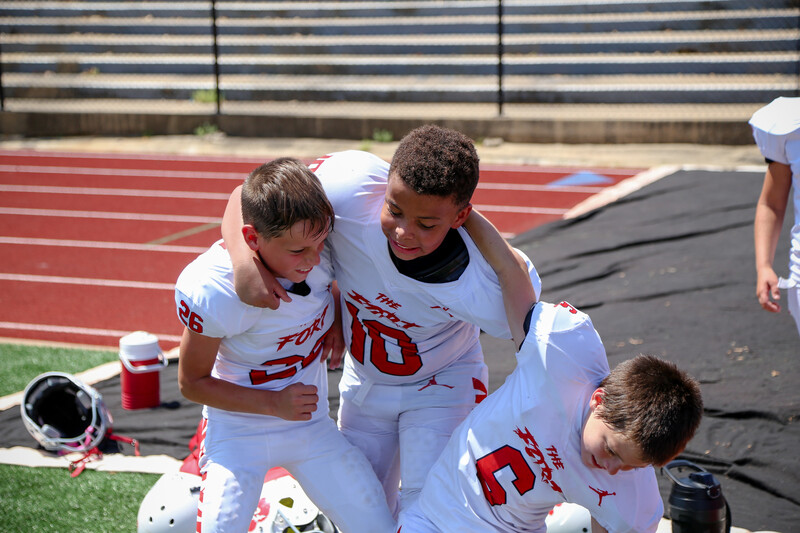
Framing and Depth Without the Clutter
Daylight is unforgiving if you let backgrounds run wild. Use foreground layers to build depth—shoot past a coach’s laminated play sheet, over a yard marker, or through a teammate’s shoulder. Favor verticals when the ground gets messy; a clean vertical at 100mm turns third-and-short into a graphic study of helmet, eyes, and ball. Whenever you can, angle yourself so trees, fences, or shaded bleachers sit behind your subject; the macro turns those planes into simple blocks of tone that flatter skin and uniforms.
Prime Limitations and Daylight Workarounds
You will miss far-hash streak routes. That’s the tax for committing to a prime. The answer is choreography, not regret. Before each snap, read the geography and drift with the chain crew so you’re never stranded when the offense flips the field. Build three-beat sequences—pre-snap tension, the decisive step, the immediate aftermath—so your story never depends on a fifty-yard heave. When the play goes away, protect the exposure, nail the focus, and don’t be afraid to crop with intent. The 6D’s files give you an honest 8×10 from a loose frame if the shot is timed well and the highlights are intact.
Handheld Rhythm, Lens Hood, and Heat
At 100mm, a monopod is optional. I prefer to shoot handheld so I can pivot and drop to a knee without wrestling hardware. Keep the hood on for flare control and as a soft bumper when plays leak into the white. On hot days, sweat and sunscreen will fog the eyepiece; tuck a microfiber in your pocket and wipe the viewfinder between drives. The lens’ Hybrid IS is a gift for static details and halftime stills; at 1/2000 it’s essentially invisible, which is exactly how stabilization should behave during action.
Ethics and Trust on the Sideline
Youth sports are community rituals, not PR campaigns. Know the league’s policy on photographers and consent. Avoid frames that single out injuries. If a player is visibly upset, give them room. When in doubt, show a frame to a parent and ask if they like it. You’ll gain trust faster than any sideline badge. The 100mm macro excels at respectful proximity, letting you make honest pictures without leaning into anyone’s bubble.
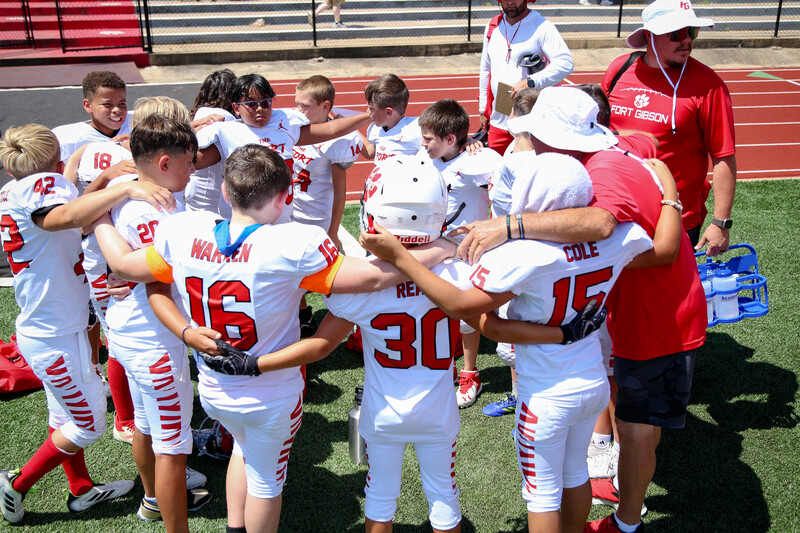
Daylight Color and a Parent-Friendly Finish in Post
Cull tightly and sequence with intent. Lead with an action anchor or two, then walk viewers through the day: pregame nerves, first-drive hits, sideline breathers, halftime textures, late-game grit, the handshake exhale. In post, keep sharpening small-radius and modest so uniforms and numbers pop while skin stays natural. Let contrast live in the midtones and save clarity for gear, not faces. Keep greens believable, rein in hot reds, and avoid candy colors. If you’re selling, build packages around what this lens gives you: a detail-driven set for the sentimental frames, a game-story gallery that balances action and reaction, and a hero panel where a tight portrait sits above a strip of three moments.
When the 70–200 f/4 Stays in the Bag
The Canon EF 70–200mm f/4L is a daylight darling, but the prime forces commitment. With a zoom, I sometimes spray the middle and hope. With the Canon EF 100mm f/2.8L IS Macro, I decide where I’m living on a drive and author the sequence from that spot. The galleries get bolder, and the hit rate on meaningful frames goes up because I’m not chasing everything—I’m writing something.
Edge Cases and Honest Trade-Offs
Harsh noon sun wants you to simplify. Use open shade near the bench for portraits and let live-ball frames go more graphic—helmets, hands, ball. Sidelines jammed with spectators will squeeze your angles; step back a single row and shoot over shoulders. On windy, dusty days, angle with the light so backlit particles add atmosphere instead of haze across your subject. There will be drives you let go because the hash and the sun and the traffic don’t line up. That’s not failure; that’s editing in real time.
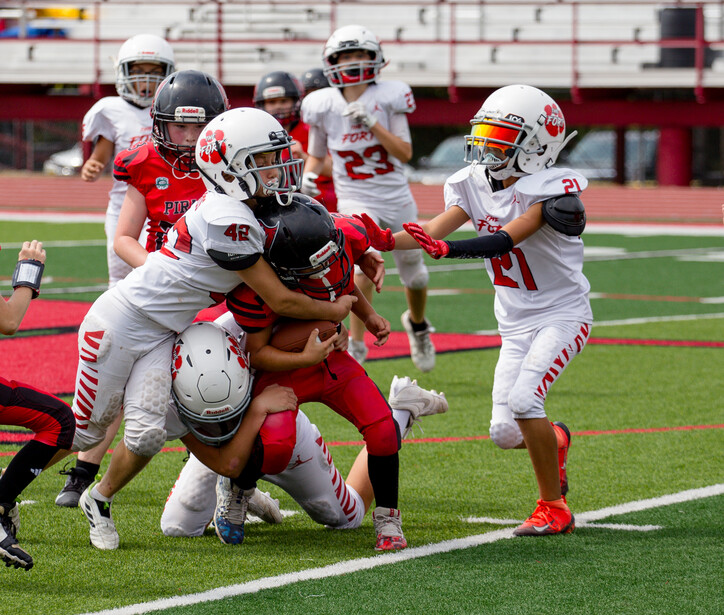
A Daylight Field Guide You Can Repeat
Walk in with the macro on your Canon 6D, hood on, stabilization on, and the limiter set to 0.5 m to infinity. Set AI Servo with back-button focus and live on the center point. Start at 1/2000–1/3200, f/2.8–f/3.2, ISO 100–400, and a Kelvin WB around 5,400 K, adjusting for shade or late sun as it shifts. Pre-focus on the near guard before each snap so the lens is biased toward the action. Fire short, decisive bursts at the moment of commitment and stay ready after the whistle for the reaction frames parents actually buy. Before kickoff, at halftime, and after the game, switch into detail mode and sweep for wristbands, tape edges, chewed mouthguards, helmet decals, cleat studs, and grass-stained towels. That mix of action, reaction, and texture is what turns a gallery into a keepsake.
Conclusion
The Canon EF 100mm f/2.8L IS Macro will never replace a 300mm on a college sideline. It isn’t meant to. But at youth football in daylight, where intimacy beats grandeur, this lens on a Canon 6D is a genuine cheat code. It gives you the separation you want and the details that make a gallery feel authored rather than assembled. If you’re tired of the standard sideline look and want to photograph the game the way kids actually experience it—up close, a little chaotic, and full of tiny, perfect textures—bring the macro. You’ll make pictures that parents buy and players remember.
All photos belong to the author, Steven Van Worth






Join the Fstoppers community for free
-
Post comments and join in the discussions
-
Browse the site ad-free
-
Share your work and get featured in the community
-
Compete in the photo contests for fun and prizes
No comments yet