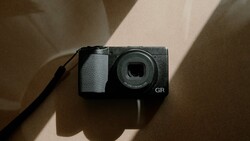
The Fujifilm X100 VI is one of the most talked-about compact cameras in recent memory, and for good reason. Owning one for over a year and putting more than 10,000 frames through it across Japan, Mexico, Hawaii, Brazil, and Australia gives you a very different perspective than a two-week review ever could.
Coming to you from Gerard Needham, this thorough real-world video covers what it's actually like to live with the Fujifilm X100 VI as a travel and professional tool over the long haul. Needham doesn't just run through specs. He talks about what surprised him, what frustrated him, and what he actually changed about how he shoots because of this camera. One of the bigger surprises is battery life: he bought two extra batteries expecting the small cells to drain fast, but found that a single charge gets him through a full day of shooting, even on paid jobs. He also addresses one of the most common complaints about fixed-lens cameras, the single focal length limitation, and the solution he landed on is genuinely worth knowing about.
Needham brought in the Viltrox teleconverter and wide conversion lens to give the X100 VI effectively three focal lengths: 28mm, 35mm, and 50mm, with the in-body crop pushing it to a 100mm equivalent thanks to the 40 MP X-Trans 5 sensor. He tested both lenses extensively and found the results mostly strong, with only minor corner softness on the wide end and a small round flare on the tele side that cleans up easily in Lightroom. But the real stress test in this video is what Needham does with the image quality comparison: he puts the X100 VI up against a Hasselblad X2D, a 100 MP medium format camera, to see how the files hold up side by side, both as digital files and as large prints.
There are also a few honest criticisms here. Needham thinks Fujifilm has priced the X100 VI a bit high for what it is, especially given that the autofocus in continuous mode still lags well behind what Nikon, Canon, and Sony offer. He uses single-point autofocus exclusively because the continuous tracking hunts too aggressively to be reliable. The lens itself is sharp and compact, but Needham points out that updated coatings would have made a meaningful difference: the flare the current lens produces is unflattering and has noticeably washed out some of his shots. He also covers a processing tip involving DxO Pure RAW 5 that addresses a known Lightroom rendering issue with X-Trans 5 raw files and produces a noticeably sharper, cleaner result, especially for images where you want to extract everything the sensor has to offer. Check out the video above for the full breakdown, including the Hasselblad comparison results, from Needham.



1 Comment
Complains about flare but not once uses a lens hood. It's a small simple step every user can take. And the less said about the viltrox introducing horrible flaring the better!
Also the AF-C, fair point for the x100vi bit it's not what this camera is about. It's compact so has a stepper motor, and it's a go slow camera. It might mean you can't track and spray your kid coming at you on a zipline but consider it as the street and documentary camera it is. On the x-t5 AF-C is very usable and at that point becomes more of a matter of the user adapting to the Fuji system, so the whole of Fuji cameras shouldn't be pigeonholed based on a camera that is slower in more ways than one.
Presume there was also sponsorship by Viltrox here also. He seemed to suggest their conversion lenses suddenly changed the game. But Fuji's own conversion lenses have been available for years. The wide angle in particular is compact, inexpensive and does not lose sharpness. For the Tele you are better off just using the immense cropability of the camera anyway as it is bulkier. But the whole point of the camera is compromised somewhat when using any converter - just use it as it is and and as the camera is intended, composing to that focal length.
But if you are happy to use converters, no excuse at all for not using a hood to increase contrast and eradicate flare. I'm sure K &F will have one 😉