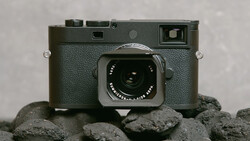
The Leica M10 Monochrom locks you into black and white the moment you turn it on, with no safety net of color files to fall back on. That single constraint forces you to look harder at light, contrast, and shape instead of thinking about what preset you will use later.
Coming to you from Jason Kummerfeldt of grainydays, this relaxed video walks through what it means to use the Leica M10 Monochrom, which only records luminance. Kummerfeldt explains how removing the color filter array means each pixel collects pure light data, which translates into crisp detail and very clean tonal transitions. He keeps the M10 Monochrom at ISO 1,600 as a default, which lets you stop down in the street and still hold a fast shutter without worrying about blur. That high ISO habit makes shooting from the hip simpler and frees you from constantly riding exposure controls. You see the effect most clearly in the way small textures in buildings, water, and pavement hold together when you zoom in.
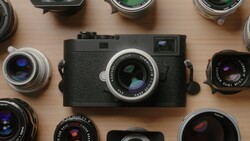
Lens choices in the video show how this sensor reacts to different glass. Kummerfeldt uses a Leica Summicron-M 35mm f/2, a compact, sharp classic that suits the rangefinder body and leans into microcontrast. The files look tight and punchy without feeling brittle, especially in backlit scenes where the midtones still separate cleanly. He then switches to a slower zoom, the Konica M-Hexanon 21-35mm f/3.4-4, and shows how the strong high ISO performance makes that kind of lens very workable at night. Because the frame lines only reach about 24mm, he adds a big external finder on top of the camera to frame 21mm properly, which changes the way you compose and forces you to commit before you press the shutter. There is also a stretch with a fast normal like the Voigtlander 50mm f/1 Nokton, where he drops to the base ISO of 160 and leans into shallow depth of field for portraits.
The video spends time on how the files look at both base and high ISO rather than chasing charts. Because there is no de-mosaicing, the noise at ISO 1,600 and beyond takes on a tighter, grainlike structure instead of smeary color blotches. That matters when you want to print big and still keep fine detail in hair, fabric, or distant windows. Kummerfeldt also points out how little he uses the rear screen, which has a reputation for being fragile and easy to chip, and how that habit stretches the battery across a couple of days of shooting. When he needs more precision, he flips into live view to check framing with wide lenses or to rely on the sensor for more accurate metering instead of the older reflective meter in the body. You get a clear sense of how the camera pushes you toward a slower, more deliberate way of working without turning every outing into a technical exercise.
Infrared is where the video takes a more unusual turn and hints at what this camera can do beyond regular monochrome. Kummerfeldt talks about the relatively thin hot mirror over the sensor and uses an R72 filter to block visible light so infrared can dominate the exposure. Focus shifts once you move into that spectrum, so he relies on live view or a Leica Visoflex 2 electronic viewfinder to dial in sharpness while he walks around sculptures and city scenes. The infrared files come out flat and flexible, ready for contrast and tonal shaping in post, and they give familiar locations a stark, almost eerie look. Check out the video above for the full rundown from Kummerfeldt.

Join the Fstoppers community for free
-
Post comments and join in the discussions
-
Browse the site ad-free
-
Share your work and get featured in the community
-
Compete in the photo contests for fun and prizes
2 Comments
One can achieve the same mental switch by setting a conventional camera to B&W mode. The viewfinder and rear screen will show you B&W images. If you want to keep your options open, shoot raw + jpeg: the latter will be in B&W, but the former will give you access to color in processing.
I don't own a monochrome camera and just shoot in colour and convert to B&W later. I don't need a dedicated (expensive) monochrome camera as I am very disciplined. I find photos generally look either great in B&W or colour, very rarely both. It's all down to the way you approach the photos and shooting for B&W or colour are very different approaches. Monochrome cameras are a niche that most won't be able to afford and you can always shoot to a B&W jpeg profile if you really want to lock into B&W without the Leica investment.