A compact 24-70mm style zoom that starts at 24mm but stops at 60mm instead of 70mm is not a common sight, especially with a constant f/2.8 aperture. You get a smaller, lighter lens that still promises bright aperture performance without the usual cost or bulk.
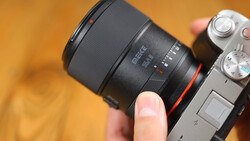
Coming to you from Christopher Frost, this detailed video breaks down the new Rokinon (Samyang) AF 24-60mm f/2.8 and how it stacks up in the real world against more established options. Frost explains that the lens is a compact full frame standard zoom co-developed by Samyang and Schneider-Kreuznach, built specifically for Sony E mirrorless bodies. You see the plastic-bodied but solid construction, the weather-sealing gasket at the mount, the USB-C port for firmware, and the pair of control rings with clear texture differences so you can find zoom and focus by feel. Frost notes the fast, quiet autofocus and the low focus breathing, which immediately makes this lens interesting if you shoot video as well as stills. The smaller barrel and 72mm filter thread help keep your kit lighter than a typical 24-70mm, even once you add common filters.
Frost also spends time on where this zoom fits in the lineup next to the Tamron 28-75mm f/2.8 Di III VXD G2 and Sigma 24-70mm f/2.8 DG DN II Art, which both give more telephoto reach but come in larger, heavier shells. The Rokinon undercuts those lenses on price and trims the zoom range to keep size and weight down. If your everyday shooting tends to hover between 24mm and about 50mm, that trade can make sense, particularly once you factor in how much nicer a smaller kit feels over a long day. Frost’s sample shots and simple handling tests give you a quick sense of whether 60mm feels like “enough” reach for the way you usually frame scenes.
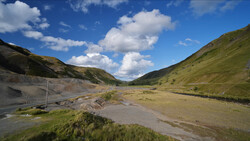
On the image quality side, Frost pushes the lens hard by mounting it on a 61 megapixel Sony a7CR. In the center of the frame, sharpness at f/2.8 looks very strong at 24mm, 40mm, and 60mm, so you still get the crisp subject detail you expect from a modern fast zoom. The catch appears at the edges and corners, where performance wide open is notably weaker, especially around 40mm and 60mm, and needs stopping down to around f/5.6 or f/8 before it settles. With in-camera corrections turned off at 24mm, Frost shows very heavy vignetting and strong barrel distortion, which is a reminder that this design leans heavily on software correction. The video goes much deeper into how that looks in real scenes and how much of it you will actually notice when editing.
Key Specs
-
Focal length: 24 to 60mm
-
Maximum aperture: f/2.8
-
Minimum aperture: f/22
-
Mount: Sony E
-
Format coverage: full frame
-
Minimum focus distance: 0.59' / 0.18 m (wide) to 1.05' / 0.32 m (tele)
-
Magnification: 1:3.73 macro reproduction ratio, 0.25 to 0.27x
-
Optical design: 14 elements in 11 groups
-
Aperture blades: 9
-
Focus type: autofocus
-
Image stabilization: none (relies on in-body stabilization)
-
Filter size: 72mm front thread
-
Dimensions: approx. 3.1 x 4" / 78 x 102 mm
-
Weight: 17.4 oz / 493 g
For stills, if you lean on wide open shooting at the long end and care about clean corners, you may find the compromises harder to accept than someone who keeps subjects near the center or often stops down. If your main use is video, the strong autofocus performance, low focus breathing, and controlled flare could outweigh the optical flaws at the edges, especially once you factor in how much modern cameras correct distortion and vignetting in real time. Frost also points out the close focusing at 60mm, which lets you get into near-macro territory and produce very soft, creamy backgrounds with that 9-blade diaphragm.
Pricing is another angle Frost touches on that might matter a lot to you. The lens launches at $899, putting it under the classic 24-70mm competition while still promising constant f/2.8. Frost compares it to the earlier 14-24mm Schneider-Kreuznach / Samyang collaboration, which was impressively sharp and compact, and suggests this 24-60mm does not reach quite the same optical highs, even though it follows the same compact-zoom philosophy. That mix of strengths and compromises is exactly what makes seeing his full set of tests useful before you decide where it fits in your own kit. Check out the video above for the full rundown from Frost.


Join the Fstoppers community for free
-
Post comments and join in the discussions
-
Browse the site ad-free
-
Share your work and get featured in the community
-
Compete in the photo contests for fun and prizes
No comments yet