Portrait shooters keep circling 135mm, and for good reason. You get compression, subject isolation, and reach, making for instantly striking images.
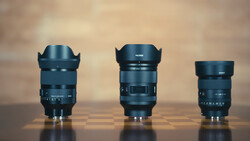
Coming to you from Dustin Abbott, this thorough video pits the Viltrox AF 135mm f/1.8 LAB FE against the new Sigma 135mm f/1.4 DG Art and shows where each lens pulls ahead. Price sets the tone fast, with the Viltrox coming in at $899 while the Sigma lands at $1,899, and that $1,000 gap changes how you think about “want” versus “need.” The Sigma’s f/1.4 aperture buys cleaner subject cutout and bigger, rounder specular highlights, plus extra headroom in dim venues. The Viltrox counters with less distortion, lighter weight, a smaller hood, and a friendly 82mm filter size instead of a 105mm wallet punch, which affects how you kit out with NDs or diffusion filters
Abbott’s tests keep autofocus front and center, with both lenses snapping into focus quickly and quietly in real scenes. You also see practical handling differences that matter when you’re in the field instead of a studio. The Sigma ships with a locking hood and a tripod collar, which helps on sticks or when you want rotation control, while the Viltrox leans into a more modern interface with an LCD and two function buttons that can be programmed for tricks like preset focus pulls via the app. If you live at minimum focus, the Viltrox’s 0.25× magnification and shorter focus distance open creative frames like tight details, flowers, or ring shots without reaching for a dedicated macro, and that advantage shows up in background blur up close even with the slower aperture
Where the Sigma earns its premium is the look. At the same framing and distance, the transition from in-focus to out-of-focus appears smoother, and highlights stay circular earlier as you stop down thanks to 13 blades. That extra two-thirds stop also helps keep ISO in check under bad light or reduce motion blur when you want to freeze hair flicks or handheld candids. If you shoot stars or night portraits, the combination of brightness, low vignetting, and high wide-open sharpness is a niche the Sigma fills well. If your work leans on clean geometry and you hate massaging pincushion in post, the Viltrox is the simpler file with basically zero visible distortion at default corrections
If you need the f/1.4 look at typical portrait distances and care about the softest background rendering, Sigma is the pick. If you value lower distortion, closer focusing, smaller filters, and keeping an extra $1,000 for lighting or a second body, Viltrox makes a strong case. The video walks through chart crops, portrait scenarios, flare behavior, and specular highlight shape, so you can judge the trade-offs with your own eyes instead of pixel-peeping screenshots. Check out the video above for the full rundown from Abbott.



Join the Fstoppers community for free
-
Post comments and join in the discussions
-
Browse the site ad-free
-
Share your work and get featured in the community
-
Compete in the photo contests for fun and prizes