The limits of a macro lens show up fast when you try to fill the frame with something smaller than a grain of rice or when your background turns into busy mess instead of smooth color. Sony’s new 100mm macro aims to push past that by giving you more magnification and cleaner blur so tiny subjects feel bigger and more isolated in a natural way.
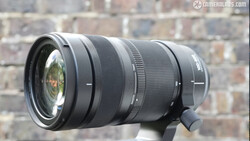
Coming to you from Albert Dros, this thoughtful video puts the new Sony FE 100mm f/2.8 Macro GM lens up against the older 90mm macro in real forest shooting, not just on a spec sheet. You see how the 100mm is slightly larger and heavier, but adds an aperture ring, a second custom button, faster autofocus, and a bump to 1.4x magnification. The difference in bokeh shows up in side-by-side images where backgrounds stay a bit smoother and less nervous, even when you stop down. You also get a clear look at how the 100mm handles teleconverters, which is something the 90mm simply cannot do. By the time Dros finishes the basic comparison, you have a much clearer idea of which lens fits your style instead of just guessing based on focal length and price.
Out in the woods, the lens gets pushed into the kind of subjects that actually test a macro design. Dros spends a lot of time lying in leaf litter with clusters of tiny mushrooms, shooting wide open at f/2.8 for that dreamy look where only the important slice of the cap or gills is sharp. Then he changes pace and stops down hard, around f/14, to capture carpets of raindrops on autumn leaves while still keeping the background smooth and clean. Handheld shots at ISO values around 2,000 show how flexible this setup can be when you want to move just a few centimeters and completely change your angle on the subject. You see where these results could have been done with the old 90mm and where the extra magnification and teleconverter support are clearly doing the heavy lifting, which is the part you cannot tell from a spec listing alone.
Key Specs
-
Focal length: 100mm
-
Maximum aperture: f/2.8
-
Minimum aperture: f/22
-
Lens mount: Sony E
-
Lens format coverage: full frame
-
Minimum focus distance: 10.2" / 26 cm (from sensor)
-
Maximum magnification: 1.4x
-
Optical design: 17 elements in 13 groups
-
Aperture blades: 11, rounded
-
Focus type: autofocus
-
Image stabilization: yes
-
Filter size: 67 mm (front)
-
Dimensions: 3.2 x 5.8" / 81.4 x 147.9 mm
-
Weight: 1.4 lbs / 646 g
As the video goes deeper into magnification, things get more extreme and more useful if you like pushing macro to its limits. With a 1.4x teleconverter, Dros works his way from a whole leaf covered in droplets down to just three tiny drops, then down to individual beads of water where the 90mm would already have given up. He shows how even at f/14, the depth of field is still razor-thin at these distances, which is why he sometimes stops down and sometimes stays more open depending on whether he wants detail or atmosphere. The bokeh demonstrations, where he walks from f/2.8 through f/14 while keeping the same forest scene, give you a clear feel for how the lens draws highlights and how the 11-blade aperture keeps the blur looking round and soft instead of choppy. There is also a taste of more advanced work like focus stacking with his Sony a7R V.
The most striking sequences come when the 100mm is pushed all the way to tiny coral-like fungi, microscopic droplets, and insects that are smaller than a millimeter. Dros uses the 1.4x teleconverter and careful focus to pull out textures and patterns you would never notice while walking through the forest. He sometimes adds a 2x teleconverter as well, using the extra reach to compress distant autumn colors into smooth backgrounds behind tiny mushrooms. Later, he finds minuscule insects racing over a mushroom and manages to capture their faces and antennae at near maximum magnification, something he says he could not do with the older 90mm. The video also touches on the practical question of whether you should upgrade or stick with the 90mm, especially with used prices likely dropping, and leaves enough room for you to decide how much that extra reach and teleconverter flexibility really matters. Check out the video above for the full rundown from Dros.




Join the Fstoppers community for free
-
Post comments and join in the discussions
-
Browse the site ad-free
-
Share your work and get featured in the community
-
Compete in the photo contests for fun and prizes
1 Comment
I like this guy's photography, in fact, I purchased his book earlier this year. Having said that, I don't subscribe to his channel, simply because everything on his channel seems to revolve around "Sony" instead of photography in general. Nikon 50+ years.