An 85mm prime is still the classic way to get flattering portraits on a full frame body, and the latest option from Viltrox tries to give you that look without the usual bulk or price. If you want a compact lens that still feels serious in the hand, this release deserves your attention.
Coming to you from Dustin Abbott, this detailed video walks through how the new Viltrox AF 85mm f/2 lens fits into the Evo lineup and, more importantly, into a Nikon Z or Sony E kit. Abbott explains that Evo sits above the tiny Air series and below the Pro and Lab lines, so you get a smaller lens with more serious controls and performance. Direct comparisons to Nikon’s own Nikon 85mm f/1.8 S and the older Viltrox 85mm f/1.8 make it clear where this new option lands on size, weight, price, and features. You come away with a clear sense that it is intended as the compact alternative when you do not want to spend S-line money.
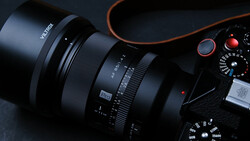
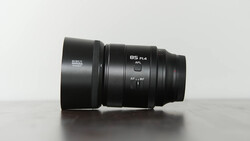
Abbott spends a good amount of time on build, because that is where Evo separates itself from cheap-feeling budget glass. The barrel feels solid, with metal construction, a clean finish, and a layout that gives you both an aperture ring and a separate manual focus ring so controls are not fighting each other. The aperture ring can be de-clicked with a side switch, making exposure changes smoother for video, and there is a customizable button on the lens that you set from the camera body. Weather-sealing is not as extensive as Nikon’s S-line lenses, but you do get a gasket at the mount and a coated front element, which is usually enough for light rain and dusty days. A compact hood, 58mm filter thread, and a USB-C port at the rear for quick firmware updates round out a package that stays small, light, and easy to pack.
Key Specs
-
Focal length: 85mm
-
Maximum aperture: f/2
-
Minimum aperture: f/16
-
Lens mount: Sony E, Nikon Z
-
Format coverage: full frame
-
Minimum focus distance: 2.43' / 0.74 m
-
Maximum magnification: 0.13x (1:7.7)
-
Optical design: 10 elements in 8 groups
-
Focus type: autofocus (STM motor)
-
Image stabilization: none
-
Filter size: 58 mm front thread
-
Dimensions: 2.7 x 3 in / 69 x 76 mm
-
Weight: 12.7 oz / 360 g
Autofocus performance is a big question any time you consider a third-party Z-mount lens. For stills, the STM motor moves focus briskly and quietly, with little hesitation as he racks from near to far. Eye and subject tracking on people and animals holds up well, even when he pushes it with movement toward the camera. On the video side, Abbott points out that Nikon bodies need careful AF sensitivity tuning, but once that is dialed in, the lens tracks him as he walks, leaves the frame, and returns. Touch-to-focus transitions are not Hollywood-smooth, yet they are confident enough for everyday clips, with focus breathing present but not distracting. The takeaway is that you can rely on it for real work instead of treating it as a toy prime.
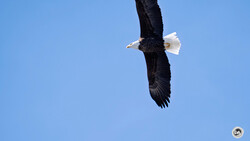
Image quality is where this lens starts to feel more expensive than it is, and the video gives you a good sample without exhausting every test. Abbott shows charts and real scenes that reveal strong sharpness and contrast right from f/2 in the center and mid-frame, with corners tightening up as you stop down toward f/5.6. Distortion is a mild pincushion pattern that cleans up with a small correction, and a vignette is noticeable wide open but not extreme, especially once a profile is applied. Chromatic aberrations stay well controlled, even in shiny metal details and high-contrast edges. Bokeh holds up in the messy, mid-distance backgrounds that usually expose weaker lenses, with highlight shapes staying clean enough that you do not see harsh edges or nervous patterns.
He gets into deeper tests too, including deeper corner sharpness sequences across apertures, close-range performance at maximum magnification, and extended flare tests where he pushes the lens into the sun and small apertures to see where it breaks down. Check out the video above for the full rundown from Abbott.



Join the Fstoppers community for free
-
Post comments and join in the discussions
-
Browse the site ad-free
-
Share your work and get featured in the community
-
Compete in the photo contests for fun and prizes
No comments yet