Fuji’s 40-megapixel bodies expose which portrait lenses can actually hang at high pixel density. A fast 56mm that stays sharp at f/1.2 changes what you can shoot in bad light and how cleanly you can separate a subject from chaos.
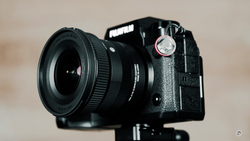
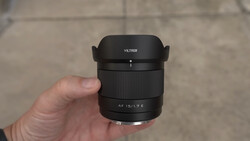
Coming to you from Dustin Abbott, this helpful video looks at the Viltrox AF 56mm f/1.2 Pro XF lens. Abbott compares autofocus feel, build choices on X mount, and whether the optics hold up on the 40-megapixel sensor. You see why an f/1.2 on APS-C gives you that full frame-style subject cutout. You also get context on how Fuji’s own standards around lens controls affect what third-party makers can enable on body. The video makes plain where the glass is doing the work and where the camera is the bottleneck.
Autofocus for stills lands in the “confident enough to trust” tier, with misses showing up mostly when you push shallow depth of field during movement. That tracks with X-series behavior rather than a motor problem in the lens. Manual focus feel is a win, with a smooth, linear throw that makes micro-adjustments predictable at f/1.2. You’ll notice the premium construction and thorough weather-sealing, plus a proper aperture ring with clean third-stop clicks. You won’t get an AF/MF switch or a declick option on X mount, and that limitation matters if you rely on silent iris changes mid-take.
Where the story spikes is the optics. Center and mid-frame look crisp wide open, corners only a step behind, and by f/2.8 edges snap to attention. Longitudinal fringing shows lightly in stress tests but stays controlled in actual images. Bokeh stays soft with gentle speculars, and the rendering plays nicely with skin at close to medium distances. Flare behavior is the one watch-item: backlight can throw streaks and blobs at smaller apertures, which you can dodge with framing and aperture choice.
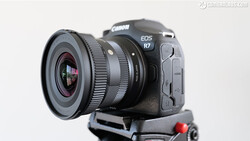
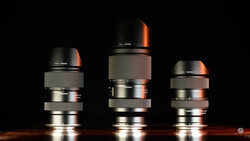
Compared to alternatives, the value equation is blunt. The Fujifilm XF 56mm f/1.2 R WR brings first-party integration and a solid optical redesign, but its micromotor focus feels dated and the price bites. The Sigma 56mm f/1.4 DC DN Contemporary is compact and sharp for the money, yet you give up the extra light and blur of f/1.2. The Sirui Sniper 56mm f/1.2 hits the same speed at a lower weight, but Abbott’s chart and real-world crops show the Viltrox pulling ahead in contrast and detail at the edges that count.
Key Specs
-
Focal length: 56mm (35mm equivalent: 84mm)
-
Aperture: Maximum f/1.2, minimum f/16
-
Minimum focus distance: 1.6' / 50 cm
-
Magnification: 0.13x (1:7.7)
-
Optical design: 13 elements in 8 groups
-
Aperture blades: 11
-
Focus: Autofocus
-
Image stabilization: No
-
Filter size: 67mm (front)
-
Dimensions: ø 78.4 x L 92 mm
-
Weight: 1.3 lbs / 575 g
A few usability notes matter if you shoot both stills and video. Floating elements clunk a bit when the camera is off, then lock when powered, which is normal. The lens hood now clicks home securely and rides slimmer in a bag than Fuji’s oversized alternative. Touch-to-focus pulls on current X bodies can step and lag, and that’s the camera’s AF brain showing its age rather than a fault in the lens. If your workflow leans on smooth AF transitions, you’ll either set timing expectations or favor first-party glass until Fuji updates algorithms.
If portraits, events, or ambient-lit interiors are your main arena, the speed-plus-sharpness balance here lets you keep shutter speeds honest without ugly ISO noise. The look at f/1.2 on APS-C restores that dimensionality you miss when everything is stuck around f/2.8, and it does it with credible control over fringing and cat-eye. You won’t see everything in the video, including the deeper optical charts and the side-by-sides against Fuji’s WR lens at multiple apertures, but the sample sequences already make the case. Check out the video above for the full rundown from Abbott.


Join the Fstoppers community for free
-
Post comments and join in the discussions
-
Browse the site ad-free
-
Share your work and get featured in the community
-
Compete in the photo contests for fun and prizes
No comments yet