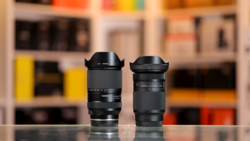
Choosing between the Sigma 20-200mm f/3.5-6.3 DC DN Contemporary and the Panasonic Lumix S 28-200mm f/4-7.1 Macro O.I.S. for travel shooting isn't obvious, and the answer depends heavily on what you actually value in a walk-around lens. These two super zooms sit at nearly identical price points but deliver meaningfully different results in the real world.
Coming to you from DirksFocus, this detailed side-by-side video puts both lenses through a structured category-by-category comparison, with points awarded in each round. Dirk opens with something worth paying attention to: at 28mm, the Lumix 28-200mm is actually sharper than the Sigma 20-200mm at its widest end. That's a surprising result, but the moment you zoom in, the story flips hard. By 50mm, the Sigma pulls ahead in center sharpness, and in the corners it's not even close. Dirk describes it as "a class of its own," and the images he shows back that up at 100mm and 200mm as well.
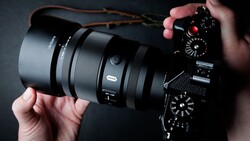
The Lumix has real advantages, though, and Dirk doesn't gloss over them. The lens weighs only 413 g and is significantly smaller than the Sigma's 550 g body, which has a direct impact on what kind of travel bag you need. The Lumix also includes optical image stabilization, which the Sigma lacks. Dirk shoots handheld video at 200mm to demonstrate the difference, and the stabilized footage from the Lumix is noticeably smoother. If you're shooting video while walking through a city, that stabilization does a lot of work for you.
On chromatic aberrations, both lenses perform well, but Dirk spotted ghosting and fringing on the Lumix at 200mm that didn't show up on the Sigma. The aperture comparison is more nuanced than it first appears. The Sigma starts at f/3.5 versus the Lumix's f/4, which sounds like a clear advantage, but by 28mm the Sigma has already closed down to f/4. The Lumix actually holds a fractional aperture edge through most of the zoom range up to about 128mm, at which point the Sigma's f/6.3 maximum becomes the better option compared to the Lumix's f/7.1. Neither lens is parfocal, and neither suffers from focus breathing, so those are wash categories. Dirk also puts both lenses through close-focus and near-macro shooting, where the Lumix's 14 cm minimum focusing distance at the wide end is genuinely impressive, though the Sigma closes the gap at the telephoto end. Check out the video above for the full breakdown and scoring from Dirk, including his final verdict on which lens he'd buy if he were starting from scratch.



No comments yet