The Viltrox AF 15mm f/1.7 Air lens is the widest option in the company’s lightweight Air lineup. Its size and speed make it appealing for anyone who wants a compact tool for wide views, but that comes with some trade-offs you’ll want to know about before picking it up.
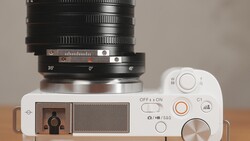
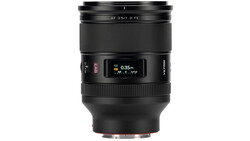
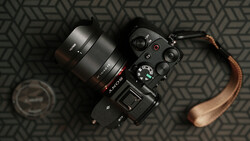
Coming to you from Dylan Goldby, this detailed video takes a close look at the Viltrox AF 15mm f/1.7 Air E lens. Goldby explains that while the build quality is in line with the rest of the Air series (lightweight composite materials, a smooth metal mount, and the usual firmware update port), the filter thread is different. Unlike the others in the lineup that share a 52mm thread, this one jumps to 58mm. That means you lose the convenience of swapping filters across lenses, which may feel like a missed opportunity. Still, the size and weight stay very compact at only 180 g. If you can live without weather-sealing and a physical aperture ring, it offers a clean, minimal setup.
Autofocus is another key point. The lens uses a stepping motor, which gives you fast and generally reliable focusing. It’s not quite as quick as the 56mm f/1.7 Air lens, but for most shooting situations, it won’t hold you back. Accuracy is solid overall, though Goldby did note occasional misses, which he attributed more to camera systems than the lens itself. The bigger technical story, however, is distortion. Barrel distortion shows up prominently, and it isn’t the kind that’s easy to fix without a dedicated profile. If your work depends on straight lines, such as architecture, that’s a serious consideration. Center sharpness improves significantly by f/2, but corners never quite catch up, leaving some softness no matter how much you stop down.
Key Specs
-
Maximum Aperture: f/1.7
-
Minimum Aperture: f/16
-
Lens Mounts: Sony E, Fujifilm X, Nikon Z
-
Format Coverage: APS-C
-
Minimum Focus Distance: 9 in / 22.9 cm
-
Magnification: 0.1x (1:10)
-
Optical Design: 12 elements in 10 groups
-
Aperture Blades: 9
-
Autofocus: Yes (stepping motor)
-
Image Stabilization: No
-
Filter Size: 58 mm
-
Dimensions: 65 x 56.4 mm
-
Weight: 180 g
Image quality quirks continue beyond distortion. Wide open, the lens shows a heavy vignette of over two stops, which decreases as you stop down but never fully disappears. Coma is noticeable in point light sources near the frame edges, so night shooting is best done at f/2.8 or narrower. There’s also some chromatic aberration in extreme conditions, though nothing unmanageable. On the creative side, the close focus distance of 23 cm lets you get some nice separation for a wide lens, and the bokeh, while not as strong as Fujifilm’s faster glass, is smooth enough for casual use. Flare and ghosting are mostly controlled, with only minor issues in extreme cases. Check out the video above for the full rundown from Goldby.



Join the Fstoppers community for free
-
Post comments and join in the discussions
-
Browse the site ad-free
-
Share your work and get featured in the community
-
Compete in the photo contests for fun and prizes
No comments yet