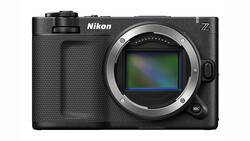
The Nikon ZR is a camera that has generated a lot of conversation since Nikon acquired Red Cinema, but most of that conversation focuses on specs and codec comparisons. What's harder to find is a perspective from someone who actually shot on a Red camera for years, sold it, moved on, and then picked up the ZR expecting to be underwhelmed.
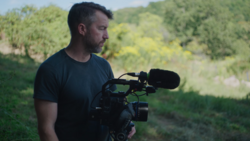
Coming to you from Curren Sheldon, this candid video walks through five things that turned Sheldon from a skeptic into a buyer after just one week with the camera. Sheldon is an Oscar-nominated filmmaker who spent years shooting on the Red Helium before selling it and returning to Canon cameras, specifically the Canon C300 Mark III and the Canon C70. That background matters here, because his frame of reference is not someone chasing specs on paper. He describes the Red Helium's image as the best he's ever captured on any camera, and says the ZR's color fidelity brought that feeling back immediately. Rich, deep color that goes beyond what your eyes actually see is how he describes it, and he draws a direct contrast with Sony's color rendering, which he characterizes as thin and slightly off in ways that don't match reality.
The second major point is lens compatibility. Sheldon owns no Nikon Z mount glass, but he does have Sony E mount lenses, including what he calls his favorite lens of all time, the Zeiss Otus 50mm. A Metabones adapter lets him mount any E mount lens on the ZR with so little bulk that it feels native. Given how deep the E mount ecosystem is across Sony, Sigma, Zeiss, and third-party manufacturers, that compatibility is a real advantage for anyone coming from a Sony-based system. Sheldon also points to the camera's 4-inch rear screen as a genuine leap forward. After working with 3-inch screens on cameras like the Canon C50, the Canon EOS R6 Mark II, and the Sony a7 V, he says going back to anything smaller feels genuinely frustrating. A waveform, level indicator, and full image can all live on screen at once without crowding each other out.
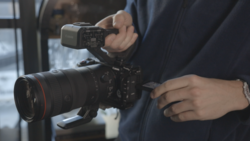
There are real downsides here too, and Sheldon doesn't skip them. Focus peaking is unavailable when shooting in Redcode Raw, which he calls bizarre and inconvenient. File sizes in Redcode Raw on a 1 TB card give you roughly an hour to an hour and a half of footage at 24 fps, with no variable compression options the way legacy Red cameras offered. He's found that transcoding Redcode Raw to H.265 in DaVinci Resolve preserves a surprising amount of the color depth, and he's also experimented with N-Raw, which several people in his orbit consider nearly equal to Redcode at more manageable file sizes. The camera also includes 32-bit float internal audio, timecode via the 3.5 mm jack through firmware update, and a manual focus confirmation indicator that shifts from red to green. He's paired the camera with a SmallRig cage for a better grip, and shoots it alongside a DJI Ronin 4D in his current workflow.
Check out the video above for the full breakdown from Sheldon, including his direct footage comparisons and the specific settings he uses to get the most out of the Redcode raw workflow.

3 Comments
What did that have to do with the Nikon Z8? The video was about the Nikon ZR.
Edit - Above statement is no longer valid. Headline has been change to reflect the video content.
Clean up needed on aisle Z8!