
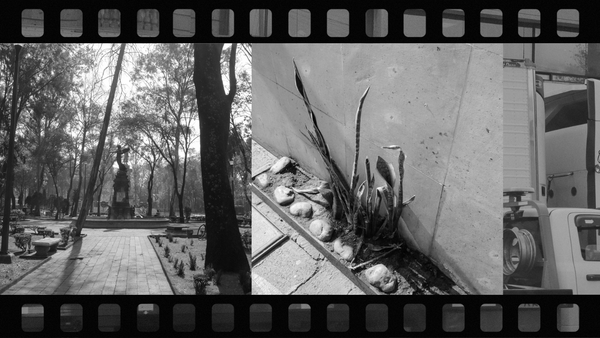
There's a strange misconception in street photography: that more is more. More chaos. More layers. More subjects. More "decisive moments."
But what if the real power lies somewhere else entirely? What if the strongest images are the ones that almost don't exist? And what if the format itself is the first, decisive cut?
I learned to love street photography because it could be documentary and artistic at the same time. In Italy, many used to call it reportage. Mostly made in black and white. And the photograph usually was not crying out loud in order to take a position on social media. For me, street photography is still that thing.
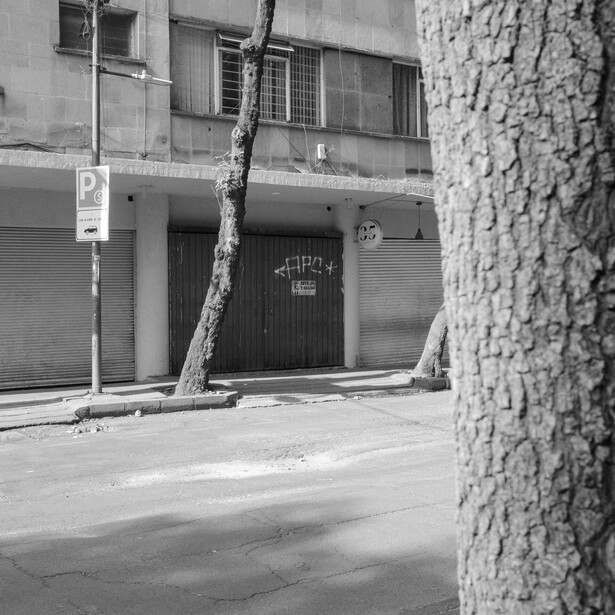
Why the Square Is Not Neutral
The 1:1 frame is clearly not just a stylistic choice. It's a restriction that changes how you see before you even raise the camera.
Rectangular frames suggest direction. They imply movement. Left to right, top to bottom. They encourage narrative. The square refuses all of that. It doesn't lead your eye anywhere. It traps it. Everything inside the frame has to coexist, not flow.
That's why the square is ruthless. There's no escape route for weak elements, no empty sides to hide imbalance, no cinematic illusion to lean on. Either the image holds or it collapses. That's the tough part when we are called as photographers to solve the visual equation. In square format, everything is even harder.
Silence, Center, and Tension
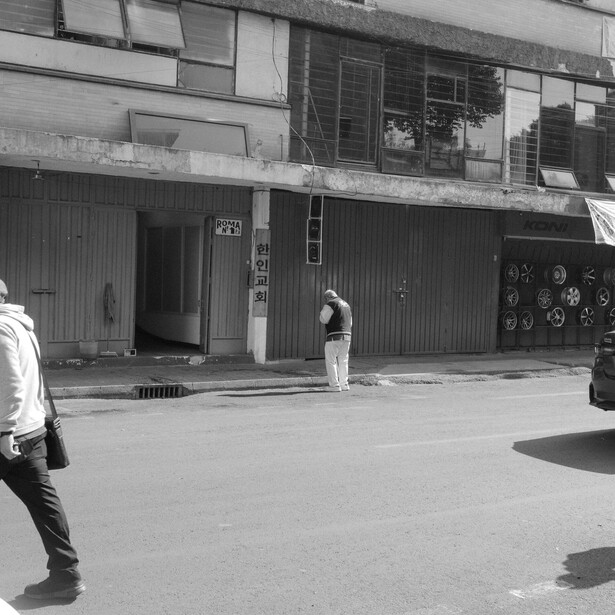
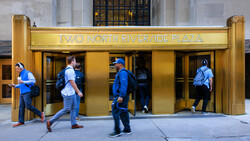
In the frame above, a man stands alone in front of a facade that feels heavier than his presence. He is not heroic, not central in a traditional sense. He just exists. In a rectangular frame, you might push him to a third, create direction, build narrative. In the square, he's held in a field of tension.
The space around him isn't negative space anymore. It's pressure. Another figure enters only partially, cut by the edge. In any other format, that would feel like a mistake. Here, it becomes a statement: not everything deserves completion. The square allows that kind of brutality, even more than the rectangular format.
Geometry Becomes the Subject
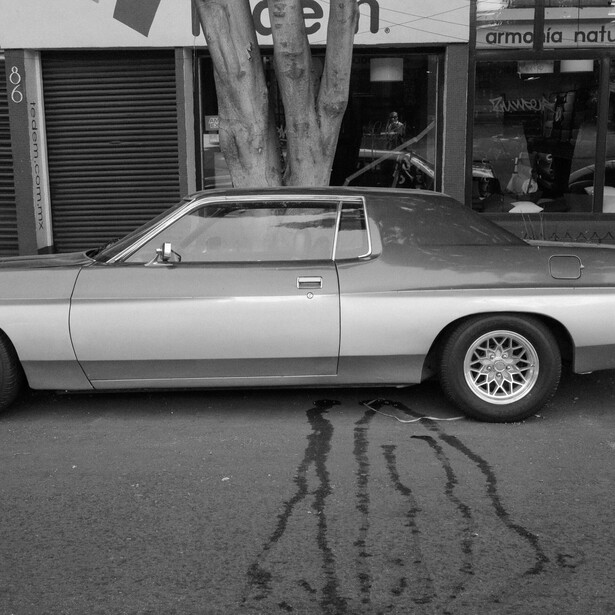
Look at the car. Parked. Static. Almost indifferent. In a wide frame, it would read as context, a piece of a larger scene. In the square, it becomes structure.
The horizontal line of the car collides with the vertical interruptions of the tree. Below, those dark stains stretch downward, breaking the order like a slow leak in reality. Nothing is happening, but everything looks imperfect and as if waiting for some event to happen. The frame feels alive because the square forces every element into confrontation. There is no "background" anymore.
The Courage to Remove Direction
Street photography often relies on anticipation. Something is about to happen. Someone is about to enter, gesture, collide. The square kills that expectation. It's not about what's coming next. It's about what is already there.
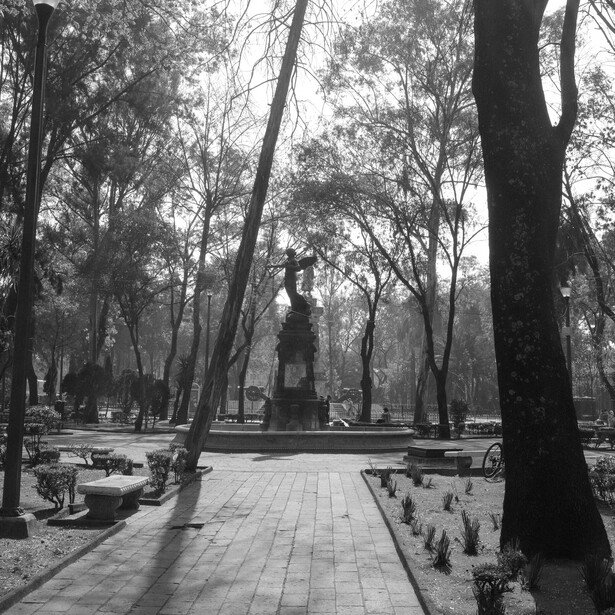
A statue in a park, surrounded by trees, doesn't need a moment. It exists in a suspended state. The square reinforces that stillness, almost like a closed system. You're not waiting. You're looking. It is a scene fixed in time. It is an invitation to meditate, a luxury, if you think about it, in these times when everything moves so quickly and we don't have the time to truly observe the reality before us.
The Square as Discipline
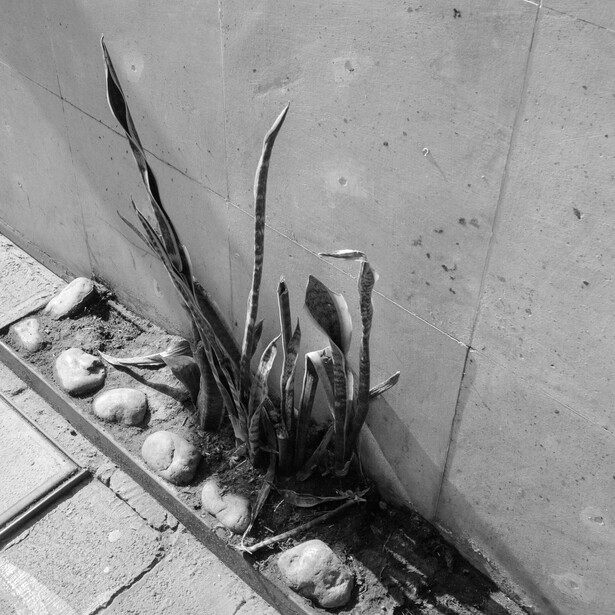
Let's be honest: the 1:1 format is unforgiving. It exposes hesitation. It punishes indecision. It reveals when a photographer is relying on habit instead of intent.
You can't just "frame loosely" and fix it later. You can't depend on cinematic proportions to create interest. You have to commit. You have to be willing to think differently. It is not a kind of photography you make from the gut.
That commitment changes everything. It slows you down. It sharpens your attention. It forces you to recognize when a scene is already complete, without adding anything.
Why This Matters Now
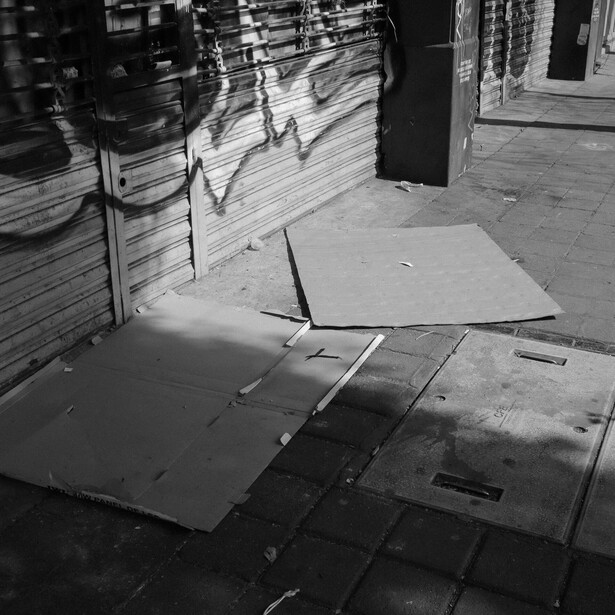
We are drowning in images designed to grab attention instantly. Wide, loud, dynamic. The square does the opposite. It resists.
It creates images that don't perform. They don't scream. They don't guide the viewer. They sit there, almost indifferent, waiting for someone willing to engage. And when that happens, they don't hit like spectacle. They stay like a thought you can't quite shake. I think it is also ironic that, because Instagram was born for square format photos, the dynamics there are not celebrating at all the power of the 1:1.
Final Thought
Minimalism is not about having less. It's about needing less. And the square frame is its most honest form. Because inside a square, there's nowhere to hide. Only what matters survives.
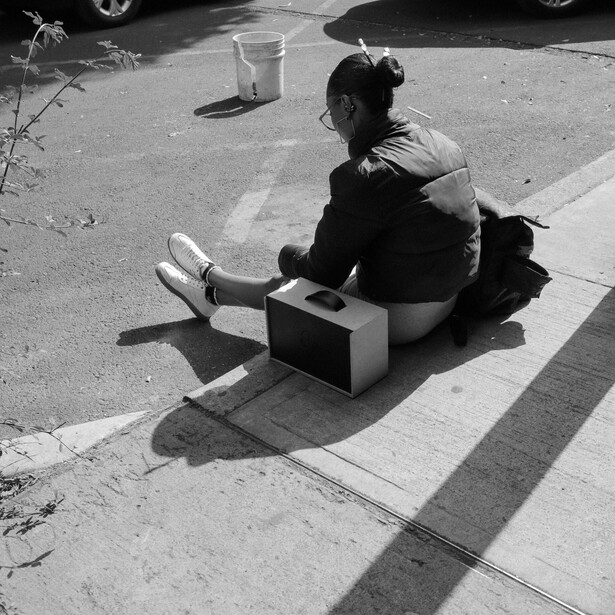
To conclude: it's no coincidence that I left this woman's photo for last. The distance is close, and her presence dominates the square in this case, further enhanced by certain lines we see on the asphalt. This is my response to those who think that classic street photography doesn't work in the square format. There was a time when the square format was the king of documentary photography. Think of Vivian Maier and the Rolleiflex. I also think of a Mexican master of photography, Nacho López.
6 Comments
Inspiring!
Thank you! The main goal for me here is giving something that can get other photographers inspired.
I shot 6x6 for 3 decades. I loved the flexibility since most shots were cropped later. What was great when shooting is not having to decide on portrait or landscape when shooting so one could concentrate on the shot, and not be messing with the camera. That was really handy when shooting weddings.
You are right because the square format still changes the way you see. It simplifies the act of photographing itself, and in fast-moving situations that can make a huge difference. While I don't share completely the idea to crop later for my workflow and approach I can see still a room for a different approach like yours. And I definitely understand it more in editorial work where recently I found myself to crop more even with different formats from the classical 3:2. .
Back then, I only cropped if they wanted an 8 x 10 and we’re going to frame it themselves. I like the largest I sold was up to 16 x 20. If they had me do the framing then I would go for a full 20 x 20 or 16 x 16 print. Even in the albums if they ordered 8 x10 I would put in 10 x 10s. They loved that.
That is great! It represents your approach and vision and you have positive success with that!