
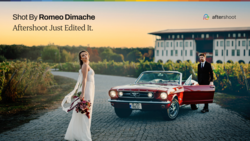
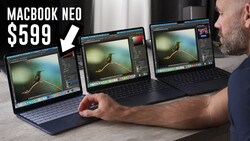
After hearing that “no professional would ever use” a cheap laptop, I decided to test it. I edited an entire wedding, about 2,600 RAW files, on Apple’s budget MacBook Neo and compared it to a MacBook Pro. The twist: I let AI do almost everything.
Using Aftershoot, I automated culling, cropping, masking, and editing. The MacBook Pro finished in 52 minutes. The Neo took 3 hours 25 minutes. But that time difference barely matters when you’re not actually doing any work.
The AI grouped similar shots, picked the best expressions, and cut the set down to 877 images. I spent about 15–20 minutes reviewing everything. Then I ran full AI retouching. Skin, teeth, eyes, hair, even clothing wrinkles, all handled automatically with a simple preset.
Total hands-on time: about 30 minutes.
Ten years ago, this would’ve taken me days maybe over a week of work. Now it’s almost completely automated.
So yes, you can edit a full wedding on a $500 laptop. But that’s not the interesting part. The real takeaway is that AI just replaced most of the post-production process.
And that raises a bigger question: if anyone can do this now, can anyone become a "professional" photographer?


5 Comments
Professional photography is not about editing, it never was. Its about how you communicate and connect with people and how you see. Everything else is not important. People edit their work on much less advanced pcs, you dont need a mac to be a pro, that is just laughable
What happens when cameras are so automated that they don't require anything other than a button press? AI software is so good that it's already made manual editing obsolete so what's left, composition? What about when AI can just "reframe" shots with better composition?
Wasn't that his point? That you can do the work on a $500 laptop? And while the Pro laptop was much faster, you can get by with a less expensive one?
Profesional photogtaphy it's about doing your job as good as you get. That also involves editing, of course. There's no point in oy a good communication if you don't force yourself to produce the best possible material. No one said you have to have a Mac or not, the man wanted to show that you can edit on something cheap. Photographers who edit on something weak, I think they should at least have a good monitor.
Can anyone become a professional photographer? Probably... because running a business has always been about marketing and delivery, as much as making a product. In the same sense that Aftershoot streamlines editing, the professional of ten years ago could have outsourced editing to a retouching expert. I worked for 40 years as a graphic design and print broker. I outsourced every print order, and for four decades never invested in more than a Mac computer. What design skills I lacked, such as designing logos, I outsourced. My point is that I could run a successful business with a lot of limited skills and equipment.
I believe the opportunity still exists today. Focus on what you're delivering to the client. They still want reliability and results. It is probably of no concern to them how you edit your images, or whether it took you 10 minutes or two days. I've found that in the art photography business, people appreciate a lot of help in guiding them through the artwork production and installation stages. Perhaps there's a whole level of service for wedding and portrait photographers from selling books of the event. It's all about what sort of products and services you can deliver to a client, not the tools you use to get there.
Of course AI opens the door to less skilled people entering the business. But rather than fearing their impact on the industry, concentrate on what you bring to the client that they don't. If any photography genre has been impacted by technology more than landscape stock photography, I can't imagine what it would be. If I try to compete for sales with Istock, I'm doomed. So I do what they can't... I offer my clients different ideas for their projects. A different type of photo, or printing substrate. Many times they come to me looking for a grand landscape on canvas and end up buying a macro shot on watercolor paper, because it appeals more to their sense of elegance. Ideas are what make you invaluable to your customer. The underlying software for creating your product makes no difference to them. Technology will always change but there is only one of you, and that's what makes you a professional.