
Photographers are worried about AI coming to take their jobs. Fair enough, with all the new tools out there you might very well think that. Yet, it is simply impossible, and Aftershoot has finally proven that. Aftershoot AI works for you, not against you.
You come home after a shoot with thousands of photos, and before even starting to edit, you first have to select the right ones. While in genres such as landscape this might be manageable due to few images being shot, in high-volume productions this can easily take days (my case). Comparing near-identical expressions, checking sharpness, and filtering out duplicates is already a demanding task that I don't always nail. Add editing on top of that, and you may find yourself turning down shooting days simply because of an editing backlog. I had to turn down a few projects simply to be able to manage the backlog that has built up. As a result of this, you might want to push the responsibilities over to AI, yet something is holding you back. You don't quite know how your data is being used or if you are just feeding a machine that will replace you. There is a solution that works for you, not against you - Aftershoot. With their three public commitments, photographers can now have piece of mind that Aftershoot is being responsible about the AI they are providing.
The Three Commitments Making Aftershoot Stand Out
Aftershoot is making active steps towards making a responsible AI that is made to serve the photography industry, not destroy it. They have published three commitments which make it different. The first one is relating to the product itself, the AI is built in a way that does not compete with the creative themselves. It simply culls, edits, and retouches. Nothing more nothing less. The second one is relating to where the images are processed. With 8.8 billion images on their platform, they have not sold or shared a single one with a third party. Should you wish to delete something, it's gone permanently within 14 days. The third one is most exciting, as Aftershoot is actively working with photographers, to develop their product further. The user community is listened to, and their suggestions are implemented into the software. One of the two founders is a photographer themselves, meaning that they understand what is needed by the end user.
Beyond the commitments, let's see where AI can fit inside your workflow. We will start with my favorite topic, money.
Why AI Makes Sense Financially
There is a growing concern that AI could replace photographers. While that fear exists in some industries, photography operates differently. Most photographers charge per day, per project, or per hour, meaning they earn money when they are shooting. My own pricing model is project-based, meaning that if I am on set, I am making money. If I am not, then I am spending money.
Editing, on the other hand, is rarely billed in the same way. Time spent culling and editing is often unpaid labor. Much like an airline only makes money when the aircraft is flying, a photographer only earns when actively shooting. Even the most in-demand photographer won't generate revenue while sitting at a computer processing images. If you find a way to cut down on this "downtime," you can be more profitable. Even if your profit per shoot decreases, it will increase overall because of more capacity.
Where Aftershoot Fits In
This is where a platform like Aftershoot comes into play. It is designed to handle culling, editing, and retouching within a single workflow, using AI to automate the most time-consuming steps. Importantly, the goal is not to replace the photographer. The goal is to remove the repetitive tasks that slow you down.
AI Culling
Aftershoot analyzes your images based on sharpness, focus, facial expressions, and even whether subjects have their eyes open. It identifies duplicates and groups similar images shot in burst sequences, highlighting what it considers the strongest frame. At the same time, it keeps everything organized so you can review and make final decisions yourself. With modern cameras capable of shooting 20–30 high-resolution frames per second, selecting the best image has become more difficult than ever. Aftershoot can reduce a 3,000-image shoot to a manageable selection in just minutes. You remain in control, but the process is significantly faster.
AI Editing
After culling comes editing. Presets can help, but they are not adaptive. They don't account for different lighting conditions, exposure shifts, or subtle variations between shoots. Aftershoot takes a different approach by learning from your previously edited images. It builds what is essentially a personalized editing profile based on your style. This includes adjustments to:
- White balance
- Exposure
- Color balance
- Contrast
- Cropping
For photographers delivering large galleries, such as weddings or events, this can dramatically speed up the process. Instead of editing hundreds of images from scratch, you are refining an already consistent base.
Retouching and Workflow Integration
Retouching is the final step, and Aftershoot is beginning to incorporate this as part of the workflow as well. This helps bring images closer to a finished state before you even open them in your editing software. Combined with integration into tools like Lightroom or Capture One, the entire process becomes significantly more streamlined.
AI That You Can Trust, Maybe?
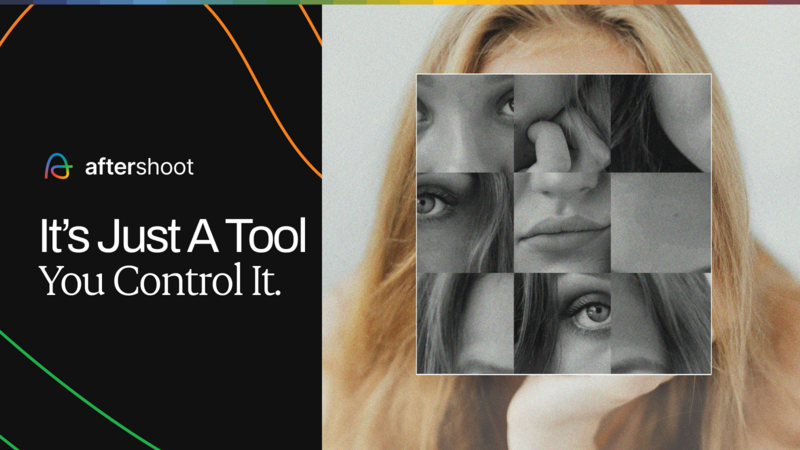
One of the biggest concerns photographers have with AI tools is data usage. Many platforms require you to upload your images to the cloud for processing. This not only slows down the workflow but also raises valid concerns about privacy and ownership, especially when working with client images. Aftershoot addresses this by processing images locally on your machine. Your files stay with you. There is no need to upload thousands of raw files, and no ambiguity about where your data is going. This is part of a broader shift toward transparency in AI tools. Across creative industries, there is growing skepticism around AI. Photographers are rightfully asking questions: Will my work be used without permission? Will AI replace what I do? Do I still have control? The reality is that tools like Aftershoot are being built with a different intention. They are designed to assist, not replace. You still make the creative decisions. You still choose the final images. You still define your visual style. The AI simply helps you get there faster. By handling culling, base editing, and parts of retouching, it allows you to spend more time where your value actually lies — behind the camera.
It Is the Future, and We'd Better Embrace It

AI is already reshaping how photographers approach post-production. The question is no longer whether these tools will become part of the workflow, but how they will be used. For some, it will be about saving time. For others, it will be about scaling their business. And for many, it will simply be about removing the most tedious part of the job. Every photographer works differently, but one thing is clear: the less time you spend on repetitive tasks, the more time you have to create, shoot, and grow. If you've been hesitant about AI tools due to trust concerns, the best approach is to try one that prioritizes transparency and control. Aftershoot offers a free trial, which makes it easy to test it on your own work and see how it fits into your workflow. Because at the end of the day, AI should work for you, not the other way around.



Join the Fstoppers community for free
-
Post comments and join in the discussions
-
Browse the site ad-free
-
Share your work and get featured in the community
-
Compete in the photo contests for fun and prizes
2 Comments
It appears from your story that if you got more keepers with the correct white balance, exposure, and lighting, you would not need AI to do any culling, editing, or retouching, which would make for a faster workflow overall.
The very small tag above and below the commercial tells you it is sponsored, this is just an add.