
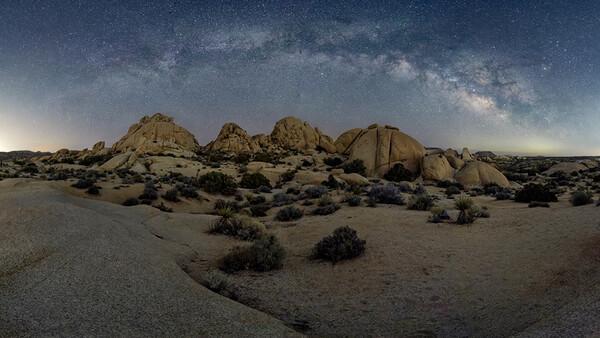
One of the joys of discovering Joshua Tree National Park is learning how to photograph the night sky through night photography workshops and classes. "Half the Park is After Dark" is a National Park Service campaign slogan, after all. But this may be coming to an end.
Ambassadors and Partners to the National Park Service
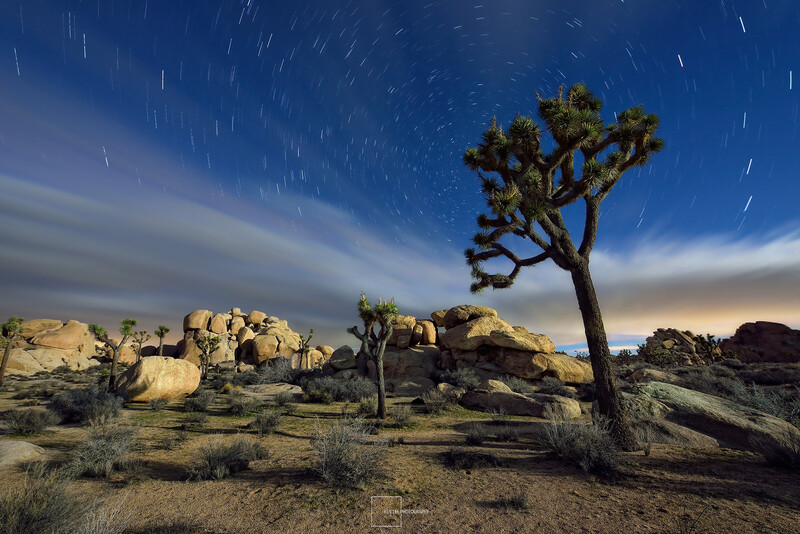
I am one of many who lead night photography workshops in Joshua Tree. We consider ourselves ambassadors of the National Park Service. We work with the National Park Service and share mutual goals of educating, preserving, and conserving our public lands. We teach about International Dark Sky Parks such as Joshua Tree National Park, and about the importance of minimizing light pollution. Indeed, National Parks at Night has "National Parks" as part of their title.
My Spiritual Home for Night Photography
One of the main reasons that I moved near Joshua Tree National Park was as a result of the Desert Institute - Joshua Tree, the educational branch of Joshua Tree National Park Association. I took an introductory night photography class and several other hiking classes through them. This very sort of night photography class inspired me to jump in with both feet to night photography. I came out to Joshua Tree frequently. Eventually, I moved here, and go to the Park several times a month to photograph the beautiful landscape underneath the night skies. I frequently refer to Joshua Tree National Park as my spiritual home for night photography. I now pass on this inspiration from Desert Institute, teaching night photography workshops with Tim Little of Night Photography Tours.
Imagine my surprise, then, when night photographer and instructor Casey Kiernan of Joshua Tree Workshops brought Joshua Tree's new policy changes to our attention in a logical, well-reasoned email, outlining many concerns that we will discuss shortly. As lucid as Casey's email was, it felt like an unexpected gut punch to me.
Joshua Tree Quietly Changes their Terms and Conditions for Commercial Use Authorizations
Workshops are permitted to take place in Park listed night sky viewing areas, Echo T parking lot, Cap Rock parking lot, Twin Tanks parking lot, and scenic pullouts only.
Workshops are not authorized to use day use areas such as Barker Dam, Wall Street Mill, Arch Rock, and Heart Rock. Use of these areas during the night will result in administrative action.
Workshops are not permitted to enter any campground location, administrative area, and areas behind a locked gate. Use of these areas will result in administrative action.
Illuminating Park features and landscapes for the purpose of photography is strictly prohibited. This will disrupt wildlife and will result in administrative action.
During the day, the Park's terms and conditions include some of the following:
- Trails – Workshops are not permitted to take place on trails.
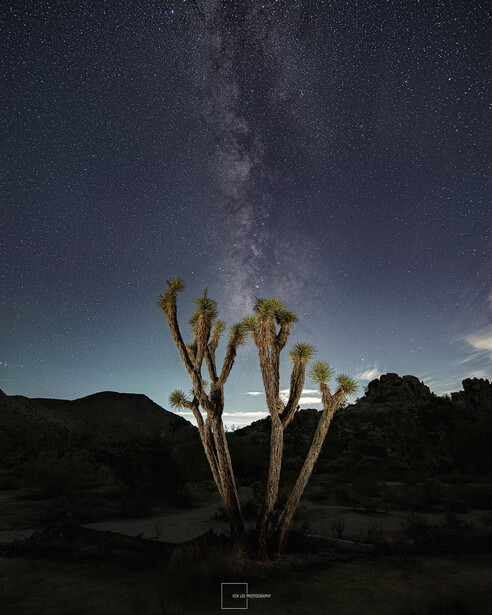
Concerns About the New 2026 Policies
Provisions Apply Only to the Very People Who Are Helping National Parks
The new guidelines apply only to trained, insured, CPR/First Aid–certified, fee-paying guides. These are the ones who have also received Leave No Trace and environmental impact training.
However, these same restrictions do not apply to the general public, including those people who come into the Park to teach without paying for permits or obtaining insurance or CPR and First Aid training.
My experience has been that the overwhelming majority of other workshop and tour leaders — again, the very ones who are trained, insured, and certified in First Aid — operate with the same goodwill and intentions as the Park. Invariably, when we do encounter people disrespecting the rules, it’s members of the public, not other permitted workshops or tours.
Ironically, it is these very groups of night photographers and instructors who inspire people to visit Joshua Tree National Park not only through workshops but also by sharing their enthusiasm and night photos. It seems to me that the very people who follow the rules, obtain the permits and insurance, and receive training in conservation, First Aid, and CPR are the ones being singled out.
Increased Crowding at Designated Night Sky Viewing Parking Areas
If night photography workshops are permitted to take place solely in the three Park-listed night sky viewing areas and scenic pullouts next to the main road, this would greatly increase crowding since night photography instruction groups and the public alike would be using the same few areas instead of spreading out throughout all of Joshua Tree National Park.
This would effectively ruin sky-viewing and night photography for many visitors. I don’t believe we can provide the experience our clients expect from parking lots and pullouts. These areas are close to cars with bright lights driving past and do not offer a positive experience in nature or ideal dark conditions. Staying on the pavement is no way to teach students about the magic of nature and our night skies.
If these new 2026 restrictions are left to stand, most night photography workshops and educators will no longer be able to operate in Joshua Tree.
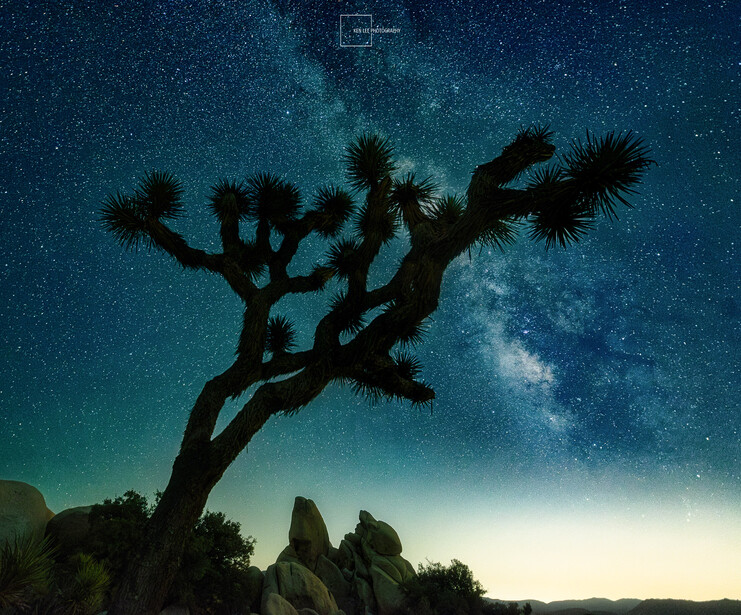
Let's Understand Joshua Tree's Underlying Concerns
We would like to understand what issues or incidents prompted these changes, especially since many guides have long, incident-free histories in the Park. If the changes are in response to specific violations, we believe it would be more appropriate to address those individual cases rather than apply wide-ranging restrictions to the entire educational community.
No Opportunity for Review or Feedback
There was no advance announcement or opportunity for feedback or review by the public. Instructors only learned about the new rules when reading the updated CUA materials. And this occurred only after workshops had been scheduled, and in many cases, sold out for months. This will adversely affect our night photography workshop, forcing us to cancel should the new restrictions stand.
Request to Delay Implementation of the 2026 Terms and Conditions
Given the timing and the significant operational impacts, we have written to Joshua Tree National Park to respectfully request that implementation be paused for 2026 and revisited for 2027, with an opportunity for educators and guides to provide input and collaborate on a workable solution.
Final Thoughts
We respectfully hope that Joshua Tree National Park reconsiders these new restrictions, reaches out to Commercial Use Authorization and Special Use permit holders, and shares their concerns. We would love to be involved in helping to address them. Night photography educators want to be partners in stewardship and to be an asset.
If you would like to share your concerns politely, you may reach out to Joshua Tree National Park by emailing:
- Jane Rodgers, Park Superintendent: Jane_Rodgers@nps.gov
- CUA Contact: jotr_special_use@nps.gov
I urge you to be respectful, thoughtful, and understanding when writing. I again want to emphasize our wish as night photography workshop instructors and educators to be partners. Thank you very much for your consideration.

Join the Fstoppers community for free
-
Post comments and join in the discussions
-
Browse the site ad-free
-
Share your work and get featured in the community
-
Compete in the photo contests for fun and prizes
29 Comments
Hmm.. that’s a tough one. It’s interesting that they wouldn’t have applied the terms broadly to everyone.
There are some valid points IMHO, such as illuminating features and the like. Makes one wonder if those rules will be rolled out to everyone, it would be nonsense if they weren’t.
Strange though, given the.. uh, political “see-change” the US has gone through I’d have more likely expected to read an article about all the rules getting tossed in the bin and it turning into a for-profit free-for-all.
Illuminating features can be done quite well without disturbing wildlife, particularly near a full moon or when using very dim light that is barely discernible or only discernible with high-ISO photography during dark nights.
Regardless, targeting the very group of people who have worked hard with the Park seems odd, allowing everyone else to continue.
And finally, it's difficult to determine what sorts of changes the United States goes through, as one gets whiplash just trying to follow along. I just don't even pretend to be able to predict much of what happens with our National Parks. But by and large, the changes toward night photography that have occurred in the past ten years or so have been mostly aimed at becoming more restrictive in general.
With the lighting concerns, Car Headlights are 10,000 lumens, Headlamps are 1000 lumens (multiply this by ten people with the headlamps on), Cellphones are 150 Lumen.
For night lighting, photographers lights are 30 Lumen (which are only on few a few minutes). And, what is nice, is that in order for these 30 luman lights to be used - ALL of the other headlamps need to be turned off (yay!). So, in addition to the lights being barely visible, the benefit is that the other lights are off while the night lights are on. WIN-WIN
If the park is concerned about animals - the Car Headlights and 10x Headlights (which are on for hours) are 99.99% of the problem. Make it make sense.
It’s peculiar that they’re only rolling out those restrictions to your cohort of what I suppose would be described as private tour guides. Makes one wonder if other changes aren’t coming down the pike that might be more broadly applied. Bureaucratic inefficiency existed long before the US gov tried to fire as many federal employees as possible.
Since it impacts your bottom line and your professional activities I can understand that you’d be against any restrictions, never mind so many at one time. But you might have to contend with there being interests other than your own at play. I mean, you clearly do as it looks like they’re telling, not asking. There could be objectively good reasons for introducing restrictions that you might disagree with. Or it could be just some bureaucratic BS, or some political appointee on a power trip.
But some things might be a boon to wildlife even if they hurt someone’s income stream. There’s a lot of Milky Way shots out there with artificially lit rock features, I can’t say I’ve seen nearly as many under a full or gibbous moon. Perhaps you’re one of the only people offering such workshops with any frequency, and your colleagues are working more during the moonless periods? Not everyone may be as responsible as you.
And you know how most of those Milky Way photos are lit? With absurdly dim light that you cannot see. Why? Because when you are photographing the Milky Way, you are photographing stars that have very dim light. So if you light anything at all, it’s with light that is about the same brightness as the stars in the night sky. Workshops don’t have a bunch of yahoos waving flashlights. They can’t.
As an astrophotographer I know how they’re lit, Ken, and I’m sure you do your best to minimize impacts. Perhaps there are those who do not?
The way this national park is rolling out these rules seems like a cluster, and I can certainly appreciate how the changes affect your bottom line. I also acknowledge that It’s easier for me to be dispassionate because I don’t have a stake in things. But as both an astrophotographer and environmentalist myself, when the needs of photographers collide with the needs of preservation I’m simply biased in favour of the preservation of nature. Perhaps these restrictions seem like an overreaction when humanity has trashed so much of the planet already, but after reading the article my main takeaway was “they should enforce these without exceptions, why is it only for the tour guides?”
It’s an uncomfortable thought, but if part of your income was not dependent on running workshops there you might have a different view of things yourself. Maybe the changes are completely unreasonable or maybe they’re not. But it’s a national park, you’re not the only stakeholder and there might be valid needs that conflict with yours.
Hopefully it all gets sorted in a way that can be workable for all stakeholders.
Take care, and good luck
The whole point is this: restricting the very people who have already had training and lead workshops that help with environmentalism while letting everyone else, including large photo clubs and other large groups, wave flashlights around does not help preservation of nature. Singling out the very people who stay away from the areas that are so often lit, singling out the very people who have obtained permits, singling out the very people who teach about JTNP is NOT the way to help preservation of nature. It's odd to single out the very group of people who are by and large the most respectful ones in the Park while letting everyone else do what they want.
Sounds frustrating. I wonder since it is a 'National Park': There are recent US laws that were instituted that protect park photography. (Explore Act) They treat commercial and non-commercial the same, but for 8 or fewer people. Of course they are restricting certain areas, but majorly restricting it sounds like, even on trails. I know that state-parks and other private places can be more finicky, and they are not governed by the same laws. Do they still allow you to seek permits for your actions? But that may be beyond what you want to do, or cost prohibitive.
We have permits. But if we have permits and take Leave No Trace courses for teaching night photography education, we are penalized with these restrictions.
However, Meetup groups, large photo clubs, and partiers have no restrictions.
As a local photographer myself, the rules seem reasonable to me. I can’t count how many times and how frustrating it’s been to be out towards arch rock shooting and having a large group walk right out in front of me to set up. Teaching techniques and good stewardship can be taught from parking lots. Then the “students” can then practice their techniques in the field on their own.. not in large groups hiking out on trails where the rest of us are trying to enjoy the park.
When you say "Large Group", that was most likely a "Photo Club". These rules do not apply to "Photo Clubs". These rules only apply to professional photographers.
Large groups are almost always a group of friends or a photo club.
Workshops don’t travel in large groups. They don’t walk or flash lights in front of people. And their clients don’t want to be around others waving lights or drinking or partying.
If there is someone already around photographing, we go somewhere else.
Professionally-led groups with Leave No Trace and other training and permits don’t do what you are describing.
Yet we are singled out with these restrictive conditions while photo clubs, Meetup groups, Instagrammers, and partiers are not.
The new rules are sudden, harsh, and directed at a particular group. I wonder if there were specific complaints stemming from workshop groups disturbing campers, or something like that. It sounds as though a non-workshop group, such as myself and a few friends, could trample about unimpeded, but an organized group would be restricted from doing the same.
Perhaps, JT doesn't want workshop groups there at all, and the restriction is their way of saying, get out. Do workshops pay a use fee to the park for the privilege of photographing there?
It is odd that there was no warning or inquiry or, hey we see an issue, what can be done to avert the harsh decision we are about to make.
Organize a few like-minded people to see if you can arrange a meeting with the rule makers and ask the relevant questions.
The NEW rules state that trained, professional, experienced guides (who pay a fee to Guide people in the park) are now only allowed to take night pictures in parking lots, but the general public, including "Photo Clubs", can take pictures anywhere in the park.
And, experienced Guides are limited only to "SOME" parking lots (Cap Rock,...) - which, as we all konw, are filled with car lights (Brights!) and people with headlamps at night - making it impossible to shoot 30 second exposures!
Some of the rules are very strange, for example:
---> Guides cannot take pictures near climbers? Why is that?
---> Guides cannot take pictures on trails. So do they mean Guides are supposed to walk off-trail?
I have been Guiding in Joshua Tree National Park for a decade, and only once have I ever seen another "Workshop" in the park - in ten years. Guides go out of their way to be invisible so that they do not get their permits revoded.
No one is really sure what problems the park is trying to solve, but these rules make no sense al all.
Yeah, during the day, photography workshops are not permitted to take place on trails.
Huh?
So far, I have never seen another workshop in the Park either.
In fact, we have never encountered anyone else except for ONCE. And who were they? A large photo group from Orange County.
In 2026 and beyond, there is no incentive for the professional photography community to schedule workshops in Joshua Tree National Park. And sadly, without notice, 2026 workshops will be forced to be canceled and refunded - hurting the photographers, the park and the local community.
This only hurts professional photographers. This does not stop "large groups" from showing up at every location in th park. "Photo Clubs" can still go anywhere in the park. (And they do not have to pay a "group" fee!)
Yes. The new restrictions will not stop photo clubs, Instagrammers, partiers, large groups of friends, groups on holiday, or anyone else from waving flashlights around, driving around sky viewing areas with bright headlights, or anything else.
But it will stop workshops who disappear into invisibility. You know, the ones who pay permit fees, take National Park courses, and act as ambassadors to the Park Systems. THEY are penalized.
If the restrictions are left to stand, there will probably be no more night photography education in JTNP. Sort of ironic since JTNP Association was teaching night photography classes themselves.
Hope to see you at the meeting next week and have all our questions answered. I especially would like to see where we can legally conduct night workshops expanded. Crowding everyone into a small set of spaces diminishes the experience for both workshops participants as well as the general public.
I completely agree.
This feels like an poorly thought out response to someone's complaint about something.
It would have been far better if they'd reached out to those leading workshops and worked to reach an arrangement that can work for everyone. For example,if light painting was bothering some people, set aside parts of the park where it is not allowed.
Their approach seems counter to the mission of the National Park Service: "to preserve unimpaired the natural and cultural resources and values of the national park system for the enjoyment, education, and inspiration of this and future generations"
The workshops are an excellent example of take only pictures, leave only footprints. I know as a workshop participant, I was certainly enjoying and learning about the park. I like to think the resulting pictures help inspire others to do the same.
Lastly, I expect this will have some impact on the economies of the surrounding communities, as all the workshop attendees cancel their vacations. Hotel rooms, restaurants, and shops all benefit from the workshops, many of which occur in the off-season. Granted we're not a huge community, but I expect our absence will be felt.
It makes me sad to think that the experience I had as a workshop participant last summer is something that people won't be able to experience any longer. It was pure magic being able to go out into the desert with someone who knows and loves the park as a guide. Sharing the experience with with other people that love photography was pretty special.
Being out there in the desert, with the milky way overheard and countless stars and the only sounds being my breathe and heartbeat. You can't get that in a parking lot with a group of people.
I completely agree.
And relegating the VERY people who teach about this appreciation to restrictions while everyone else can run all over the place waving flashlights seems misguided to me.
Having read the article, the related comments and the directive from the Parks Administration, I suggest that this directive has been issued from high above, the problem or issue they are trying to resolve has little to do with night photography or general photography within the Park and, is being driven by stakeholders with far more influence than park users currently hold.
I base this on two factors, one is the lack of consultation with the photography community, if there is one thing government agencies love it is setting up meetings with all stakeholders to thrash out a problem of perceived mutual concern.
Secondly, what sounds like an historically great relationship between the Park Administration and photography groups to ensure responsible activity within the park has been brushed aside and replaced with an aggresive "thou shalt not" policy which indicates that both Park employees and photographers opinions have been both dismissed as irrelevant.
Good luck finding out what is really driving this issue, I hope you keep us posted and are able to get this new policy overturned.
Thank you. I shall try to keep people posted, whether it's a follow-up comment or, who knows, perhaps if it's significant enough, another article. We share people's frustration with people lighting up things, and of course, no one likes large groups waving flashlights around. But it's just odd that we are the one group that is least likely to do this, but are being targeted.
It sounds as if, it basically boils down to new rules that are attempting to cover a problem, but since the rules don't actually apply to who's causing the nuisance, the rules are useless, or the problem could even get worse, because in a way they could be keeping the proper trainers out.
That has been our conclusion as well. Thanks.
Hi Ken - thanks for your post. I’m pleased to see you highlighting these changes made to the JOTR CUA restrictions on Photography Workshops. I lead workshops (astro and daytime) privately (under a CUA permit) and for the Desert Institute, and have done for the past four years. In all that time I haven’t witnessed any issues that my group, or any other CUA guided group, may have caused which could have triggered this response from JOTR.
As has been said by you and Casey, the CUA guides are CPR and first-aid trained, LNT trained, and act as stewards of Joshua Tree park. We also contribute financially to the park, through permit fees (which are not insignificant). The classes I teach on behalf of the Desert Institute I charge at significantly below normal market rate.
My workshops are primarily 1-2-1 workshops, and if a group, there’s not more than 3 people. I have never had an incident where we’ve knowingly disturbed wildlife, or other park visitors, while using a hiking trail during a workshop.
The only occasions I’ve seen where there’s an excess of artificial light (at Arch Rock and Cap Rock) for example is when there’s a large group of photographers (which I assume sometimes is a photo club meet) with no guide, or members of the public with high power flash lights lighting up the rocks at night for fun.
Another comment is that this appears to apply just to JOTR and is not NPS-wide. For example, these new restrictions do not apply to Death Valley.
I hope that we get to hear at least some reasons for these changes on Weds night. Ideally the JOTR CUA office will delay the changes until 2027 to give them time to engage with the photography community.
Thanks for your comments, and agreed. It's important to keep reiterating that Park-sanctioned and trained guides are the very people that are least likely to violate or disturb anything that they seem concerned about it, and that the restrictions won't help alleviate anything. Guides are partners and stewards of Joshua Tree National Park, not adversaries.
And yes, the only time I've seen excessive artificial light has been at Arch Rock or Cap Rock, and it's been photo clubs or large groups of people who decided to go photograph in the Park. The workshops I know generally avoid those areas.
Definitely, this article covers the issues concerning JOTR (JTNP). And I am also hoping that they will delay all changes until 2027, and work with CUA guides to determine the best, most effective, and most reasonable course of action.
OK! I’ll (politely) ask the hard question: do these changes make the government employees jobs harder -or perhaps easier?
When you are driving around in the dark and you see people in the wrong area, or you see people lighting up things, can you differentiate whether they are a photo club group, tourists, rock climbers, or people with CUA certification and training? Furthermore, if they tell you they have certification, can you determine whether they are telling the truth? And not that it matters because, well, those few people with CUA certification are the ones being barred from doing these things while everyone else can do it, but somehow, you have to enforce this by randomly driving around to all corners of the Park. Hmmmm.....and I wonder if it is easy to determine whether people are waving around lights because they are climbing, being goofy, revving their cars in the parking lot, walking around, or doing photography? Do you think it's fair that CUA people - all eleven groups of them in all - should be singled out when the general public shines considerably brighter lights on things anyway? Do you think any of this helps or hinders Park Rangers?