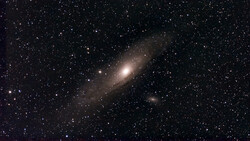
Capturing a galaxy 12 million light years away takes clear skies, a tracking mount, hours of long exposures, and a stacking process most beginners never attempt. Getting all of that to line up in Iceland during a yellow weather warning is where the real story begins.
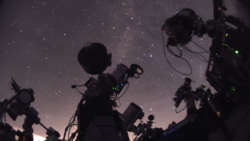
The first episode of Rough Cut follows Colt and Tejas as they teach themselves astrophotography from scratch and travel to Iceland to shoot M81, also called Bode's Galaxy. Their kit includes a cooled color astronomy camera, a Sky-Watcher tracking mount that follows Earth's rotation, and a telescope neither of them fully understands at the start. The plan is a three-day shoot, but the ten-day forecast wrecks it before they even land. Snow and thick cloud cover push them to leave a day early for what they name Emergency Day Zero, a ten-hour travel day that ends with one blurry star and roughly $800 spent.
Their approach to the actual capture is where the video earns its runtime. Colt and Tejas break astrophotography into a clear sequence you can follow: find clear skies, nail focus manually since the rig has no autofocus, complete polar alignment so the mount matches Earth's rotational axis, then set a long run to collect enough frames to stack later. Wind becomes the enemy during their day-two run, rattling the tripod just enough to smear the stars, and most of their 60-second exposures come out soft. They still pull a usable image out of 60 frames, but the trip keeps testing them. Day one is a total washout. Day two brings 50 mph winds and gusts near 90 that Tejas describes as the scariest conditions of his life.
The weather-reading side of the story is quietly the most useful part for anyone shooting outdoors. Tejas learns the hard way that clear of snow does not mean clear of clouds and that safety is paramount, and he discovers vedur.is, Iceland's official cloud-coverage map, showing the whole island buried in green. His real breakthrough is watching how the forecast shifts every few hours, sometimes flipping a closed window into the best night of the week. Instead of trusting one radar snapshot, he screenshots the forecast over days and studies the pattern, organizing everything on Firefly boards to line up and compare the micro-adjustments in cloud movement. That habit of tracking change over time, rather than betting on a single prediction, is the technique here worth stealing.
That principle stretches well past astrophotography. Landscape and Milky Way shooters already live inside apps like PhotoPills and Windy, and the shift Colt and Tejas stumble into is the same one those tools encourage: treat weather as a moving system you read across days, not a yes-or-no you check the morning of. The dark-sky angle carries its own weight too. Tejas grew up in the Hudson Valley looking at stars and now lives in New York City where he cannot see them, which is the exact reason astrophotographers drive hours to places rated on the Bortle scale. If you have ever wanted to shoot the night sky and felt boxed in by light pollution, the setup they use and the patience they need are a fair preview of what that pursuit actually asks of you. The gear gets you partway; reading conditions and waiting out bad ones gets you the rest.
The payoff is not a flawless image. Their M81 is not the sharpest version you will find online, and much of the credit for their final night goes to a break in the wind and a genuinely lucky window of clear sky at the end of the trip. On that last shift, with calm air for the first time all week, they gamble on a four-hour run built from 90-second exposures instead of their safer hour-long routine. Whether that bet pays off, and what the stacked result looks like after editing in Lightroom, is worth seeing unfold rather than reading about. Along the way they also get an aurora dancing over a house at 3 a.m., a moment that lands almost as hard as the galaxy itself.
There's a real lesson buried under the frustration, and it's about mindset in the stretch where nothing works and quitting looks rational. Colt keeps predicting the wind will clear the clouds, half joking, and it keeps coming true. Tejas frames the whole trip around doing hard things on purpose, and the phrase they land on, "what makes it hard is what makes it good," sums up why they kept going after Emergency Day Zero fell apart. The show sets up future episodes too, including one comparing filmmaking on a hundred-year-old camera against a phone.
Watch the full episode above to see whether their four-hour gamble delivers the galaxy they crossed an ocean for.


Join the Fstoppers community for free
-
Post comments and join in the discussions
-
Browse the site ad-free
-
Share your work and get featured in the community
-
Compete in the photo contests for fun and prizes
No comments yet