
Go look at ten boudoir photographers' websites right now. Read their About pages. Read their taglines. Read the part where they describe the experience. Now try to remember which one was which. You can't. That's the problem.
Somewhere along the way, the boudoir industry settled on about ten acceptable words: empowering, confident, beautiful, goddess, queen, fierce, sensual, timeless, stunning, luxurious. Then every photographer on the planet grabbed the same handful and arranged them in slightly different orders. Like a game of empowerment mad libs.
The result is an entire genre built on celebrating individuality that has the most generic branding in all of photography. We made ourselves invisible by all trying to glow the same way.
I know, because I did it too.
My early boudoir copy had "empowering" in it. Probably "luxurious" as well. I remember writing something about helping women "see their true beauty" and feeling pretty good about it at the time. It checked every box I thought needed checking. It sounded like what a boudoir photographer was supposed to sound like. Which is exactly why it was worthless. When your copy sounds like what everyone is supposed to sound like, it sounds like no one in particular.
The reason this happened is not mysterious. Boudoir photographers learn from other boudoir photographers. We attend the same workshops and follow the same accounts. We pin the same mood boards and buy the same Canva templates with the same rose-gold script font. (You know the one.) The language gets passed around like a house recipe that nobody questions because it tastes familiar. "Empowering experience" becomes the industry seasoning. You sprinkle it on everything because you saw someone else do it, and their business looked successful from the outside.
Workshop culture accelerated this. A boudoir educator builds a brand that works for her. She teaches a workshop. Thirty photographers go home and copy her language because it felt polished and professional. Those thirty photographers each influence ten more. Within a couple of years, an entire genre is speaking in the same voice, and nobody remembers who started it. The original was authentic. The copies of copies are wallpaper.
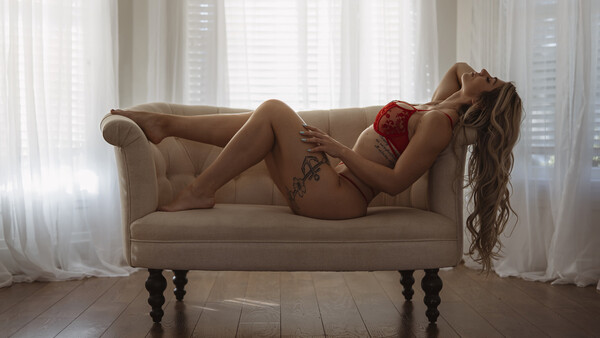
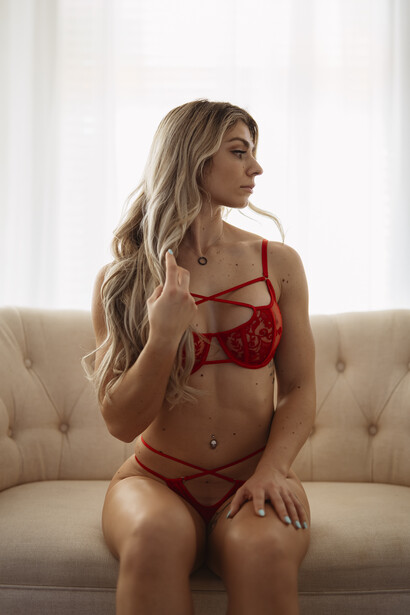
Pinterest made it worse. Every mood board uses the same warm tones, the same serif fonts, the same "celebrate your body" language. The same lace-robe-on-a-velvet-chair imagery. When the aesthetic becomes the brand, the photographer disappears behind it. You end up with thousands of businesses that look and sound interchangeable. They were all built from the same visual vocabulary.
But here is what that sameness actually costs you. When a potential client visits five boudoir websites and they all say the same thing, she has no way to choose based on connection. She cannot feel a personality difference because there is no personality difference. So she chooses the only variable she can compare: price.
That is the real damage. You are not competing on quality, experience, or personality anymore. You are competing on who charges less. And you did not lose that booking because your prices were too high. You lost it because your website gave her nothing to hold onto except the number.

The Empowerment Mad Libs Problem
I want to show you something. These are three boudoir website intros I composited from real sites. (No single photographer wrote any of these exactly, but I promise you have read all of them before.)
"Every woman deserves to feel beautiful, confident, and empowered. My luxurious boudoir sessions are designed to celebrate your unique beauty and help you see yourself the way the world sees you. This is your moment to shine."
"Welcome, goddess! I believe every woman is a queen, and my boudoir photography captures the fierce, sensual, stunning woman you already are. Get ready for a transformative experience that will change how you see yourself forever."
"You are beautiful. You are worthy. You are enough. My empowering boudoir sessions create a safe space for you to embrace your body, celebrate your journey, and discover your inner goddess."
Three different photographers. Three different businesses. One voice. If you swapped the names and logos, nobody would notice. That is not branding. That is camouflage.
Now here is what it sounds like when a real person shows up in the copy.
"I photograph women who are nervous about being photographed. That's basically my whole client list. The ones who almost talked themselves out of booking six times before they finally did it. I know, because they tell me in the car on the way to the session."
"Most of my clients have never done anything like this. Some of them apologize for their bodies within the first five minutes. By the end, they're asking if we can keep shooting. I live for that shift."
"I've been shooting boudoir for seven years. I still get a little emotional during the reveal. Not because I'm sentimental. Because watching someone see a version of themselves they didn't know existed is genuinely one of the best parts of this job."
Notice what changed. The second set does not use a single word from the boudoir vocabulary starter pack. No goddess. No queen. No fierce. No luxurious. Instead, each one tells you something specific about the photographer, the clients, and the experience. You can feel a human behind those words. You could not swap the names and logos, because the voice belongs to someone.
The mechanical difference is specificity. "Every woman deserves to feel beautiful" is a statement nobody can disagree with, which means it communicates nothing. "Most of my clients apologize for their bodies within the first five minutes" is a statement that makes you feel something. The first one is a bumper sticker. The second one is a person telling you what actually happens in the room.
Specificity is also what builds trust. A client reading "safe, empowering, luxurious experience" has no way to verify that. It is a promise made of adjectives. A client reading "they almost talked themselves out of booking six times before they finally did it" thinks, "That is me. She knows what this feels like." One version tells the client what to expect. The other version tells the client she has been seen.
That is the difference between branding and decoration.
So.. What Actually Fixes This?
The fix is not better marketing. It is different marketing. And the difference starts with one question: what would you actually say to a friend who asked you what boudoir photography is like?
You would not say "It's a luxurious, empowering experience that celebrates your inner goddess." You would say something real. Maybe: "Honestly, most of my clients are terrified when they show up. And then something clicks about forty minutes in and they stop apologizing for themselves. That part never gets old."
That second version is your brand. The first version is a costume.
Here is the practical shift. Go to your About page and delete every adjective that could appear on any other boudoir photographer's website without anyone noticing. Empowering, stunning, luxurious, fierce, sensual, timeless, beautiful, confident. All of them. Gone.
What you have left is probably a page with some very large gaps in it. Good. Those gaps are where your actual personality is supposed to go.
Fill them with specifics. Not with better adjectives. With real things. What do your clients actually say when they walk in? What do they say when they leave? What is the moment in every session where you know it is working? What is the thing you do differently from the photographer two towns over, and why?
Write it the way you would say it to a friend over coffee. Would you look someone in the eye and say "I create a luxurious, empowering experience for goddesses"? If that sentence makes you cringe out loud, it should not be on your website. Write what you would actually say. "Most of my clients are scared out of their minds for the first twenty minutes. My job is to make that part shorter."
The same principle applies to your Instagram captions, your inquiry responses, and your consultation calls. Every touchpoint where you use the same words as everyone else is a missed opportunity. The client cannot feel the difference between you and the next tab in her browser. But every touchpoint where you sound like a real person with a specific perspective? That is where she starts to trust you before she has even met you.
If you can answer those questions in your own voice, with your own stories, you will not sound like every other boudoir photographer online. You will sound like you. And "you" is the only thing your competitors cannot replicate.
I spent years writing copy that sounded like a boudoir photographer. Now I write copy that sounds like me. (It took longer than I want to admit to realize those were different things.)
The boudoir industry does not have a marketing problem. It has a sameness problem. The photographers who figure that out first stop competing on price. They get booked because a client read their About page and thought, "That one. She gets it."
The rest will keep rearranging the same ten words and wondering why nobody can tell them apart.



Join the Fstoppers community for free
-
Post comments and join in the discussions
-
Browse the site ad-free
-
Share your work and get featured in the community
-
Compete in the photo contests for fun and prizes
10 Comments
Thank you for the text, I see a lot in common.
This is not only a branding problem. It is also a problem of intention and the image photographers build. In most cases, the genre is still oriented outward, toward producing sexually attractive images aimed at drawing attention from potential partners.
There is also a different way this genre is used. Not to attract attention from others, but to explore oneself and one’s sexuality. It becomes a question of self-acceptance rather than self-display. I’ve seen this directly in practice, working with clients. Even the term “dudeoir” sounds quite stupid, but the demand behind it is real.
Commercially, this applies to people in their 40s, a stage of life where trust and empathy from the photographer become essential.
Honestly, the idea for the article came about as I was auditing my own portfolio. Looking back, seeing some of my work that was truly original and comparing it against other things that I had clearly modeled after someone else.
I think you nailed it, the intention behind anything (particularly this genre) makes a huge difference in how the image feels. Intention matters, well said.
A bit too sleazy for a man to do I think.
Maybe if you're a sleazy man, sure. But if you're an actual man (i.e. the kind that treats everyone with dignity and respect), no.
Eh, it probably really depends on the man. Check out what Alvin said in the comment above, I think he said it best, when it comes to the intentionality behind a shoot, the image, and the overall tone/message of a boudoir session.
"The result is an entire genre built on celebrating individuality that has the most generic branding in all of photography."
Reminds me of the amateur bands I used to see in Yoyogi Park in Tokyo in the 1990s, where each group lined up on the sidewalk had their own "rebel" aesthetic - cowboys, bikers, pink-hair punk rockers - right down to elaborate costumes and similarly-dressed fans. The message seemed to be "Let's be unique...together." Every time I see cheesecake photos, I get the same vibe.
Haha, "Let's be unique...together." That has to be the best line I've heard in ages, and also, very true. Another area where I've seen it a lot is the fitness industry. Most brands, influencers, and anyone trying to sell something fitness-related could all have come from the same cookie cutter mold, with the same brand manager. Plenty of good content out there, but not exactly unique.
"Go look at ten boudoir"... no, scratch that, we already did. Go look at ten landscape photographers' websites right now. "Read their About pages. Read their taglines. Read the part where they describe the experience. Now try to remember which one was which. You can't. That's the problem."
Every landscape photographer on the planet seems to introduce themself by telling you how they were given a hand-me-down camera from their father at a young age of about ten. Older photographers assisted their father in a darkroom. Then they proceed to tell you how their pictures do so much more than simply show you a tree or mountain or something... they tell you a story. And their goal is for you to feel the way they felt when clicking the shutter. An emotional plea of sorts to turn snapshots into fine art. The same idea over and over and over again.
And why stop with phographers? Corporate brand managers became obsessed with "synergy." Not sure what it means or how it applies, but sounds good. It's like everyone of them graduated from the same school of cliche marketing. Branding has always seemed to be a copycat process. Like about everything else from politics to sports.
100%, particularly in 2026, where it's so easy to use AI or outsourcing options to "build a brand." Photographers are simply the target here because of the nature of Fstoppers, but you're right, inside the corporate world I've seen the same things you mentioned. "Synergy," dude, if a single word could induce vomiting, that one would do it.