What 15 Years of Mentoring Photographers Taught Me About Photography Itself
There's something people often misunderstand about photography workshops. They think workshops exist to improve technique.
There's something people often misunderstand about photography workshops. They think workshops exist to improve technique.
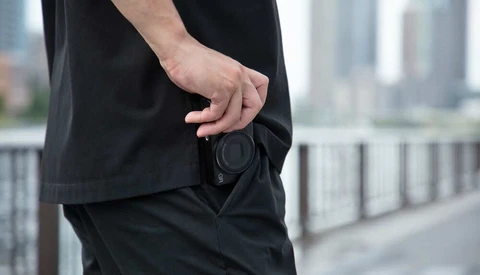
The compact camera is having a genuine revival, and it has caught the industry slightly off guard. Models that sat ignored for years are now selling out, prices are climbing, and manufacturers that abandoned the category are scrambling back into it.
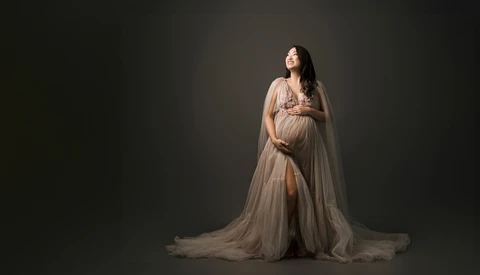
Why do I tell every maternity client, "Show up in your pajamas and I will take care of you"? Great maternity portraits have very little to do with fancy equipment or complicated lighting setups. They start with trust, and that trust begins long before the camera comes out.
Photography, in this social media era, has become exhausting.
Adobe announced on June 25 that it has agreed to acquire Topaz Labs, the Dallas company whose denoising, sharpening, and upscaling tools quietly became part of how a huge number of photographers finish their work. Neither side put a number on the deal. Closing is targeted for the back half of 2026, assuming regulators sign off.
Earlier in 2026, a 15-year-old named Jack Crockford won his category at the British Wildlife Photography Awards 2026 with a frozen instant of a Eurasian hobby snatching prey out of the air, a shot that demands timing most photographers spend years failing to develop.
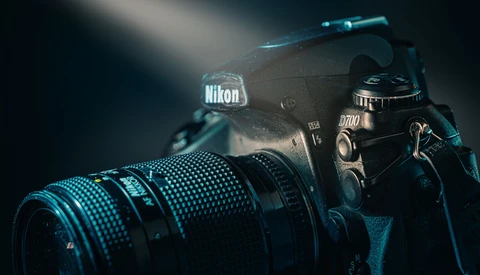
There's this idea going around that the newest cameras, with the latest sensor or faster processor, will give you the best image quality. I say to that, what absolute twaddle! (They wouldn't let me use the "B" word).
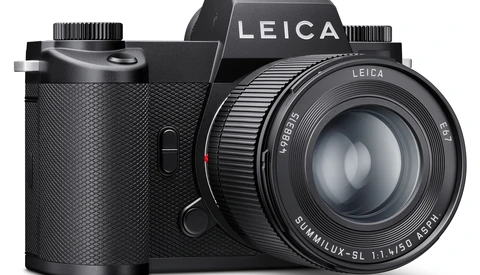
A new Leica camera always attracts attention. And while the M line is the brand's most famous line, there are many devotees of the SL system, which is a more contemporary system akin to cameras offered by Nikon, Canon, and Sony. Today, Leica announced the newest iteration, the SL3-P, a 44-megapixel camera designed for both speed and performance.
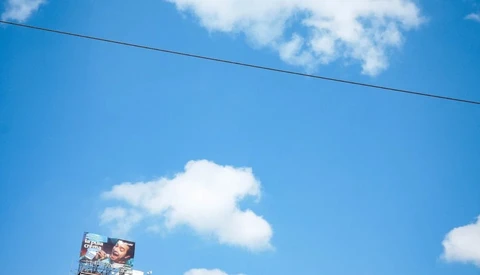
There are moments when the street offers nothing back. No gesture, no alignment, no interruption — just space, air, a sky that refuses to hold anything except itself, a line cutting across almost by accident, a billboard drifting at the edge already dissolving into irrelevance.
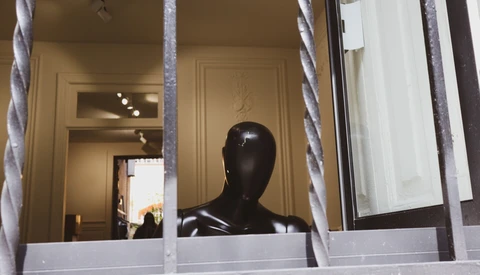
In photography, there's always a tension between control and immediacy. On one side, you have post-production, refinement, and the ability to shape an image long after it's been captured. On the other, there's the raw act of photographing in real time, where decisions are irreversible.
"Dogma 11" sits firmly in the second camp.
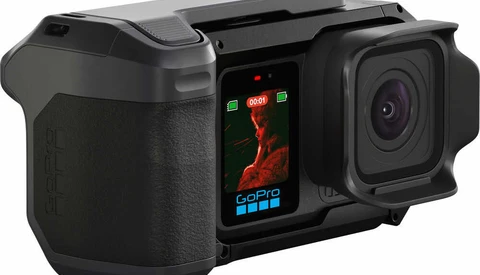
On June 1, 2026, GoPro filed a document with the Securities and Exchange Commission that no company ever wants to file. Its auditor, PricewaterhouseCoopers, had attached a going-concern warning to GoPro's 2025 accounts, the formal accounting language for substantial doubt that a business can survive the next twelve months.
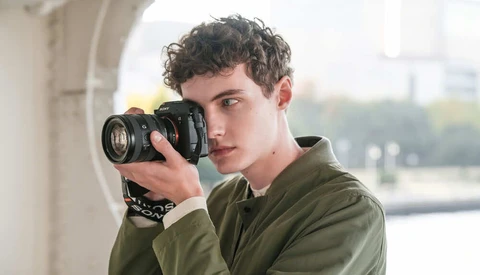
For roughly two decades, the standard zoom lens started at 24mm. Before that, it started at 28mm or even 35mm. The 24-70mm f/2.8 became the default in the early 2000s and stayed there so long that the starting focal length became invisible. 24mm was simply where a standard zoom began, and nobody questioned it because there was nothing to question.
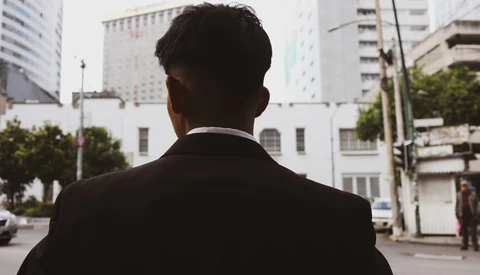
Street photography has become so codified that much of it now looks like photographers photographing other photographs. That sentence might sound unfair, perhaps even provocative. After all, we are living through a golden age of technical accessibility. Cameras have never been better, books are everywhere, and great work from every continent is just a swipe away.
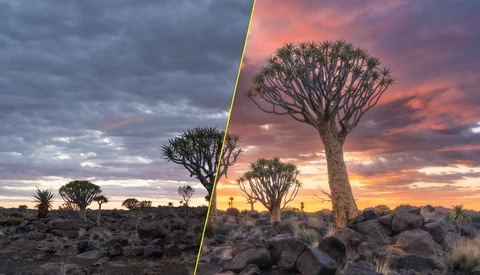
Let's talk about a few careful composition choices I made at sunrise in a quiver tree forest of Namibia, and how good ambient light helped to make the landscape photography shoot successful.
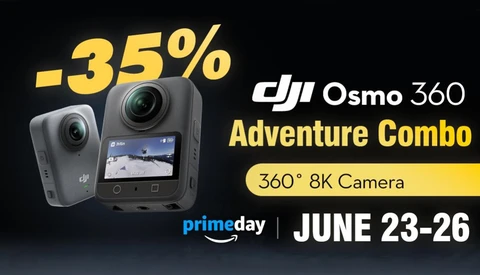
Amazon Prime Day is approaching. Every year at this time, those looking to buy new equipment mark these days—June 23 to 26 this year—on their calendars, as it is often one of the few times a year to bring home a long-desired camera at a price significantly lower than usual.
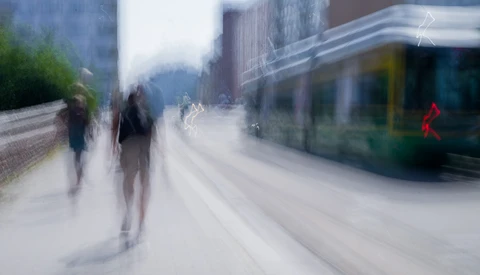
Street photography still speaks about people, encounter, and human communication in the moment. Much of the practice already uses people differently. People become form, scale, color, silhouette, and rhythm inside the frame. Has the photographer begun to use people as compositional material?
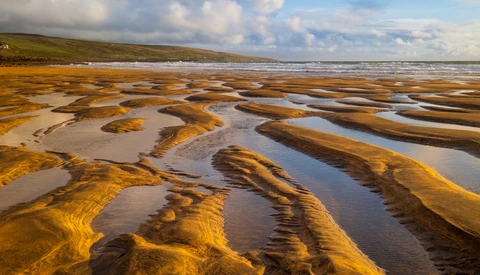
Sharpness is one of the first things many photographers judge in a landscape image, but it is also one of the areas that caused me the most frustration when I was starting out. I used to come home convinced that I had captured strong images, only to load them onto a larger screen and realize the foreground was soft or the distant detail was not as sharp as I thought it would be.
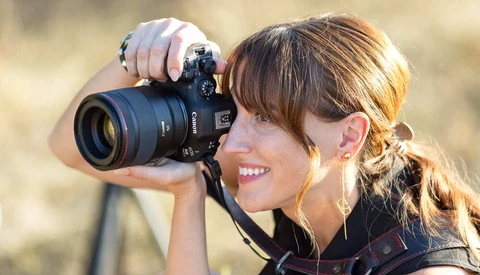
The Canon EOS R6 used to be a simple recommendation. You wanted a full frame hybrid that did a little of everything well without costing as much as the R5, so you bought the R6, and that was the end of the conversation. That clarity is gone.

There is a reflex most photographers know well. Something happens, a light shifts, a child laughs, a stranger's face catches the sun, and before the moment has fully registered, the camera is already up. The hand moves faster than the thought.
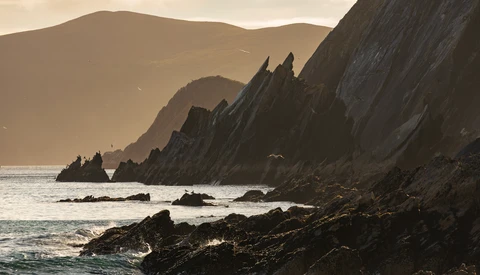
There is a moment I've become very familiar with over the years. It usually happens on the drive home, just after I've packed the camera away and the light has long since faded.
It's that quiet realization that nothing from the day will make it into a final image.
No keeper. No portfolio shot. Nothing to process.

When we think about seasons in photography, our minds usually jump to the literal shifts throughout the year. We imagine the specific light of a spring morning or the way autumn color transforms a familiar trail. But we spend so much time obsessing over the conditions outside that we often overlook the shifting climate within our own creative process.
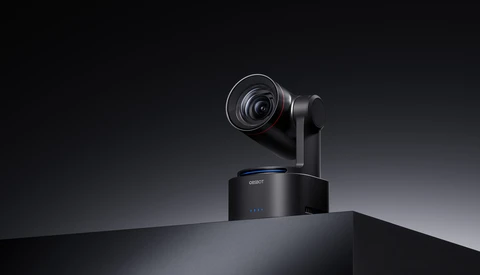
Prime Day is an excellent opportunity to pick up top tech at lower prices, but it can be a little overwhelming when browsing through all the products on offer. The OBSBOT Tail 2 is one such product, which we previously reviewed and recommended, and now has a great Prime Day deal.
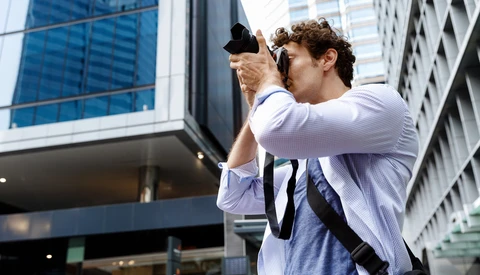
In 1952, Henri Cartier-Bresson published "Images à la Sauvette," a collection of 126 photographs with a cover designed by Henri Matisse. The American edition, published the same year by Simon and Schuster, was titled "The Decisive Moment," and that phrase entered photography's vocabulary so completely that it has shaped how photographers think about their medium ever since.
I still use AI. I'm not out here trying to churn butter by hand in a cabin while yelling at electricity. I use the tools. I test the tools. I've built workflows around the tools when they save time, cut friction, or keep me from doing some repetitive task that makes my soul feel like it got trapped in a printer jam. I'm not precious about it. If a tool works, I use it.
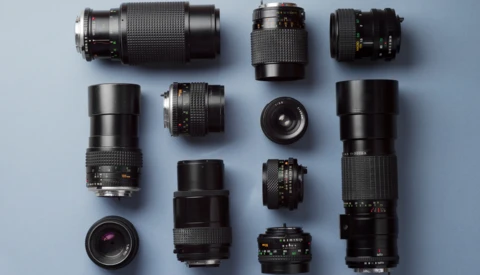
I love G.A.S. (Gear Acquisition Syndrome). I really do. But being as "stony broke" as I am, I am very restricted in the purchases I can actually make. That being said, if I had the means, I would be up to my eyeballs in all the new shiny things. It's a siren song we all hear: "Surely if I just had this—insert arbitrary piece of gear here—my images would finally be the best."