
Summer is the easiest season to photograph and the hardest season to use well. The light is long, the weather cooperates, and the subjects are everywhere. But without a specific project to anchor your shooting, those three months dissolve into a scatter of random images that do not add up to anything.
A photography project is different from a photography outing. A project has a theme, a constraint, and a finish line. It forces you to return to the same idea repeatedly, which is where the real growth happens: not in the first frame, but in the fortieth, when you have exhausted the obvious compositions and start seeing the ones nobody else would find. Here are ten projects you can start this week and finish before the leaves turn.
1. Farmers Market Documentary
Pick one local farmers market and photograph it every weekend for the entire summer. Not just the produce. The vendors setting up at 6 AM. The regulars who show up at the same booth every Saturday. The handwritten price signs. The hands exchanging cash and bags. The kid eating a peach the size of their face.
By week eight or ten, you will have a body of work that tells a story no single visit could capture: the rhythm of a community gathering, the faces that recur, the way the products change as the season progresses from strawberries to tomatoes to squash. Shoot with a 35mm prime or a 50mm prime to stay close to your subjects and keep the images intimate. Ask permission when you photograph vendors directly. Most are thrilled to have professional images of their operation, and offering a few edited frames in exchange for access is a trade that benefits everyone.
2. Backyard Macro Project
You do not need to travel anywhere. Everything within 50 feet of your back door is a macro subject: insects, flower petals, leaf veins, water droplets on grass, the texture of bark, the rust on a garden gate, the weave of a patio chair cushion.
A macro lens is ideal, but you can start with a close-up filter set or extension tubes on whatever lens you already own. The constraint of staying in one small area forces you to look more carefully at ordinary surfaces, which is exactly the skill macro photography develops. Shoot in the early morning when insects are sluggish and dew is still on the leaves, or in the late afternoon when the light rakes across textures at a low angle. A tripod helps enormously at the slow shutter speeds and narrow apertures macro demands. If you want to go deeper into focus stacking, lighting, and the post-processing workflow that turns close-up shots into portfolio-quality images, Mastering Macro Photography covers the full process from field technique through final edit.
3. One-Tank Road Trip Photo Essay
One tank of gas. One day. No plan beyond a direction. Shoot everything between departure and return: the gas station where you fill up, the road itself, the small towns you pass through, the diners, the fields, the billboards, the strangers, the light on the dashboard at different hours.
The constraint is the single tank of gas, which limits your range and forces you to find images within whatever territory that range covers rather than driving past everything in search of something better. Bring one camera and one versatile lens (a 24-70mm zoom or a 35mm prime). Edit the resulting images into a 15- to 20-frame sequence that tells the story of the day from first light to last. The essay format teaches you to think in narrative rather than isolated single images, which is a skill that transfers to every genre. If you are looking for inspiration on how to build visual stories from travel and location work, Photographing the World: Landscape Photography and Post-Processing demonstrates how to find compelling images in any environment.
4. Water and Reflection Study
Puddles after a rainstorm. A lake at dawn before the wind arrives. A car hood in a parking lot. A pair of sunglasses on a table. A storefront window at dusk. Anything that mirrors the world back is a subject for this project.
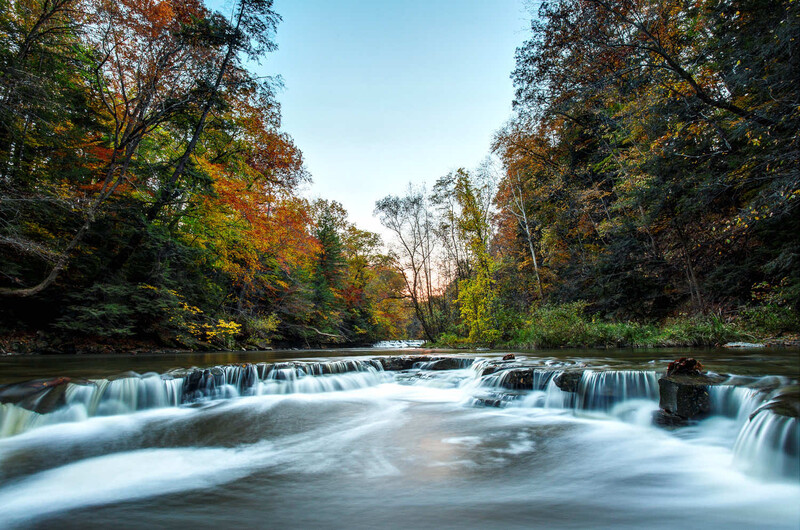
The study is about seeing reflections as compositional tools rather than accidents. Shoot them from directly above, from ground level, from angles that create symmetry or deliberate asymmetry. Use a circular polarizer to control how much reflection you keep or remove. Shoot wide to include both the reflection and its source, or shoot tight to make the reflection itself the entire image. By the end of the summer, you will notice reflective surfaces everywhere you go, which is a permanent upgrade to how you see the world through a viewfinder.
5. Community Event Coverage
Volunteer to photograph a local 5K, a charity cookout, a summer concert in the park, or a neighborhood block party. Contact the organizers in advance, offer to shoot for free in exchange for a photo credit and permission to use the images in your portfolio, and deliver a curated gallery within a week.
This project builds three things simultaneously: event photography experience under real conditions, a portfolio of work that demonstrates reliability and versatility, and a relationship with an organization that may hire you for paid work in the future. Shoot with a 24-70mm zoom for versatility or a 70-200mm zoom if the event involves a stage or race course. Bring a speedlight for indoor or evening events where ambient light is not enough. Deliver more images than the organizers expect, faster than they expect, and the referral will follow.
6. One Lens for a Month
Pick a single focal length, mount it on your camera, and do not take it off for 30 days. No zooming with your feet as a compromise. No switching "just for this one shot." One lens, one month, every subject.
A 50mm is the classic choice because it is close to what the human eye sees, which means every compositional decision is yours rather than the lens's. A 35mm forces you to get closer and deal with environmental context. An 85mm forces you to step back and compress, which changes how you see backgrounds entirely. Any of them will work. The point is the constraint.
Within the first week, you will be frustrated by everything the lens cannot do. By the third week, you will have stopped thinking about what it cannot do and started exploiting what it does better than anything else. You will learn its minimum focus distance by feel. You will know exactly how many steps backward you need for a full-body shot. You will previsualize compositions before you raise the camera because you know precisely what the frame will look like. That internalized relationship with a focal length is something no zoom lens teaches, and it stays with you permanently. For a structured approach to building these instincts across multiple genres and shooting conditions, The Well-Rounded Photographer covers eight specialties with eight instructors, and the compositional discipline of shooting with constraints applies to every one of them.
7. Local Business Storefront Series
Walk one commercial street in your town and photograph the facade of every small business on it. The barber shop, the bakery, the hardware store, the laundromat, the tattoo parlor, the flower shop. Shoot them straight-on, consistent in framing and time of day, so the series has a visual rhythm.
This project creates a document of your community at a specific moment in time. Small businesses open and close. Storefronts change. The series you shoot this summer will become a historical record within a few years. Shoot in the early morning before the street gets busy, using a 24mm or 35mm lens to capture the full facade without excessive distortion. Keep your camera level to avoid converging verticals. If you want to take it further, go inside. Ask the owner for a quick portrait behind the counter. Now you have a two-image pairing (exterior and interior) that tells a richer story than either image alone.
8. Shadow Study
Summer light is long and low at both ends of the day, which means the shadows are long, dramatic, and graphic. Document them: the shadow of a fence across a sidewalk, a tree's silhouette stretched across a field, the stripes cast by window blinds on a wall, your own shadow walking ahead of you down a road.
This project trains you to see light as a subject rather than a condition. Instead of asking "is the light good enough to shoot in?" you start asking "what is the light doing that I can photograph?" Shoot in the first and last hours of the day when the shadows are longest. Use a high contrast edit (deep blacks, bright highlights, minimal midtone recovery) to emphasize the graphic quality. The best shadow images are almost abstract: shapes and lines that work as compositions independent of the objects casting them.
9. Roadside Food Vendors
Lemonade stands, taco trucks, hot dog carts, farm stands, shaved ice trailers, barbecue smokers in a parking lot. Every town has them in summer, and every one of them is a portrait subject, a still life, and a story.
Photograph the vendor, the setup, the food, and the customers. Shoot the hand-painted signs, the worn menus, the steam rising off the grill, the condensation on a cup. This is documentary photography with a built-in narrative: someone built a small business on a folding table and a dream, and you are recording it. Ask permission, buy something, and offer to send the vendor a few images for their social media. The goodwill costs you nothing and the resulting images have warmth, character, and a sense of place that studio work cannot replicate.
10. Pet Portraits in the Park
Pick a Saturday, go to a public dog park or a busy walking trail, set up with your camera and a sign that says "Free 5-Minute Pet Portraits," and photograph every dog (or cat, or parrot, or ferret) that shows up with a willing owner.
You will get 10 to 20 subjects in a few hours, each one a different size, temperament, energy level, and cooperation threshold. Use Continuous AF with animal eye detection if your camera supports it. Shoot at f/2.8 to f/4 for clean background separation. Get low, at the animal's eye level, not standing above them looking down. Bring treats (ask the owner first) and a squeaker toy to get ear perks and head tilts. The resulting images build a pet portrait portfolio fast, and every owner you photograph is a potential paying client for a full session later. Deliver the free images within 48 hours with your watermark and contact information, and the referrals will follow.
The best photography projects are not the ones with the most ambitious scope. They are the ones you actually finish. Each of these can be completed in a single summer with gear you already own and locations within driving distance of your home. Pick one, set a deadline, and hold yourself to it. The body of work you build between now and September will teach you more than six months of shooting without a plan.
If you want a structured foundation that makes every one of these projects sharper and more intentional, Photography 101 covers camera fundamentals, shooting technique, and post-processing from the ground up. The projects supply the motivation. The skills make the images worth keeping.

Join the Fstoppers community for free
-
Post comments and join in the discussions
-
Browse the site ad-free
-
Share your work and get featured in the community
-
Compete in the photo contests for fun and prizes
2 Comments
This really good for the hobbyist who has a regular job or sorts!
Every idea is great and getting your photo eye in tune as well as learning your camera's functions with with different subjects using much more of your camera honing your editing skills.
Another is to use your local news station the asks for photos from around the area, you will find so many things and places. Example a local Zoo or a city zoo close by there your images will look like you went to a far off land. Many Zoo's do not allow tripods so a camera with IBIS and lenses with IS/OSS this is where a telephoto lens most all have. a piece of gear to have is a LENSKIRT that blocks reflections off glass, many zoos have glass between animals BUT also it is great to have if staying in a hotel/hospital up high in a city to get a night city scape just check with lenses mm's that stay within it. Easy and cost effective to have in a car/bag (it folds flat.
It is like here in Florida driving the back roads you will find big cat, elephant, bird rehab shelters and some farms that raise animals for meat from Africa (big surprise to me when I drove through horse areas).
One thing that will help in lighting is to use the TPE app and just flow the sunrise location through the year of being low down south on the horizon in December and by June up north and reversing down to the south this app allows for seeing with buildings in the way. The other thing you will learn is where the moon rises and sets every full moon it will be the same place every month great for planning a Lunar Eclipse with great foreground. With just this little bit of info you will always see some great foregrounds with your photo eye when no one else is looking as you drive about. With the app you can have a calendrer with dates of places you spot.
PhotoPills with so many things in it has one for Milky Ways where you can with the planner and use it's Night AR function and go to a location and see where the MW will rise and will disappear at sunrise at whatever time, You can play around with bad weather for 5 days before and after the new moon also but the day of you can get some of those florescent tubes and place exactly where yo want to be while you get some sleep before hand and if lucky to have the whole 10 days of great clear skies you can have many different foregrounds to go to that month. In the August to October great to have the vertical MW next to a foreground subject.
If you are near an ocean or place affected by tides the PlanIt Pro app has a tide section that is better than reading a tide chart in a paper or even on line, Most handy when you like to do MW's while on the beach for if you can start at high tide and as the tide goes out you get a nice clean beach with no foot/shoe prints by the end good for May/June/July.
With this Article's ideas and some I mentioned your mind should be spinning like forever and day dreams that never stop!
These are all great ideas. I started a project a few years ago similar to the small business one. I started photographing all the historic main streets in my state. I only got a few towns done before I got a little busy/lazy. I need to get back to doing those. However, I also started doing photography full time as a real estate and architectural/interiors photographer. And man, it really does kind of make doing personal photography more difficult. When you spend all day taking photos it can be hard to motivate myself to take more photos.