Let’s go back to basics and learn from Jason Wong, who provides some great examples and concepts about aperture that go beyond the common beginner advice of always shooting wide open for background blur. There are multiple factors, besides the aperture value, that result in a shallow depth of field, and it's worth knowing them to elevate your photography.
The more I shoot street photography and portraits, the more I have realized that the creamy bokeh of f/1.4, f/1.8, and f/2 on your lens is a trap. I am not saying that you shouldn’t use it, but there’s a time and place for higher f-stops, too. Jason Wong, in this action-packed video tutorial, delves deep into similar arguments by demonstrating various concepts revolving around aperture. This video offers five valuable tips that cover depth of field, the quality of results depending on aperture settings, confusion around these settings, and much more.
I find two tips particularly interesting and insightful.
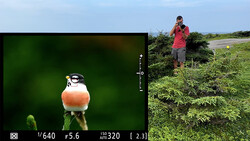
Firstly, getting physically closer to your subject significantly increases background blur, even at narrower apertures like f/3.5. This can also be achieved by using a longer focal length (zooming in), even if the aperture is narrow. This is why telephoto lenses can produce creamy backgrounds despite having maximum apertures like f/6.3 or f/8.
Another great point raised by Jason is something that many photographers are not aware of: diffraction. This is the opposite of using a wide aperture. To achieve a great depth of field, photographers should avoid using the narrowest maximum apertures on their lens (e.g., f/16 or f/22), as this can lead to a loss of overall sharpness due to light diffraction. This becomes more evident with the examples and analogies shown in the video.
There are more tips and insights in the video that I believe are not only helpful for beginners, but also a great opportunity for amateurs and pros to revisit some concepts with quality examples.
Join the Fstoppers community for free
-
Post comments and join in the discussions
-
Browse the site ad-free
-
Share your work and get featured in the community
-
Compete in the photo contests for fun and prizes
5 Comments
"the common beginner advice of always shooting wide open for background blur"
Another note for beginners: background blur is often counterproductive and even a crutch used to avoid having to manage composition. There's nothing "pro" about blurred backgrounds, other than the cost of long lenses with wide apertures. Sometimes shallow depth of focus is desirable, but, in other cases, isolating a subject from its background removes context that can make the visual story more interesting.
Well said.
I've been harping on this for years. it also took me waaaay too long to figure this out. I began to figure it out when I obtained my 70-200mm f2.8. As soon as I got it only shot it at f2.8 and at 200 mm for the "bokeh". What I noticed is that my portraits always came out blurry even if I was using high shutter speeds. I also could not keep both eyes of my subjects in focus either. As soon as they turned even a little bit one of their eyes wold go out of focus. It frustrated me for ages until I got fed up and started researching the mechanics behind shallow depth of field and wide apertures. Shooting that wide makes the plane of focus insanely slim and shooting at telephoto lengths compounds that further. After I learned that I switched to not shooting wider than f4 90% of the time. It was like over night the quality of my portraits got WAY better. I also started focusing more on how and where I direct subjects to get more dynamic and visually interesting images rather than just having blown out back grounds all the time.
Over time I started to realize all the amazing lenses I've been missing out on just because their apertures weren't at least 2.8 or wider. It's a really dumb position to have on lens selection and i'm so happy happy I grew out of that. When lens shopping I focus on the quality of the glass vs how wide the aperture is.
Now I'm not saying one should never use wide apertures but their use should be purposeful and thoughtful. If you are constantly shooting in low light then of course it makes sense that you would need wide aperture lenses. But if you are an every day portrait photographer shooting wide open all the time is only going to hurt your work in the long run. Your throwing away a lot self potential by only shooting wide open.
If I didn't already have my 70-200mm f2.8 and I was to buy a new 70-200mm today I would go for the F4 version without a doubt. It's lighter, MUCH cheaper, and just as sharp. Wide apertures should not be a blanket default. In the long run it gimps ones photographic ability. Too many people use wide apertures as a crutch and their work suffers for it. The majority of the best photos I've seen from others and of the ones I've taking are all at smaller apertures. Media portrays wide apertures as the end all be all of lens selection and shooting when the exact opposite is true. Now we have a bunch of people out there shooting images that all look exactly the same.
Thank you for sharing your thoughts and experience. I shot portraits for f4 for a long time, too. This way, you get eyes and ears visible.
This is one myth that I was never misguided by.
My first "real lens" when I got back into photography was a Canon 400 f2.8. I almost never shot it at f2.8. Like I would literally go 2 months and 20,000 images without using f2.8 even once.
One of my photography friends used to really get on me about this, saying that I was wasting the very thing that the lens was made for. I would reply; "overall, it is sharper at f4", or "I don't like the way photos look when the Elk's eye is sharp but the tips of his antlers are blurry".
So, then, why did I spend 6 months' worth of income on an f2.8 lens when I could have gotten a 400mm f5.6 for 1/10th the price? It was because the big f2.8 primes work so GREAT with tele-extenders. When I bought that lens, I not only got a 400mm f2.8, but I also got a 560mm f4.0 and an 800mm f5.6.
Back in those days, I bet the people who thought that teleconverters gave bad results had never used them with a 300mm f2.8 or a 400mm f2.8 lens. Teleconverters told a completely different story when paired with one of these huge primes. And yet people would use them on their piddly little 100-400mm zoom lens and complain that the teleconverter gave soft results and caused poor autofocus performance. Of course, because they were using the teleconverters with the wrong lenses.
So the real value of lenses with big apertures is not to be able to blur backgrounds, or to be able to shoot in lower light. It is the ability to autofocus faster and more accurately than smaller aperture lenses can, and to be able to combine with other optics, such as teleconverters, and still have razor-sharp detail resolution.