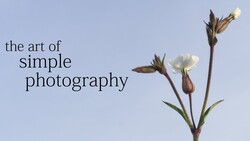
Picking up a camera is the easy part. The harder skill, and the one almost nobody talks about, is learning to see what's actually worth photographing in the first place.
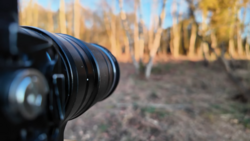
Coming to you from Andrew Banner, this quietly compelling video takes you on a walk through Banner's home village in Norfolk, England, where he uses an Olympus OM-D E-M10 Mark III with a 7.5mm fisheye lens to make his point. The gear is almost beside the point. What Banner is really after is something harder to quantify: the gap between walking past something and actually seeing it. He calls this "the art of noticing," and he frames it as the single most important skill any camera owner can develop. He also carries an Olympus OM-D E-M1 Mark II with a 25mm manual lens in his bag, though neither body is the focus here.
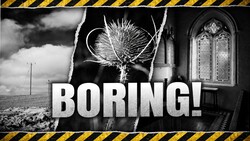
Banner's argument centers on contrast, and not just the light-versus-dark kind. He's talking about contrast in color, shape, texture, and the tension between natural and man-made forms. He shows you a photo of bluebells in a local wood, layered with color contrast, luminosity contrast, and shape contrast all at once. Then he points a camera at a padlock on a gate, beach steps where pebbles meet steel edges, and the worn surface of a memorial bench with the letters "MF" scratched into it. None of these are glamorous subjects. That's the whole point. Banner is specifically interested in the mundane, the overlooked, the things you pass every day without a second glance. He shoots most of this in high-contrast black and white, which he says strips an image down to its essential components and forces you to engage with light, shadow, line, and shape rather than relying on color to carry the image.
Where the video gets genuinely interesting is when Banner connects the act of noticing to mindfulness. He speaks openly about how mindfulness practice kept coming up as something useful. His point isn't to turn photography into therapy. It's simpler: being present in your environment is what makes you see it. He suggests sitting on a bench for at least 10 minutes, not scrolling, not glancing around, but actually looking, and then writing down everything you notice. Not what you think would make a good photo. Everything. The details you list second and third are where the real subjects start to appear. He walks through this with the padlock example, starting with "old padlock" and ending with a subject, a context, a story, and a reason to press the shutter. He also makes the case that your local area, the place you think you know best, is probably your most underused practice ground.
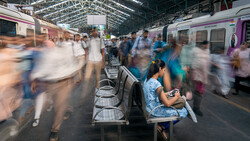
Check out the video above for the full walkthrough from Banner, including how he works with the fisheye lens on location and what he finds worth photographing in the spaces most people walk straight through.
1 Comment
I believe that the seeing of things to photograph that others just just not see maybe going to fast through life in general. I am the type that little things pull at me even when I do not have a camera. Things happen in day time that are different at night and vise versa.
A good lens to have your lens a telephoto with a wide range of MM. I like the Sony 2015 lens FE 24 -240mm f 3.5 6.3 OSS that also IF you need a closer look using the button for APS-C you have 36-360mm with in camera cropping but most will just capture and crop. Also a 16-35mm for those wide captures but these also have closeup AF.
Sometimes you will need a 10mm of something like it for those indoor or cave captures. The Cave capture I was just prepared with and a wider shot making for more in the frame,
The street at night was with my Canon T2i and is a Bracketed using the Promote Control devise. Sometimes while traveling you just see it in your minds photo eye and go out and try to get.
the heart shaped ice is using a 35mm f/2.8 but with a close focus a rare sight when heading out to do some hunting.
The bee was with a 24-70mm and it was on another trip on Alabama 82 where there are Peach Orchards on both sides of the road. In the spring at just right time for the flowers blooming just awesome sight and getting close captures. Few even notice this time of the year.
Yes I am one who see's that others do not and get no where fast. I like the roads of old before the major highways that are so boring or no time to look for going too fast.