Deciding to print and sell your own work is one of those things that's easy to keep putting off, and Faizal Westcott finally stopped putting it off. The process taught him things about printing, paper, pricing, and the psychology of selling art that most people don't think about until they're already in it.
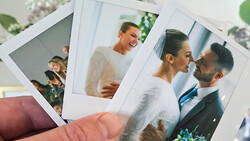
Coming to you from Faizal Westcott, this candid video follows Westcott as he prints three photographs from his three years living in New York, one image per year, and launches his first real print drop. He connected with Chris, who runs Positive Print Lab in Williamsburg, Brooklyn, after Chris reached out offering a free test print. That nudge was enough to get the project moving. All three prints were produced on matte paper by Hahnemühle, a well-regarded name in fine art printing, and Westcott explains exactly why he chose matte over glossy or satin for his particular style of work. One of the prints, a shot of pigeons silhouetted against harsh light in the Lower East Side with a single white bird flying into frame, turned out to be the most popular of the three, which surprised even him.
Choosing the three images was harder than it sounds. The 2023 photograph is a layered street shot from Chinatown, combining vintage poster art on a salon window with reflections of lanterns from the street behind him. The 2025 image is a portrait of a taxi driver shot on a compact camera. But the 2024 image went through several iterations before Westcott landed on something that worked. A friend in Japan pushed him to simplify, and that pigeon shot ended up being the connective tissue the set needed. Westcott also gets into how light conditions in a room change how a print reads, especially with darker images, and how that variability is something he's come to appreciate rather than fight.
The more revealing part of the video is what Westcott learned about selling. He structured the drop as a limited-time open edition across March, which is less common than a traditional limited edition run. A conversation he had two days before filming shifted how he thinks about pricing and value: the person told him that buyers often don't value the image itself as much as they value scarcity. Westcott says he already had a sense of this but needed to experience it firsthand. He's also candid about how putting a dollar amount on his own photographs felt fundamentally different from pricing his video work, and why that discomfort had kept him from selling prints for years. Check out the video above for the full breakdown from Westcott, including how he approached the pricing conversation and what he'd do differently next time.

Join the Fstoppers community for free
-
Post comments and join in the discussions
-
Browse the site ad-free
-
Share your work and get featured in the community
-
Compete in the photo contests for fun and prizes
1 Comment
A limited time open edition seems like a big risk. He's essentially taking his three favorite pictures over a three year period of time and offering them for sale for one month only. And then they're removed from the marketplace forever? Or does he offer them again in a year or two in another limited time open edition? If they become available again in the future, it diminishes the value of scarcity. Unless the images are sort of ordinary commodities that I could easily replace, I would never consider placing that sort of limitation on my work. Especially for the $125 price tag on his website for a print of those images.
Interesting price and product combination... one option only at 8x10. I suppose you can make money at any price if you can sell a gazillion of them. Wonder where all the traffic is coming from though, short of a gazillion Facebook followers. Also... at that size print, I would get a box of my chosen paper and print sheets rather than from a roll. There's a lot of curl in roll paper, especially as you get closer to the end of a roll. A sheet print looks more professional in my opinion for small prints. I keep roll paper just for jobs that are being framed under glass.